Bagacum

Bavay is a small village in the Nord-Pas-de-Calais region of northern France, less than an hour’s drive from Lille and Brussels. In the 1st century AD, Bagacum, as it was called back then, was the capital (civitas) of the Nervii, the most powerful Belgic tribe living in northern Gaul. Being located on the spot where seven major routes met, Bagacum was an important stopping-off point between the provinces of Germania and Britannia. This strategic emplacement allowed the city to become an important urban centre of Belgian Gaul. The future emperor Tiberius passed through Bagacum with his armies around AD 4 (an inscription attesting to his presence was found in 1716). Here the Romans built one of the largest forums in the Roman Empire.

Coordinates: 50° 17′ 53.16″ N, 3° 47′ 56.04″ E

From the Claudian period and later under the Flavians, the city of Bagacum expanded quite rapidly. Large monuments were built: a forum, thermal baths fed by an aqueduct and other buildings with a seemingly official nature adorned the city. Disproportionately big compared to the town’s size, the forum is the only entirely preserved example of a Roman forum in France. Its basilica is one of the largest known to have existed in the entire Roman Empire.

Trade and commerce flourished following the construction of the roads and the exploitation of the river network. The city became a major market centre for pottery, and workshops have been found there. Merchants sold sigillata, wickerwork, cloth, food and bread. An exceptional set of over 300 objects in bronze (the “Bronze Treasure”) was discovered in Bagacum. Current estimates suggest the town ultimately covered about 40ha and may have counted a population of 15,000.

The gradual decline of Bagacum started in the 3rd century AD, and a massive defensive wall was built at the turn of the 4th century AD. Today the fortifications are one of the most imposing elements of the archaeological site. Bagacum was destroyed during the barbarian invasions and never recovered its former influence. It would not be rediscovered until the eighteenth century.

The Museum is located right next to the archaeological site. It houses an important pottery and bronze collection. Two exhibition spaces are dedicated to the permanent collection. The first room presents the public areas of a Roman city; the second room concerns the private life of the inhabitants of Bagacum.

Portfolio
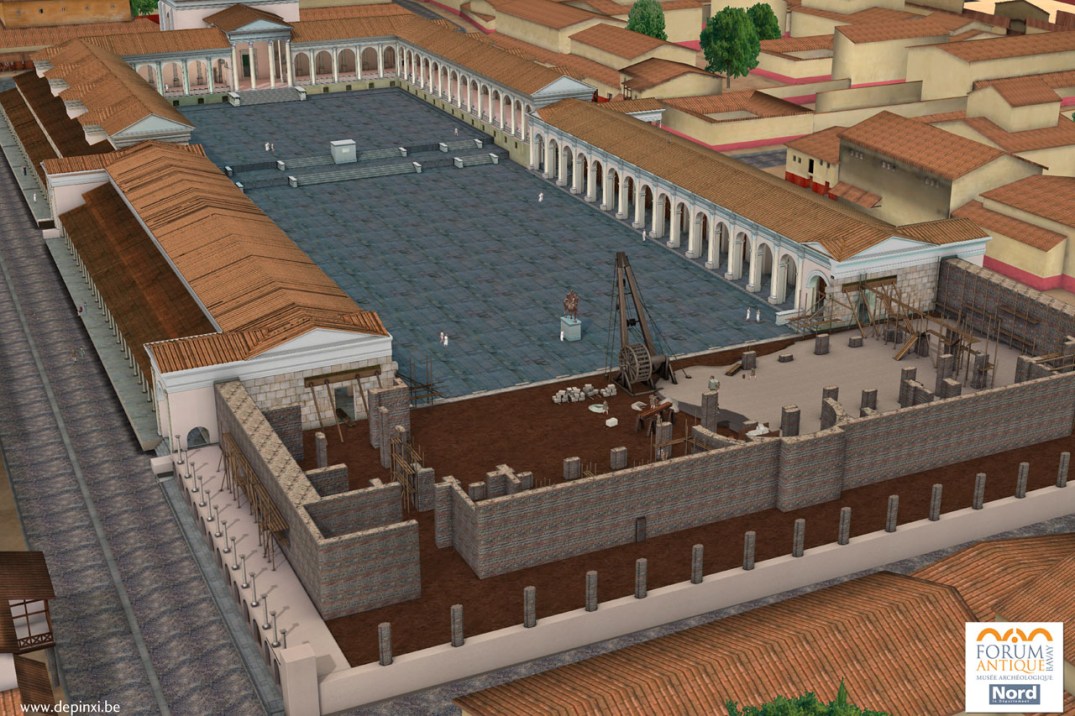
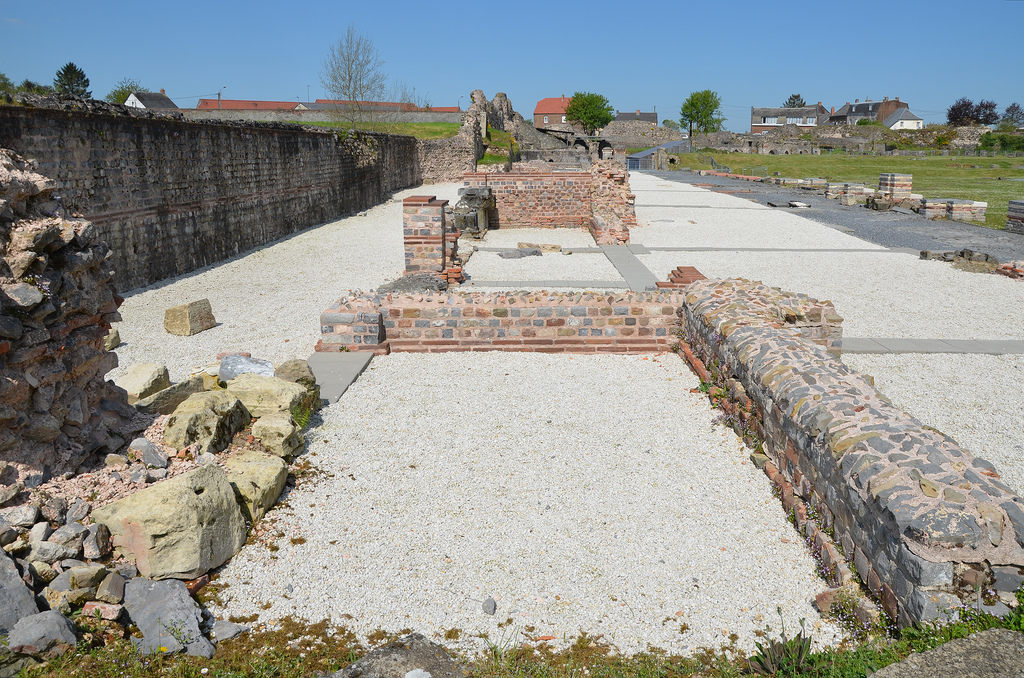
The Forum of Bagacum was 240 m long and nearly 110 m wide. It was one of a series of forums known as “tripartite forums”, which included three main parts: the esplanade, the basilica and the temple.
The esplanade was a large paved square in the centre of the forum, surrounded on the longer sides by porticoes.
The esplanade was a large paved square in the centre of the forum.
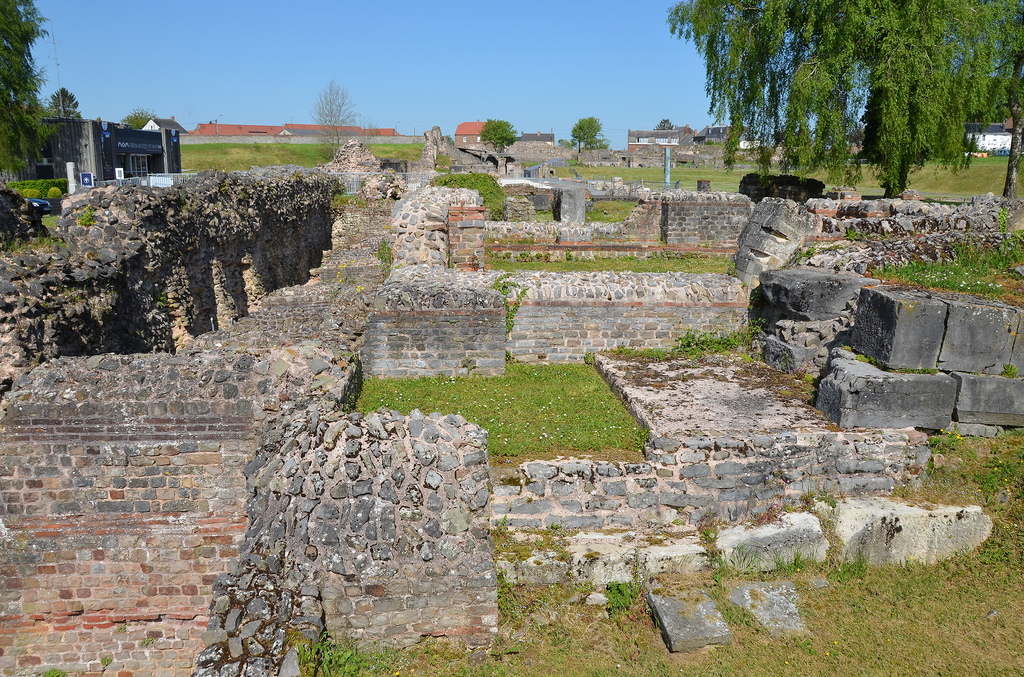
The Forum of Bagacum was surrounded on the longer sides by porticoes. A series of administrative offices were to be found under the porticoes. Citizens came to these offices to exchange money, use the weights and measures service (ponderarium) or consult a lawyer.
The Forum of Bagacum had a line of shops facing the street. Some forty shops offered a variety of products and services. Merchants sold pottery, wickerwork, cloth, food and bread.
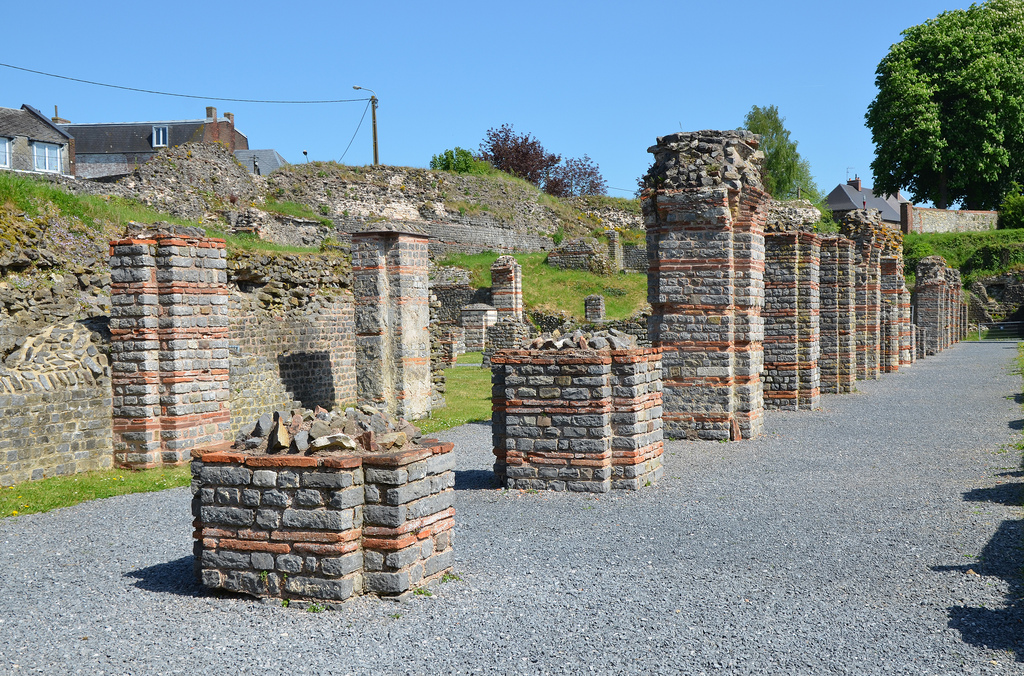
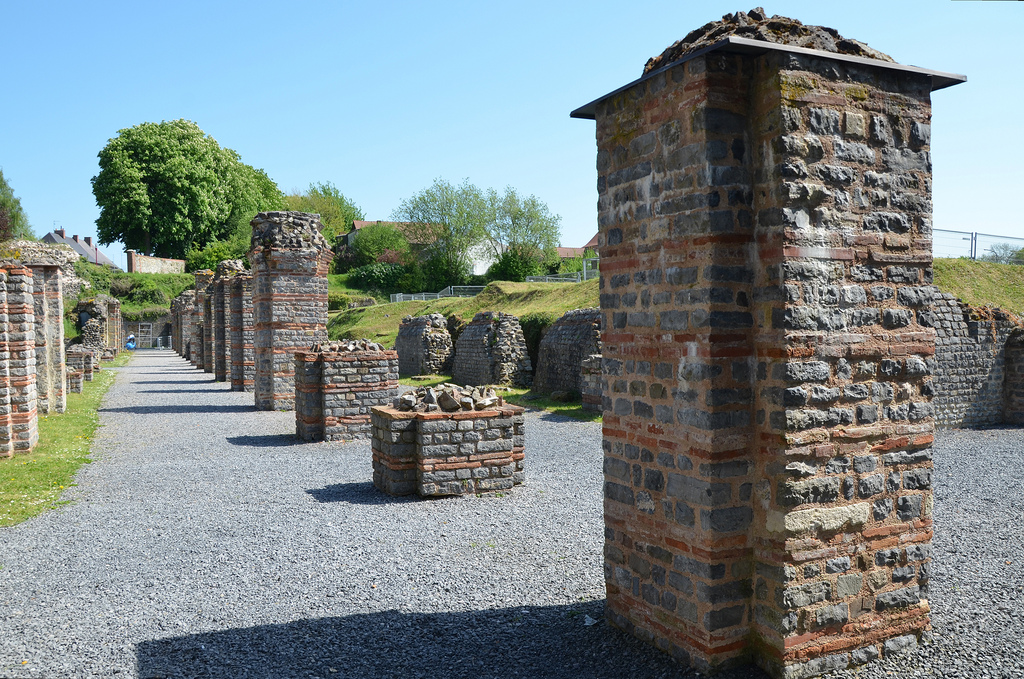
The remains of the semi-underground galleries known as the cryptoporticus. It was probably used as a walking area since the quality of the structure and its decoration are outstanding.
The remains of the semi-underground galleries, known as the cryptoporticus.
The remains of the semi-underground galleries known as the cryptoporticus.
The remains of the semi-underground galleries, known as the cryptoporticus.
The remains of the semi-underground galleries known as the cryptoporticus.
The remains of the semi-underground galleries, known as the cryptoporticus.
The sacred area is found on the west side of the esplanade and is smaller but on a higher level.
The sacred area of the forum is located on the west side of the esplanade on a higher level.
on the side of the esplanade are the ruins of a large building that was on a higher level than the esplanade: this was the basilica.
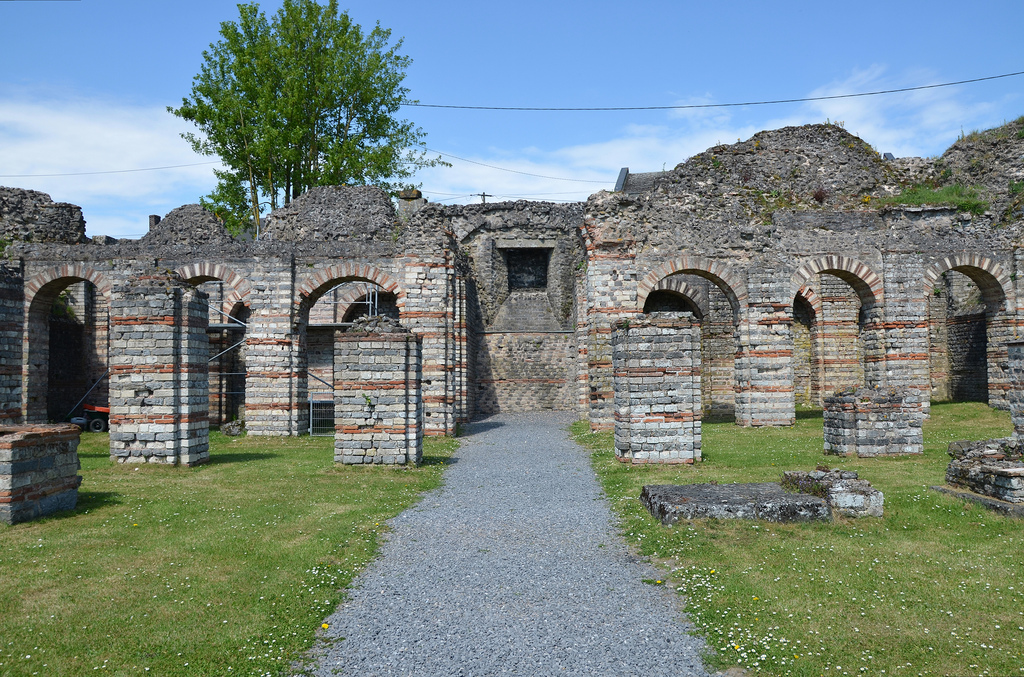
On the side of the esplanade are the ruins of a large basilica which was the centre of legal and political activity. The basilica of Bagacum was one of the largest in the Empire, measuring 98 m long.
The remains of the basilica.
The remarkably well preserved defensive wall built in the 4th century AD.
The remarkably well-preserved defensive wall was built in the 4th century AD.
The Archaeological Museum of Bavay.
The first exhibition space dedicated to the public areas of a Roman city. Some monumental architectural features allow visitors to appraise the size of the site. The finely worked pillars and capitals show the care taken by the Romans in constructing the forum of Bagacum, the capital city of the Nervian tribe. Some of these monumental pieces are on now show for the first time.
The first exhibition space is dedicated to the public areas of Bagacum. Some monumental architectural features allow visitors to appraise the size of the site. The finely worked pillars and capitals show the Romans’ care in constructing the city’s forum.
The second exhibition space presents the private life of the inhabitants of Bagacum.
The second exhibition space presents the private life of the inhabitants of Bagacum. On display are decorative items for the home, toilet implements or tools for working the land, all revealing aspects of everyday life and the different classes of people.

3D reconstruction of the Forum of Bagacum in the 2nd century AD

Links:

Nemea

Ancient Nemea was an important site in antiquity because of the well-known myth of Heracles and the Nemean lion. In the first of its twelve labours, Heracles fought and killed the Nemean lion. In one version of the legend, Herakles established athletic games in honour of his father, Zeus. Another legend is that the games were instituted by Adrastos of Argos in honour of the infant Opheltes who was bitten by a snake and died at Nemea.

Coordinates: 37° 48′ 32″ N, 22° 42′ 37″ E

Nemea was not a city but, like Olympia, both a sanctuary of Zeus and a venue for the Nemean Games, held every two years. The first of the panhellenic festivals was established at Olympia in 776 BC. Delphi followed in 582 BC, then Isthmia in 580 BC and finally Nemea from 573 BC until 271 BC. The athletes competed over various distances in the stadium, and there were also boxing and wrestling competitions. The horse and chariot races took place in the hippodrome, which has not been discovered. Following the Games’ definitive move to Argos, the site was largely abandoned.

According to Pausanias, Hadrian restored the Winter Games at Nemea in AD 124 and presided over the horse racing of boys. Later, during the 5th and 6th centuries AD, early Christians gathered in the area of Nemea and established an agricultural settlement. The foundations of an early Christian Basilica are still visible today, approximately 100 meters south of the Temple of Zeus.

The ancient stadion was the centre of the games and the forms, with the impressive remains of the Temple of Zeus at its heart. The museum covers the site’s archaeology in depth and, apart from interesting finds, houses a beautiful model of the site.

PORTFOLIO

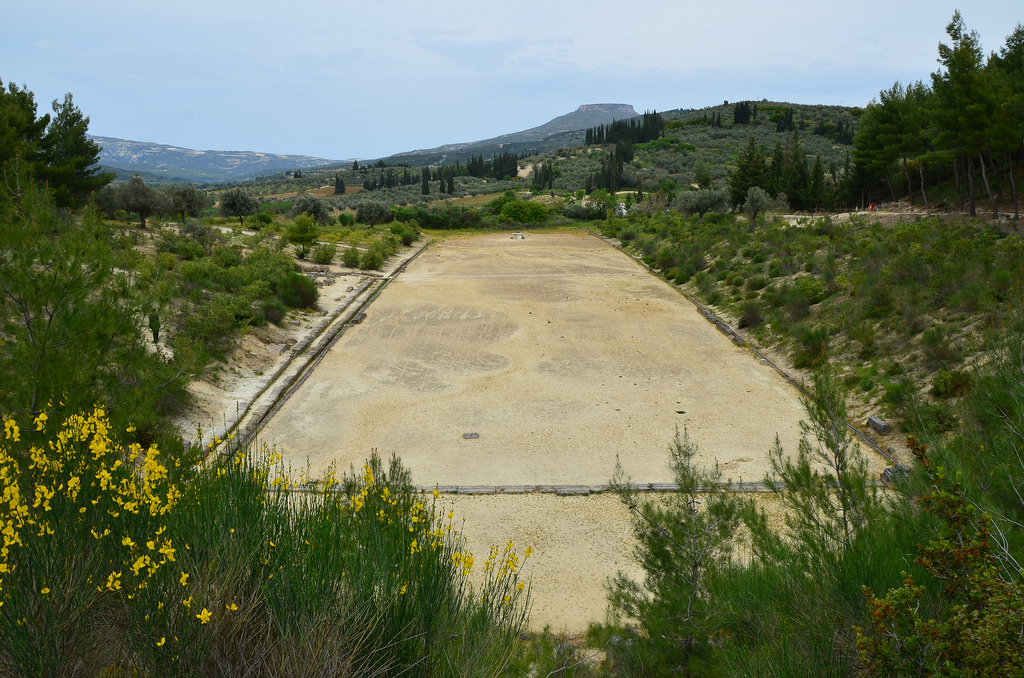
The Ancient Stadium of Nemea with the starting line in the foreground. It was built ca. 330 - 300 BC.
The Ancient Stadium of Nemea with the starting line in the foreground. It was constructed circa 330 BC when the games returned from Argos. The length of the track was 600 ancient feet, approximately 178 m.
The Ancient Stadium of Nemea could accommodate 30,000-40,000 spectators. There were no seats but a stand was provided for the judges.
The Ancient Stadium of Nemea could accommodate 30,000-40,000 spectators. There were no proper seats (only rough ledges were carved into the soft bedrock of the hillside), but the judges, called Hellenodikai, had a special platform on the east side of the stadium.
Vaulted entrance tunnel of the Ancient Stadium of Nemea measuring over 36 m in length and nearly 2.5 m in height.
The vaulted entrance tunnel of the Ancient Stadium of Nemea measures over 36m in length.
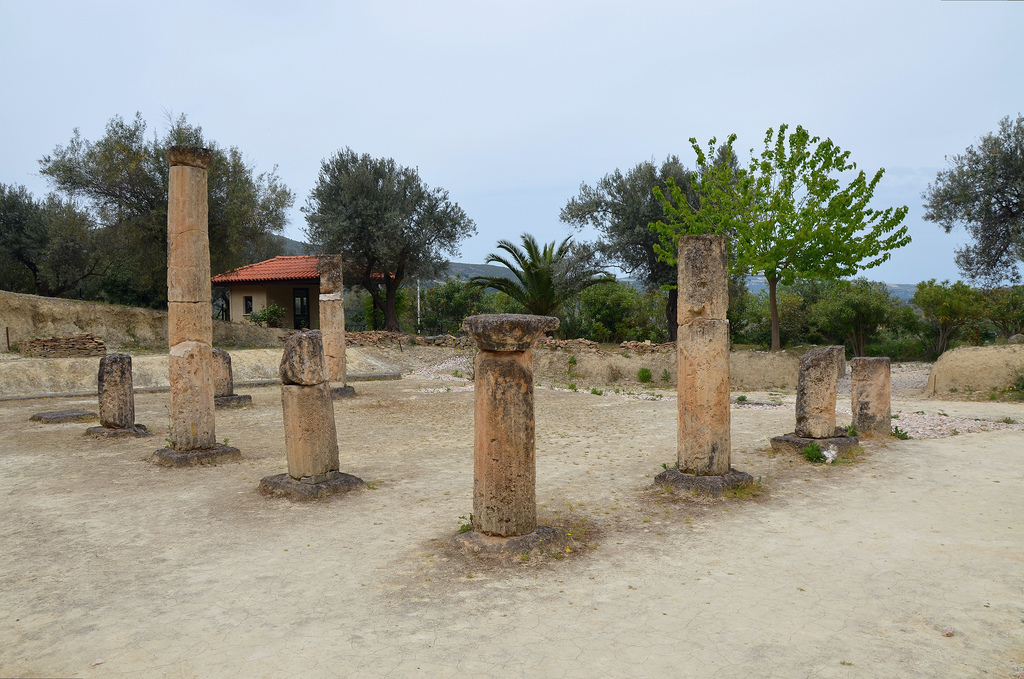
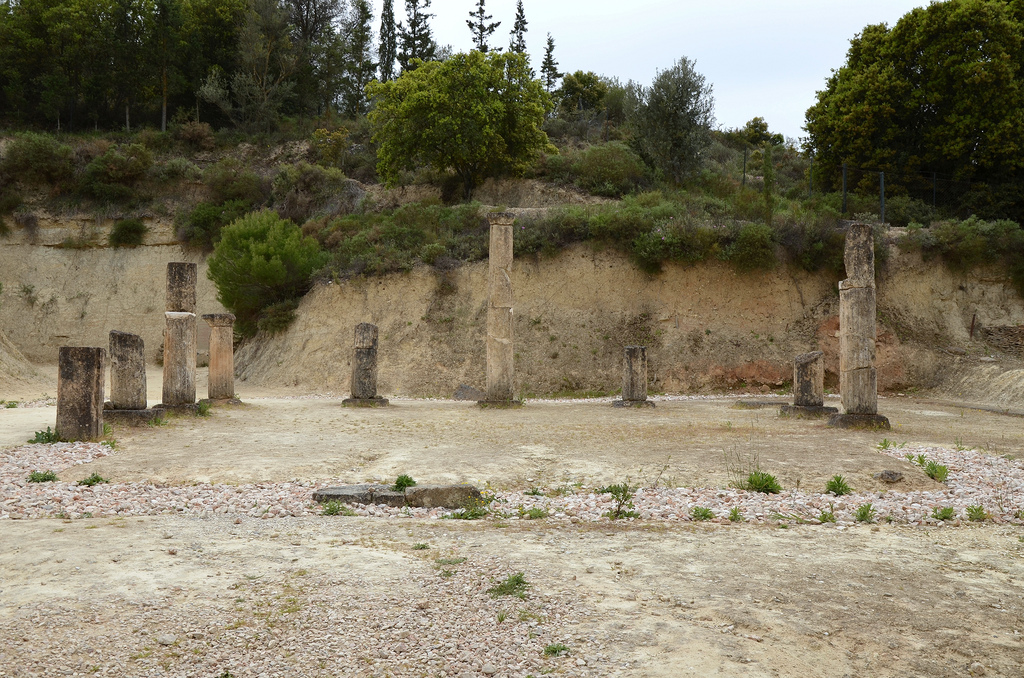
The Apodyterium ("undressing room"), where the athletes got undressed, oiled their skin and prepared for the games.
The Apodyterium (“undressing room”), where athletes undressed, oiled their skin, and prepared for the games.
The Apodyterium ("undressing room") was a small building to the west of the stadium where the athletes undressed and prepared for competition.
The Apodyterium (“undressing room”) was a small building to the west of the stadium where the athletes undressed and prepared for competition.
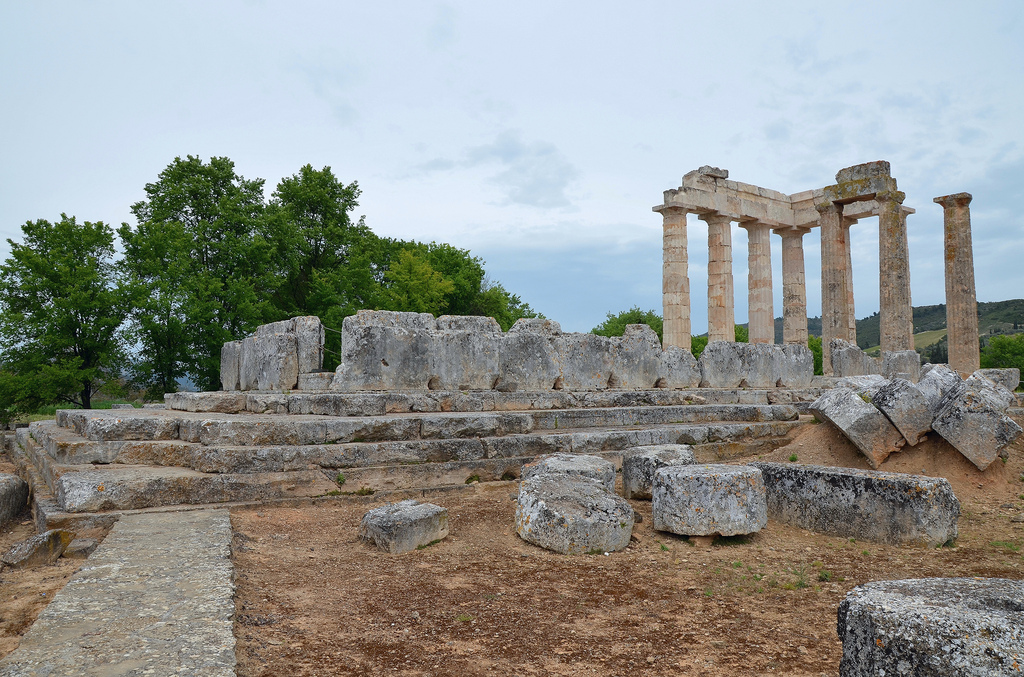
The Temple of Zeus, constructed during the last third of the 4th century BC (ca . 330 BC).
The Temple of Zeus was built ca. 330 BC over the remains of an earlier temple. It was before this Temple that, prior to the Games, the athletes would pay homage to the father of their gods, Zeus.
The Temple of Zeus was constructed of limestone. It had a peristyle of 6 by 12 columns.
The Temple of Zeus was prostyle, peripteral, with 6 x 12 columns, and used the three architectural orders: Doric, Corinthian, and Ionic.
The Temple of Zeus was used for fewer than 70 years. When the games were moved to Argos, the area was abandoned. Pausanias, who visited Nemea in the 2nd century AD, found the temple roof in collapse and the cult statue missing.
32 limestone columns, each standing 42 feet tall and composed of 13 cylindrical stones called “drums”, each weighing approximately 2.5 tons, surrounded the Temple of Zeus.
The bath house with a large central pool flanked by two tub rooms, each with four stone wash basins still in situ.
The bathhouse with a large central pool flanked by two tub rooms, each with four stone wash basins still in situ.
The Baths dating from the last third of the 4th century BC, used by athletes for washing and bathing during the games, a large central pool is flanked by two tub rooms with wash basins.
The bathhouse dates from the end of the 4th century BC and was used by athletes for washing and bathing during the games.
Nemea.
Nemea.

Links: