Italica

Italica is a well-preserved Roman city located in modern-day Santiponce, 9 kilometres north of Seville in Spain. The city was founded in 206 BC during the Second Punic War (218-202) when the Roman commander Publius Cornelius Scipio settled his Italian veterans on this site following a victory at the Battle of Ilipa. Although the nearby town of Hispalis (Seville) would always remain a larger city, Italica became an important centre of Roman culture and was awarded the title of colonia. The name Italica reflected the veterans’ Italian origins.

Coordinates: 37° 26′ 38″ N, 6° 2′ 48″ W

Much of the earliest neighbourhood, the vetus urbs (old city), established by Scipio during the city’s founding, now lies beneath the modern town of Santiponce. The new city, which can still be seen today, known as the nova urbs, was built by Hadrian as an extension of the vetus urbs. In the second half of the 1st century BC, Italica acquired municipal status and, under Hadrian, at the city’s request, it was raised to the rank of colonia, with the title Colonia Aelia Augusta Italica. The families of emperors Trajan and Hadrian originally came from Itálica (the patria of the Ulpii and Aelii), as did many Senators of the time.

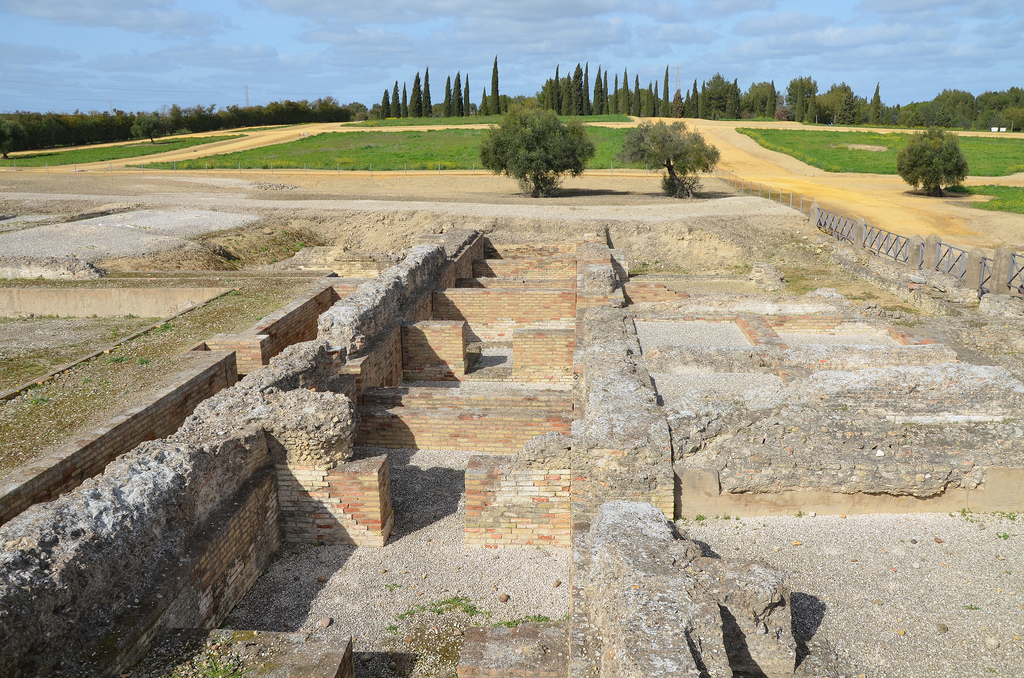
Hadrian rebuilt Italica on the scale of an imperial city, comparable to the capital of a whole province. In Hispania, only Corduba, Tarraco, and Emerita surpassed Italica. Under his rule, Italica enjoyed a period of splendour during which its architectural development flourished with the construction of new public buildings such as an amphitheatre, vast baths, and luxurious houses with a rich variety of mosaic floors. About twenty intricate mosaics lie amongst the uncovered ruins still in situ (the remainder are in the Archaeological Museum of Seville or in private hands), and their decorative themes provided the name for many of the buildings that can be visited today.

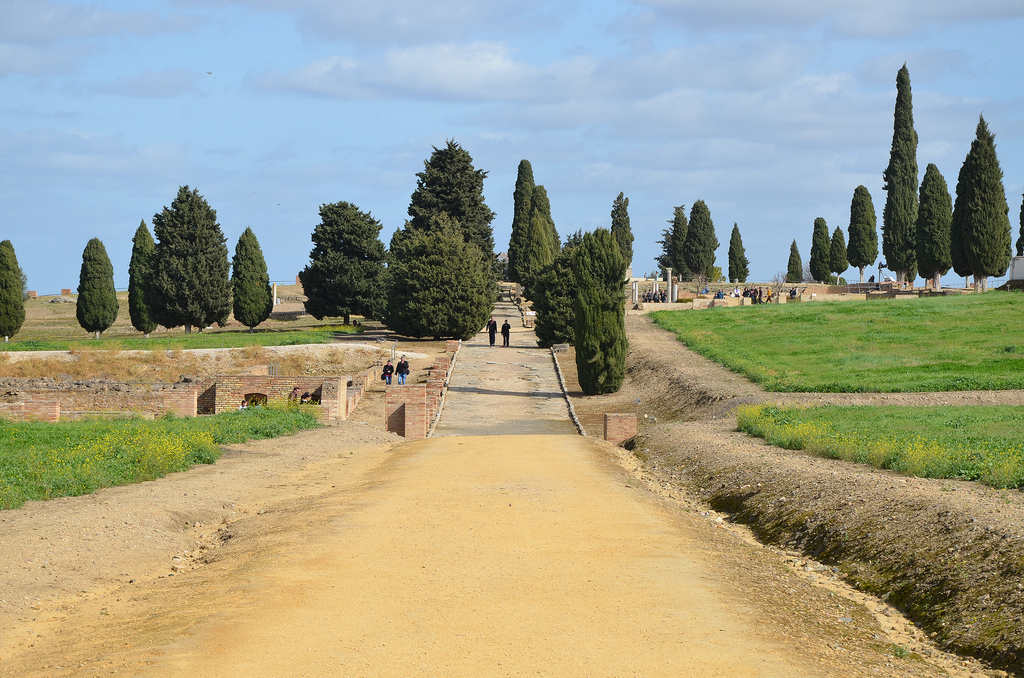
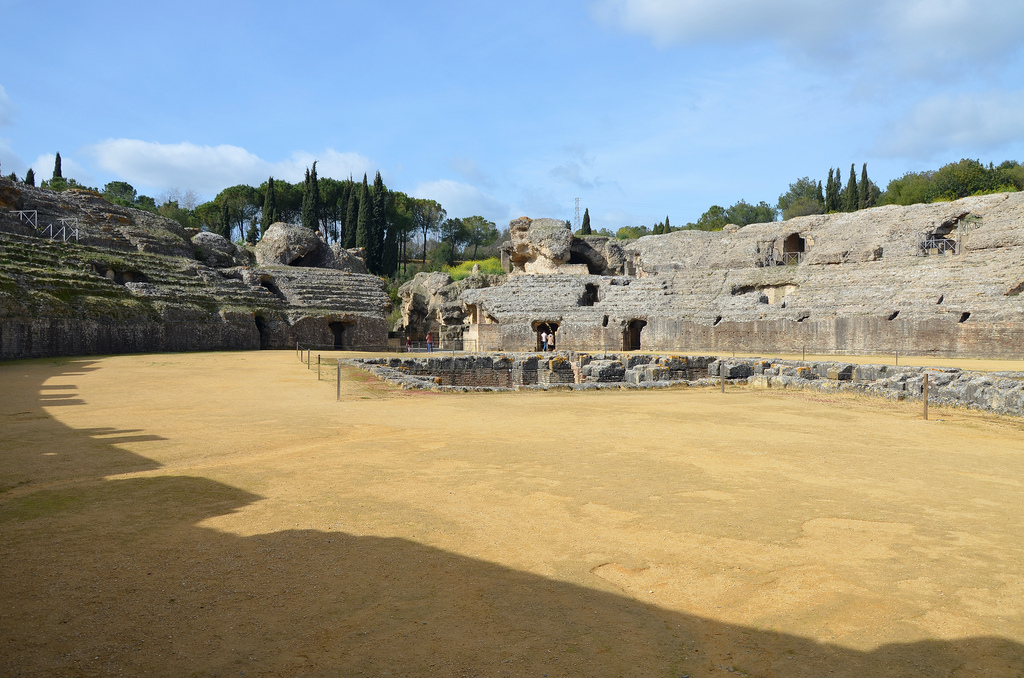
The whole plan of the city was lavish, the main avenue being nearly 15 metres wide with porticoed pavements. Other streets, of half that width, were flanked by footpaths laid out on an orthogonal plan. Hadrian provided the town with a water supply system and a drainage network. Running water was brought in via an aqueduct to cisterns before being distributed through a network of pipes. The amphitheatre was one of the largest in the Empire, 160 by 197 metres. It was built of large blocks of hewn stone and brick faced with marble and could accommodate some 25,000 spectators.

Italica rose to considerable military importance in the 2nd century AD. However, at the end of the 2nd century AD, the city began to decline for political and economic reasons and was gradually abandoned, with its most emblematic spaces losing their functionality. Throughout the Middle Ages, the ruins were used as a source of stone for Hispalis (Seville).

The archaeological site of Italica is one of the most important sites of Andalusia’s archaeological heritage, allowing the visitor to gain a vital insight into Roman town planning. There is a superb collection of sculptures from the Archaeological Museum of Seville excavations. The smaller finds, carved gems, glass, and ceramics are dispersed among various museums and private collections, notably the Lebrija Collection.

PORTFOLIO
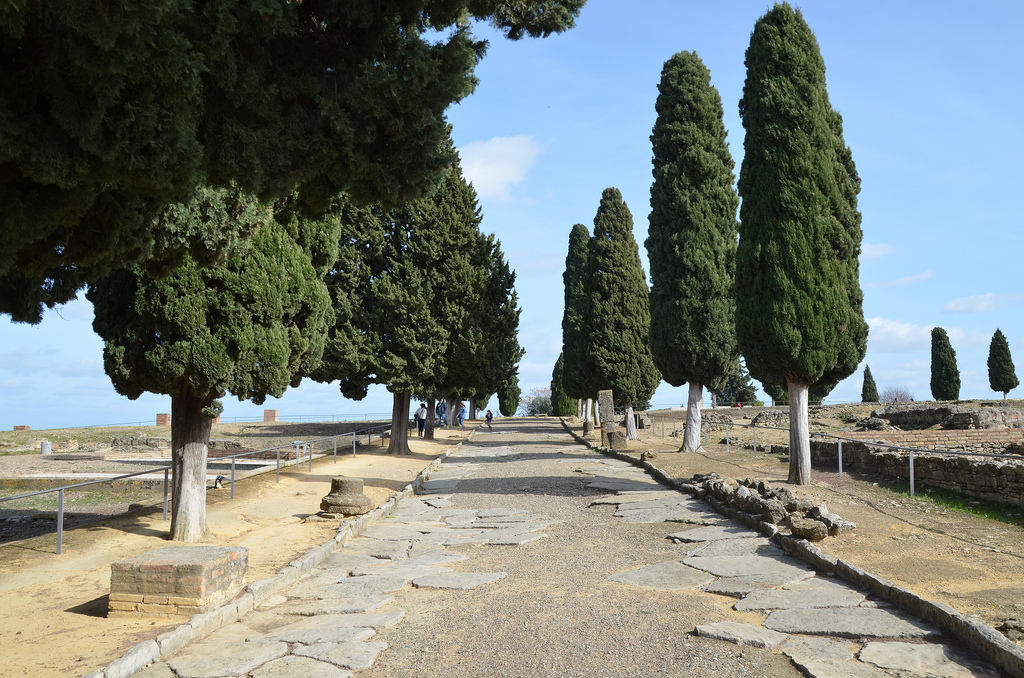
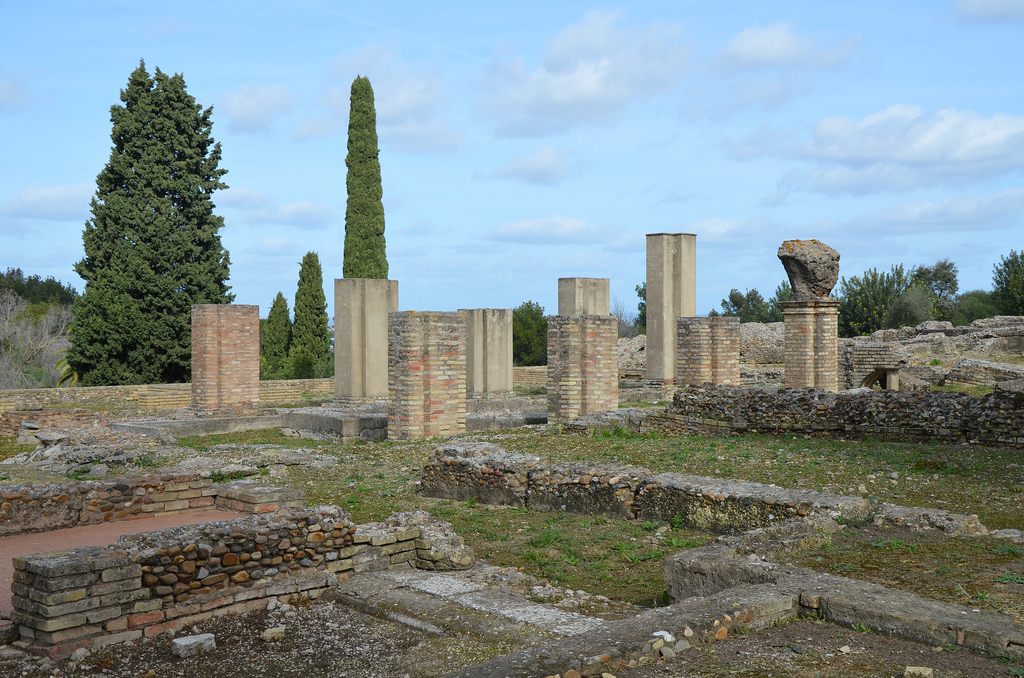
The Cardo Maximus.
The Cardo Maximus.
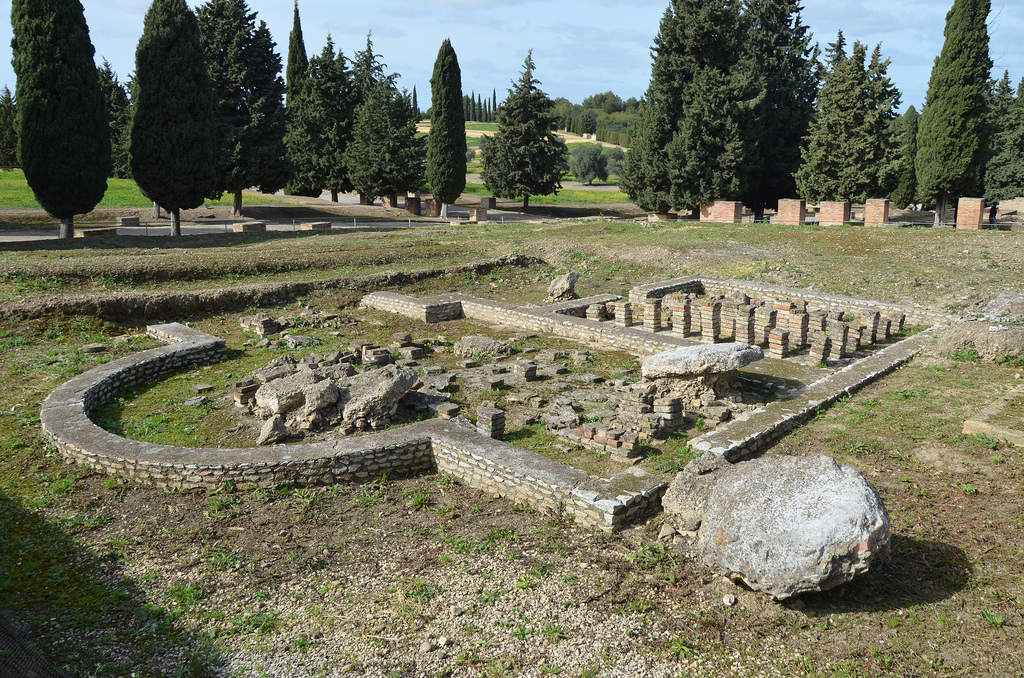
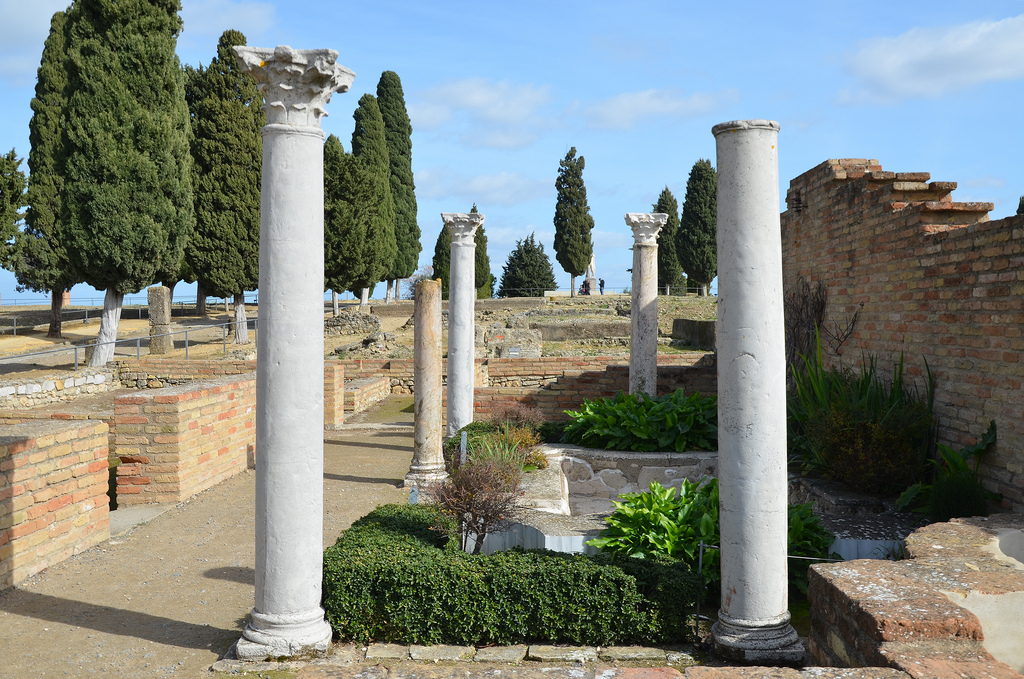
This peristylium of the House of the Exedra. This peristylium is rectangular. It has an oval fountain at its central axis. Portico perimetral supporting does not need columns, as is usual. Instead of them there were big pillars with a plan with a shape of cross.
This rectangular peristylium of the House of the Exedra. The big pillars supported a second storey. The domus covered an area of 3,000 square metres and was built entirely of brick-faced concrete.
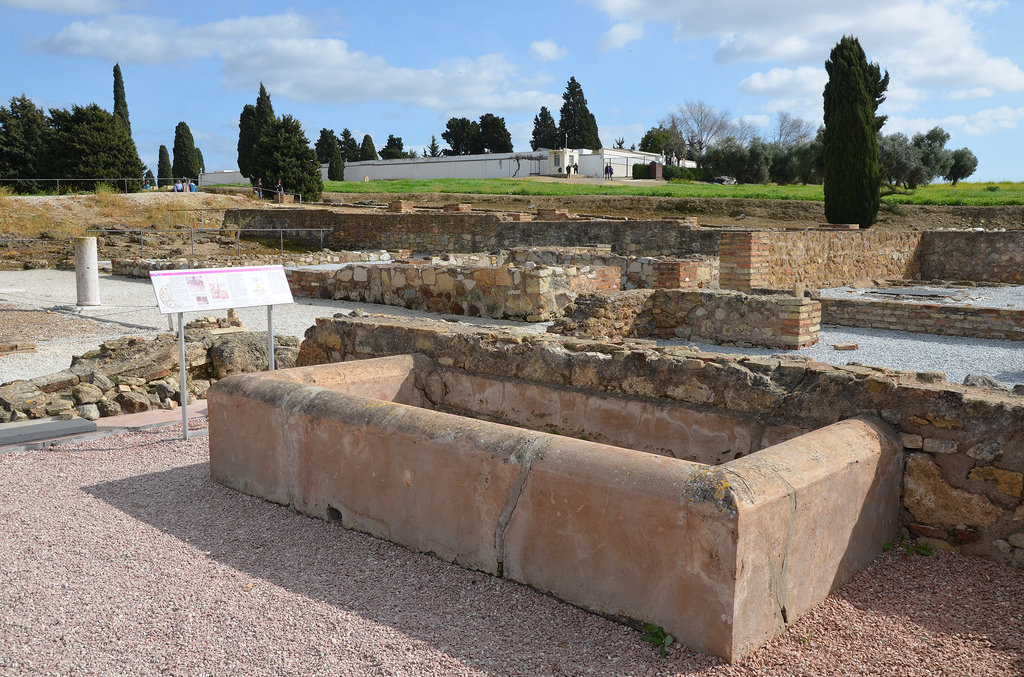
Warm thermal baths in the House of the Neptune.
The warm thermal baths in the House of Neptune.

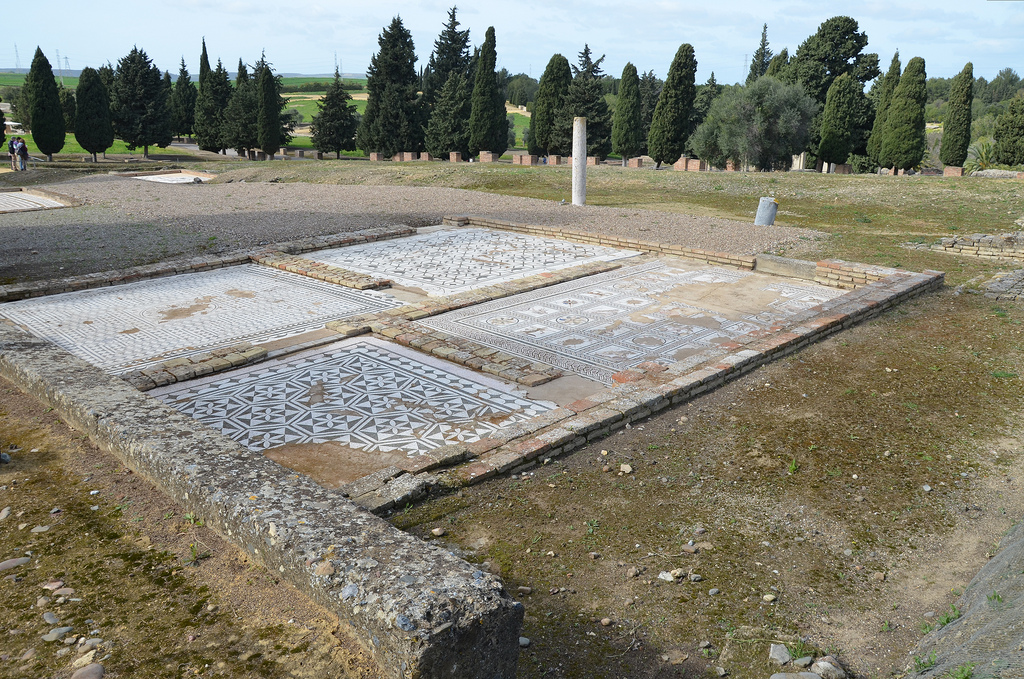
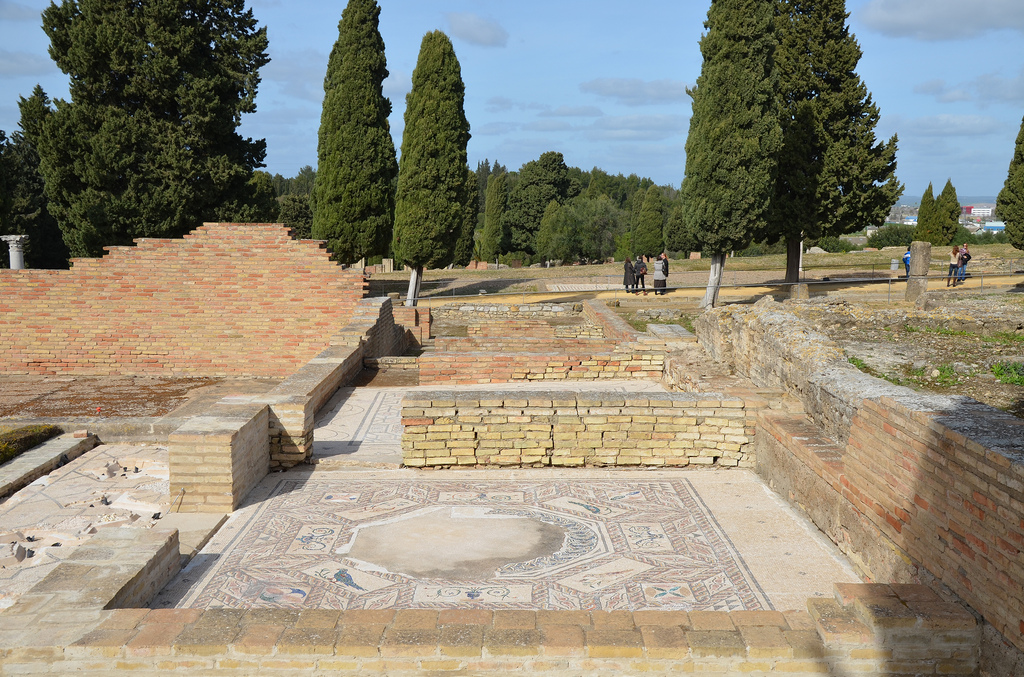
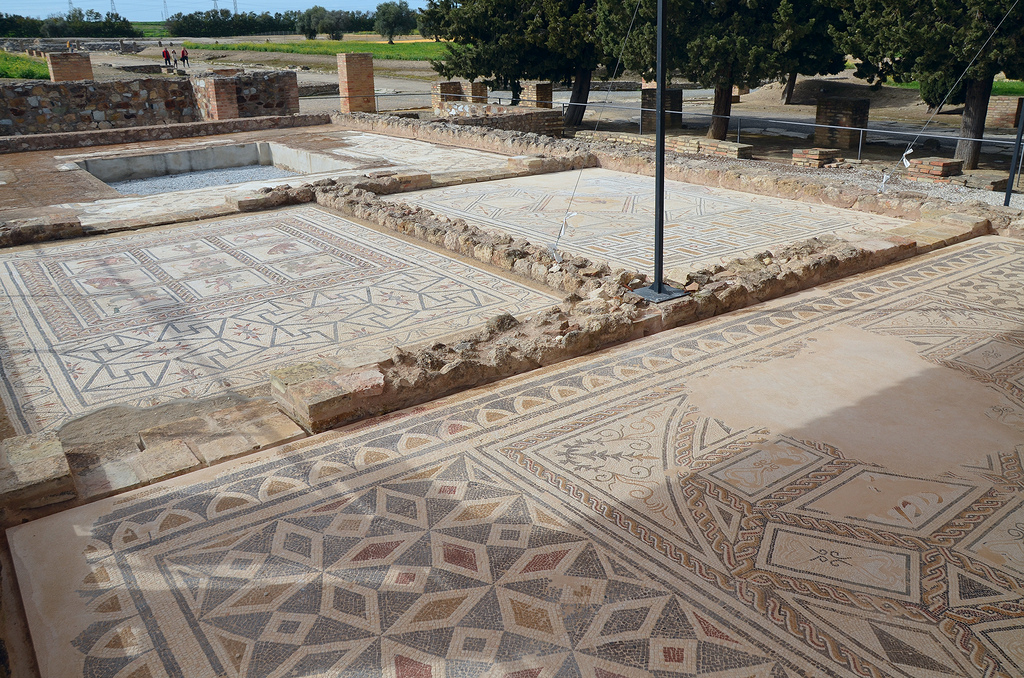
The House of Neptune with Geometric and figurative mosaics. The domus was named after a mosaic with all kinds of aquatic animals.
The House of Neptune with Geometric and figurative mosaics. The domus was named after a mosaic depicting Neptune and aquatic animals.
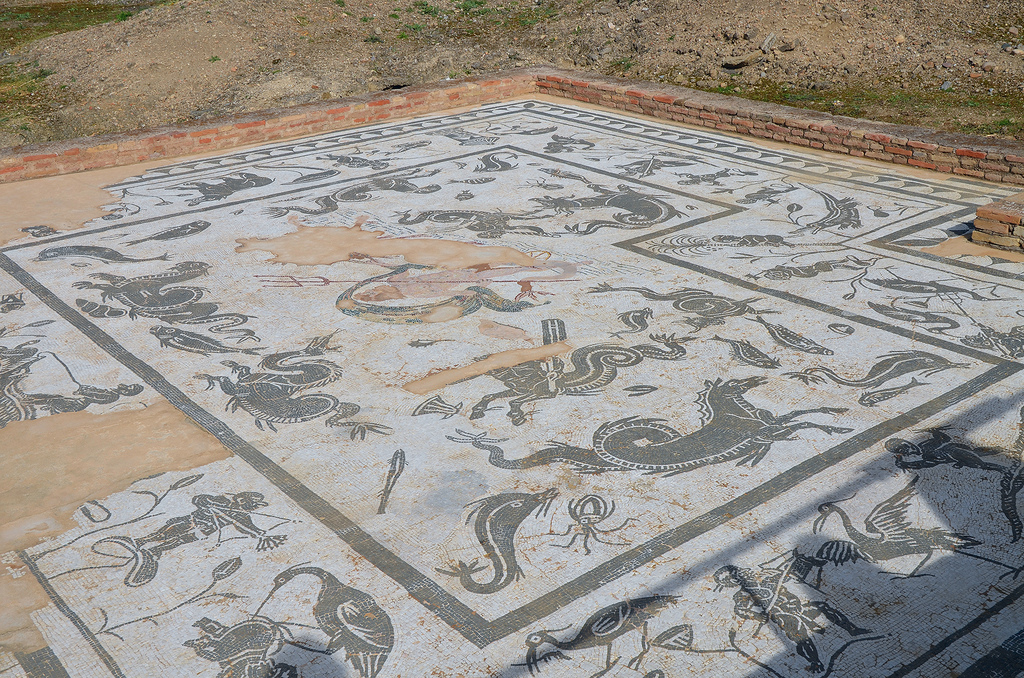
The Neptune Mosaic in the House of Neptune. Neptune, the god of the sea with his trident. The mosaic is surrounded by a wide edge that is decorated with Nilotic scenes where one can see crocodiles, a hippopotamus, a palm tree, and several pygmies fighting ibises.
The Neptune Mosaic in the House of Neptune. Neptune, the god of the sea, with his trident. The mosaic is surrounded by a wide edge that is decorated with Nilotic scenes with crocodiles, a hippopotamus, a palm tree, and several pygmies fighting ibises.
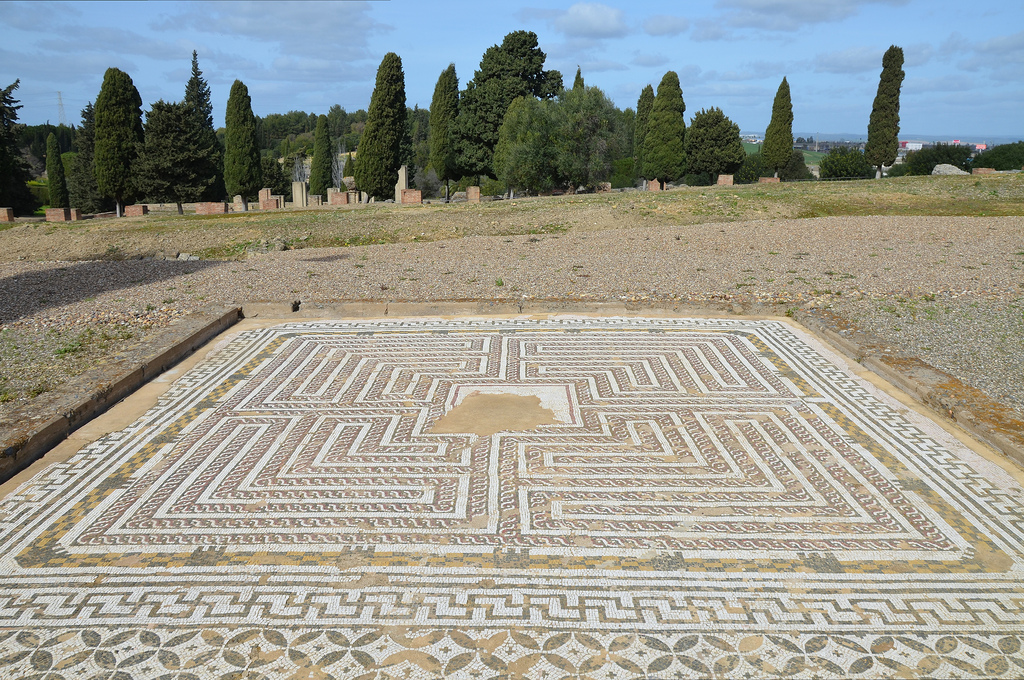
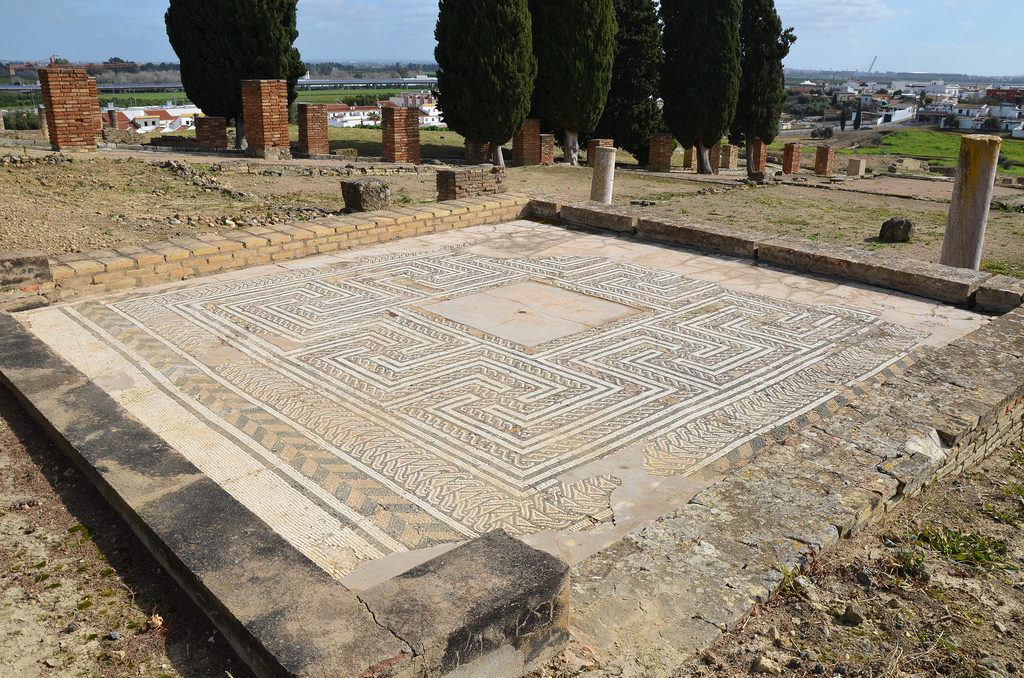
The Labyrinth Mosaic in the House of Neptune.

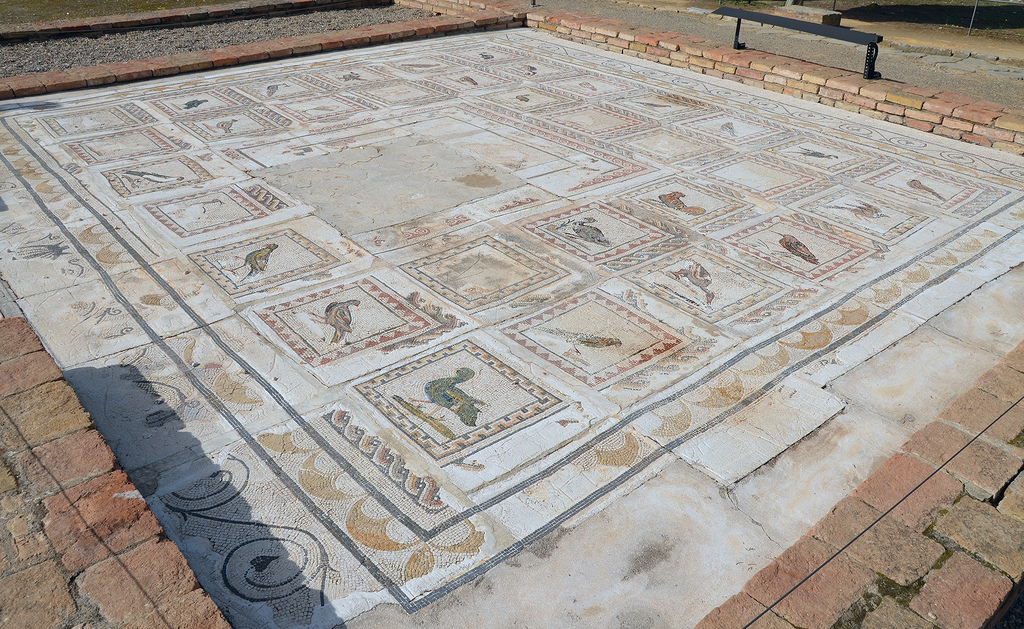
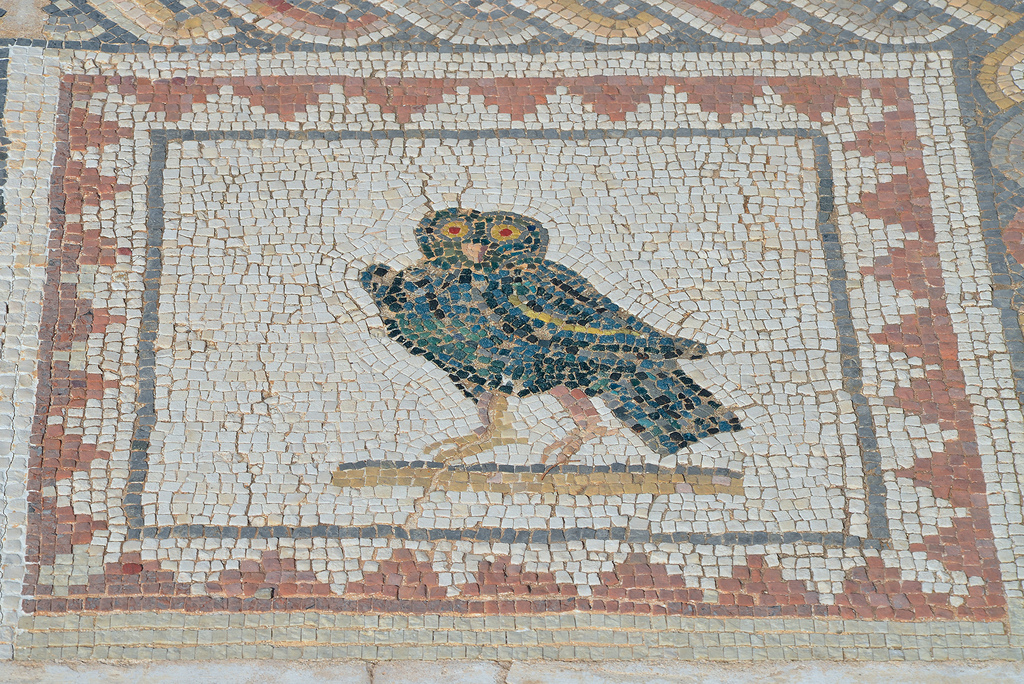
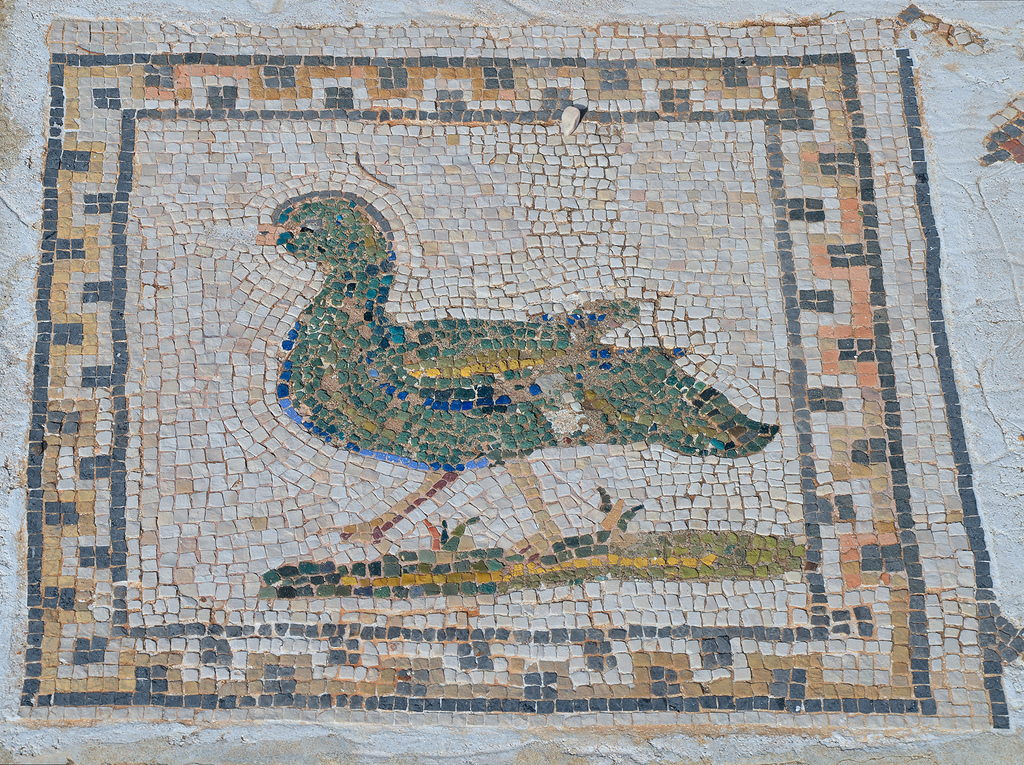
The House of the Birds, a large residence endowed with a good quantity of mosaics of high quality. One of them, the Bird Mosaic, gave its name to the house and consists of a central panel surrounded by 35 small squares representing different species of birds.
The House of the Birds is a large residence endowed with a good quantity of mosaics of high quality. One of them, the Bird Mosaic, gave its name to the house.
The Bird Mosaic consisting of a central panel surrounded by 35 small squares representing different species of birds.
The Bird Mosaic consists of a central panel surrounded by 35 small squares representing different species of birds.
Detail of the Bird Mosaic consisting of a central panel surrounded by 35 small squares representing different species of birds.
Detail of the Bird Mosaic which consists of a central panel surrounded by 35 small squares representing different species of birds.
Detail of the Bird Mosaic consisting of a central panel surrounded by 35 small squares representing different species of birds.
Detail of the Bird Mosaic which consists of a central panel surrounded by 35 small squares representing different species of birds.
The House of the Birds.
Open patio with a fountain in the House of the Birds.
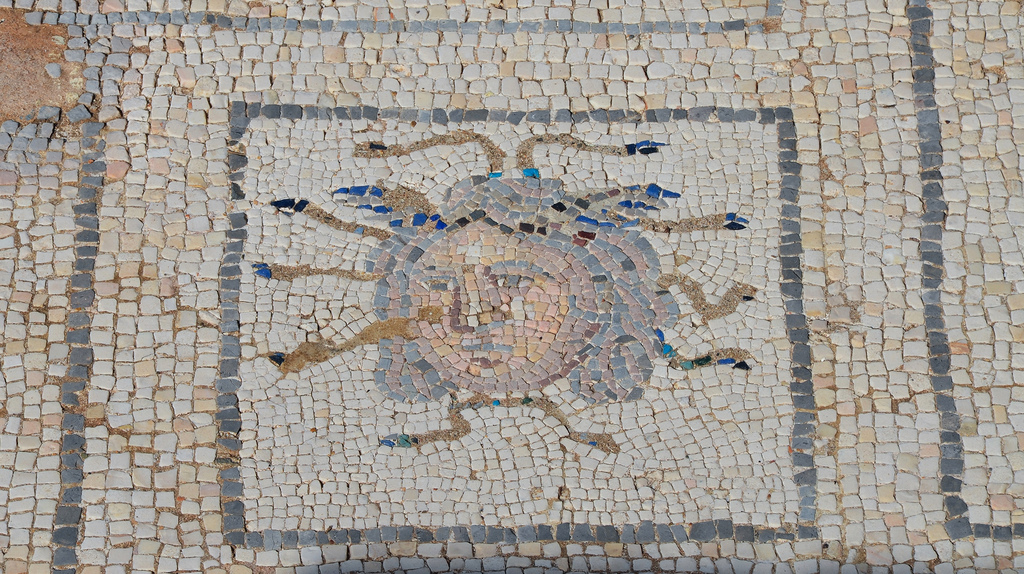
Mosaic detail with head of Medusa in the House of the Birds.
The House of Hylas.
The House of Hylas. The mosaic’s centre panel (emblema) depicts Hercules and his companion and lover, Hylas, which is on display in the Archaeological Museum of Seville.
The House of the Planetarium, so called because of the mosaic that paved one of its rooms.
The House of the Planetarium is so called because of the mosaic that paved one of its rooms.
Mosaic floors in the House of the Planetarium.
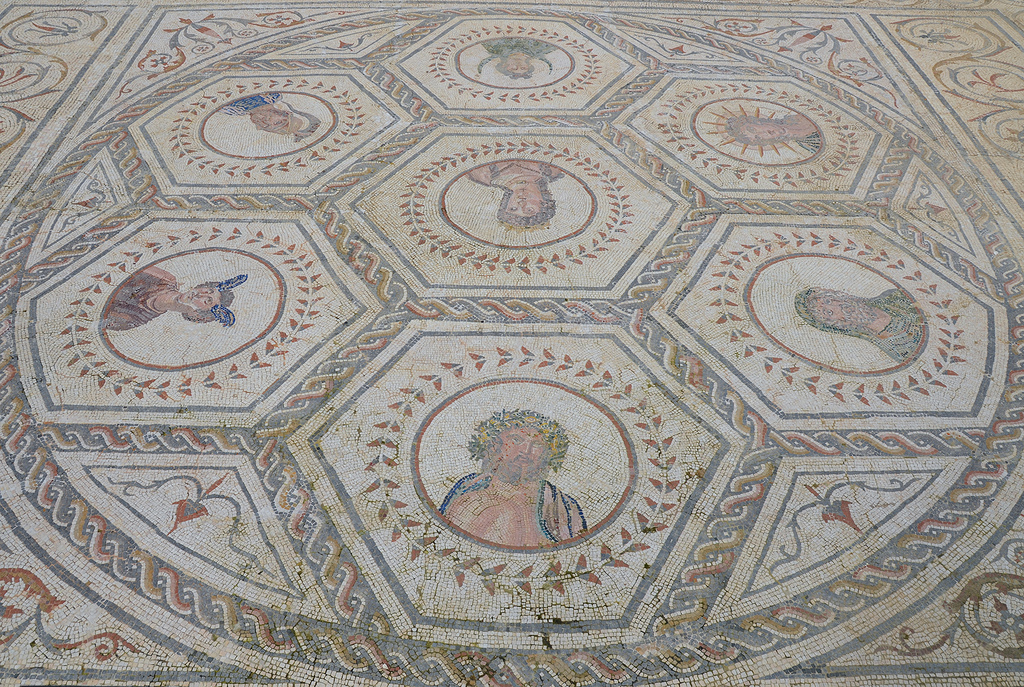
Mosaic with busts of the planetary deities in the House of the Planetarium. who gave their names to the days of the week. In the center is Venus (Friday). Anticlockwise from bottom center are Jupiter (Thursday), Saturn (Saturday), Helios or Sol (Sunday), Luna or Selene (Monday), Mars (Tuesday), and Mercury (Wednesday).
Mosaic with busts of the planetary deities who gave their names to the days of the week in the House of the Planetarium. In the centre is Venus (Friday). Anticlockwise from the bottom centre are Jupiter (Thursday), Saturn (Saturday), Helios or Sol (Sunday), Luna or Selene (Monday), Mars (Tuesday), and Mercury (Wednesday).
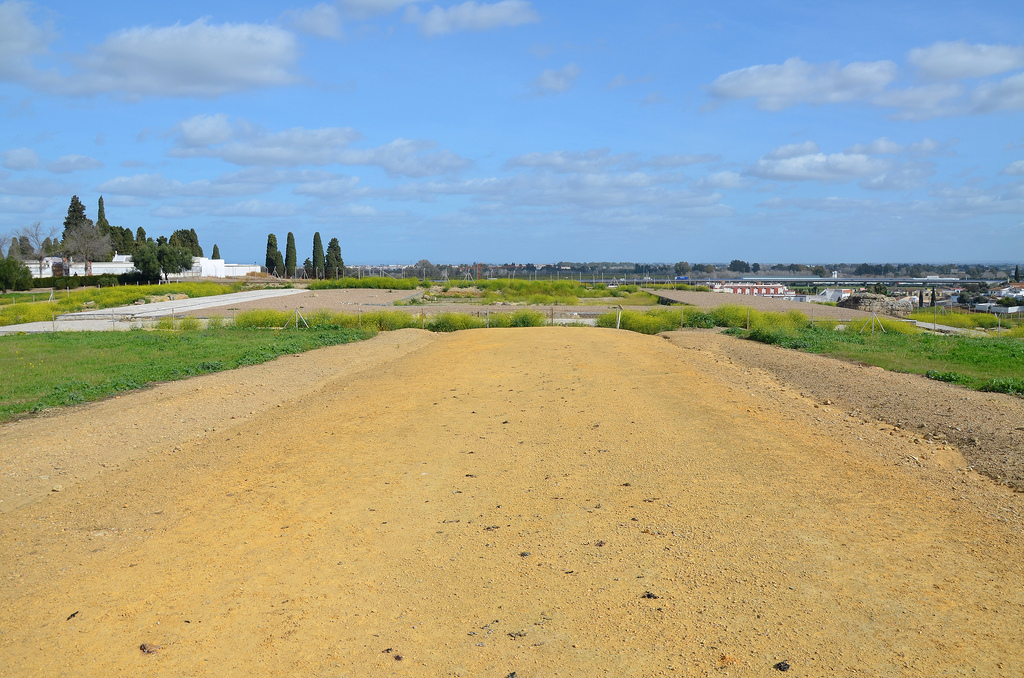
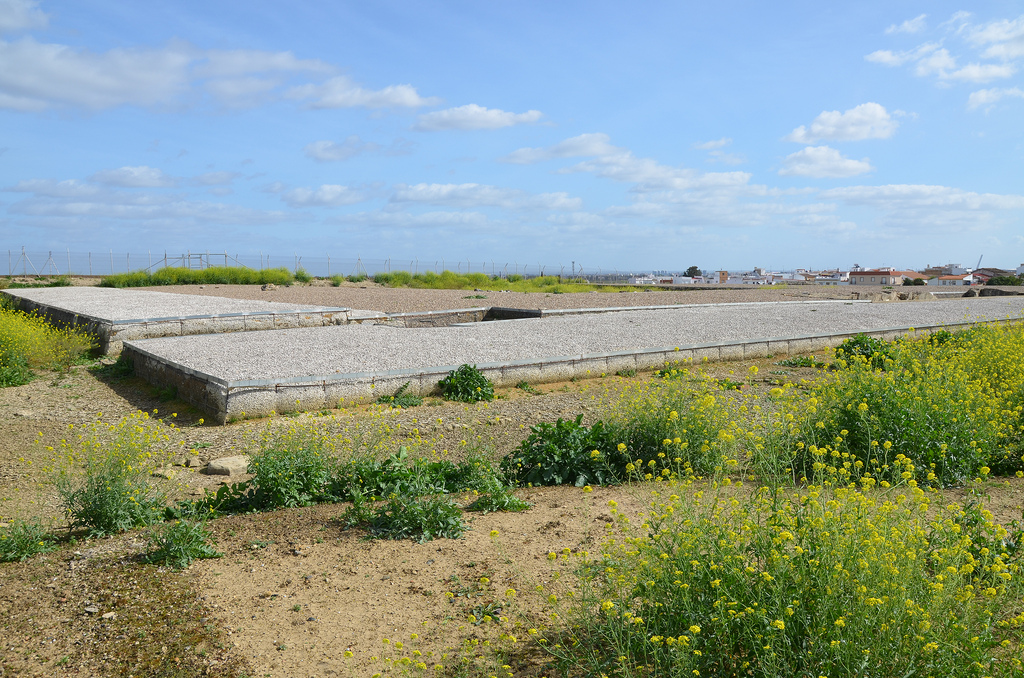
The foundations of the Temple of Trajan (Traianeum). The temple precinct consisted of a quadriporticus around an octastyle Corinthian podium temple and altar.
The foundations of the Temple of Trajan (Traianeum).

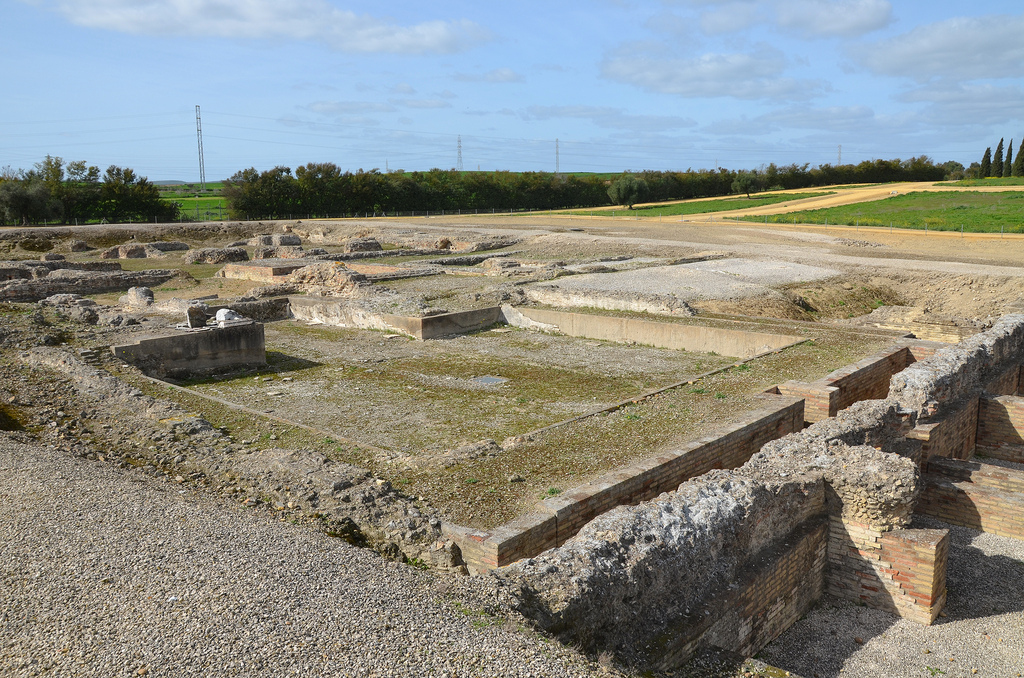
The Hadrianic Baths located in the midwestern part of the Nova Urbs.
The Hadrianic Baths are located in the midwestern part of the Nova Urbs.
The Hadrianic Baths display construction techniques dating to the time of Hadrian and lead pipes that bear stamps of Hadrian.
The Hadrianic Baths display construction techniques dating to the time of Hadrian and lead pipes that bear stamps mentioning Hadrian.
The amphitheater was one of the largest in the Empire, 160 by 197 m. It was built of large blocks of hewn stone and brick faced with marble and could accommodate some 25,000 spectators.
The amphitheatre was one of the largest in the Empire, 160 by 137 m. It was built of large blocks of hewn stone and brick faced with marble and could accommodate some 25,000 spectators.
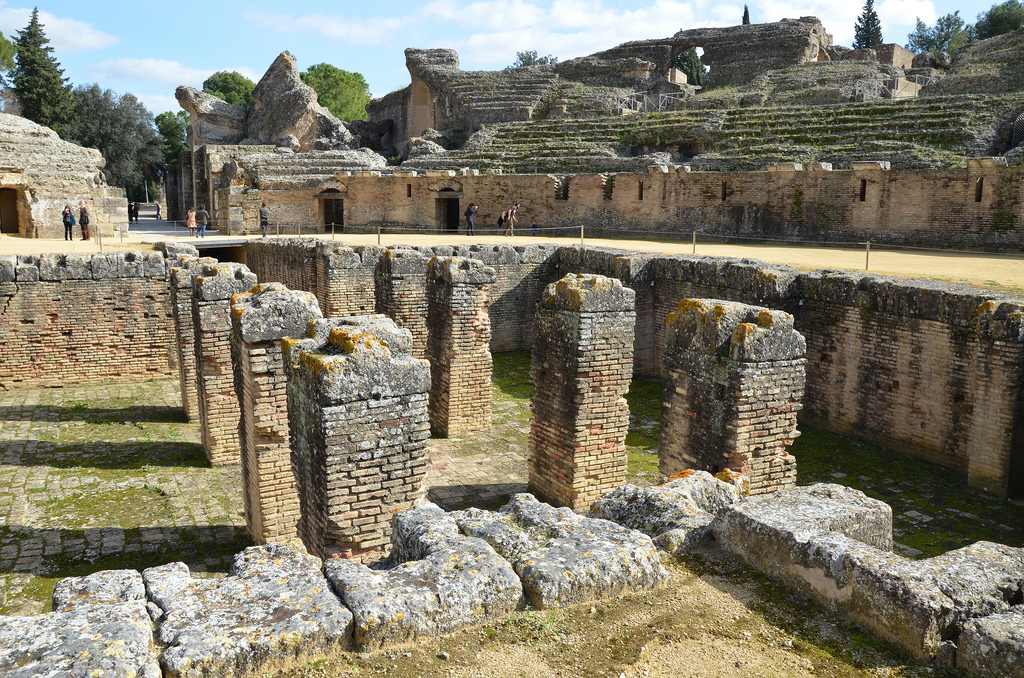
Much of the cavea of the amphitheatre is preserved with its corridors and vomitoria still usable, and the underground service passages of the arena are in perfect condition.
Much of the cavea of the amphitheatre is preserved, with its corridors and vomitoria still usable, and the underground service passages of the arena are in perfect condition.
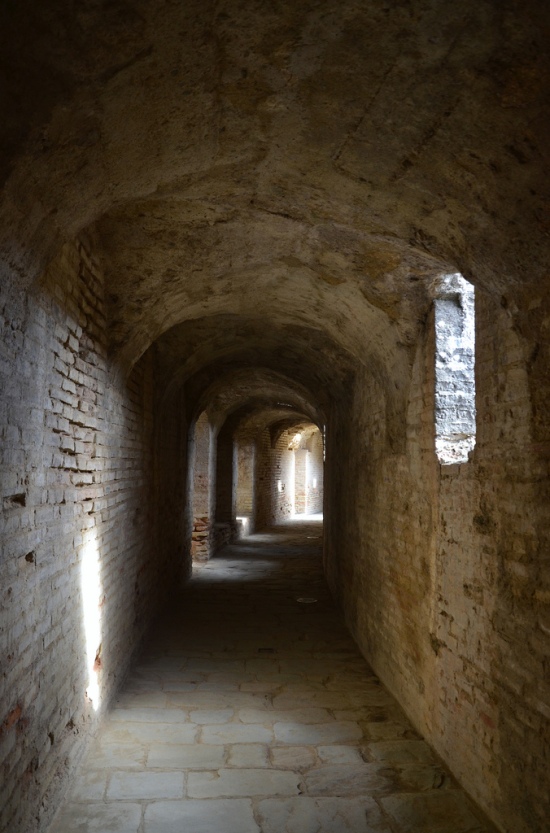
The wellpreserved corridors of the amphitheatre.
The well-preserved corridors of the amphitheatre.
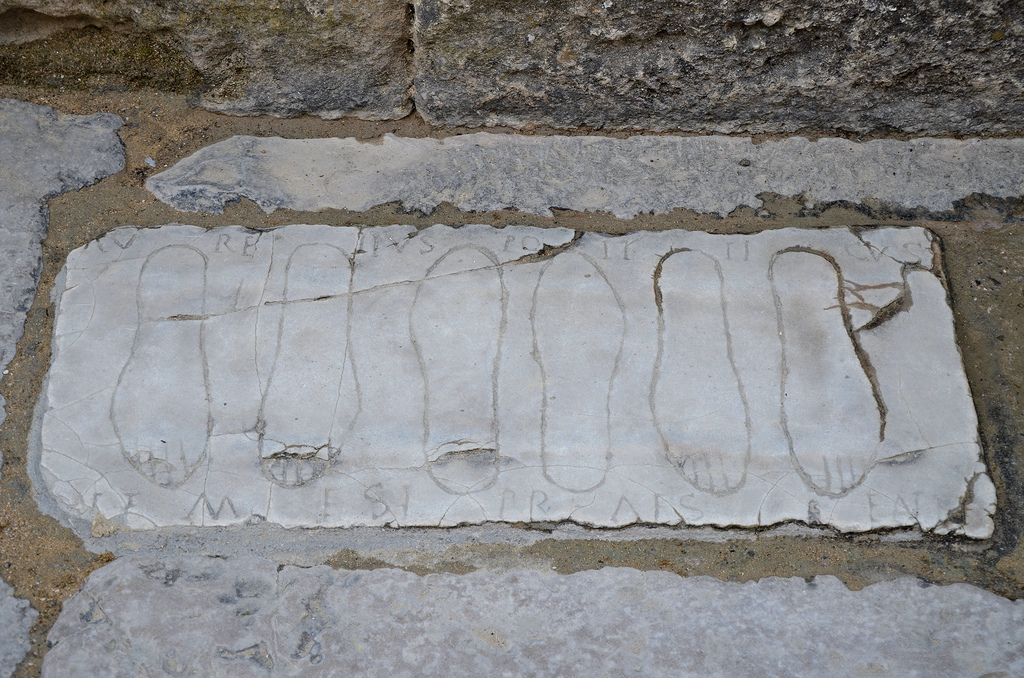
Votive plaque with engraved footprints at the entrance of the Roman amphitheatre.
The theatre was built in the old Roman city, the Vetus Urbs. Construction began during the time of Augustus. It was later modified between 60 and 80 AD. Hadrian enriched it with marble sculptures.

Links:

Porte Mars (Reims)

The Porte Mars is an ancient Roman arch in Reims in the Champagne-Ardenne region, north of France. It dates from the early 3rd century AD and is the largest arch of the Roman world and one of the most impressive Roman monuments north of the Alps. Its name derives from a nearby temple dedicated to the god of war, Mars. At the time of its construction, the Porte Mars would have been one of four monumental arches erected as entrances to the Gallo-Roman settlement of Durocortorum.

Coordinates: 49° 15′ 38.2″ N, 4° 1′ 47.8″ E

The Arch, relatively well preserved, stands 32 metres long and 13 metres high, but its height must have been equally impressive with its attic and the statue group on top. It consists of three arches with eight Corinthian columns surmounted on undecorated plinths, between which are pedimental niches. Above the niches are shield-like medallions –clipei– with high relief heads supported by cupids. The central and largest arch is about 37 feet tall.

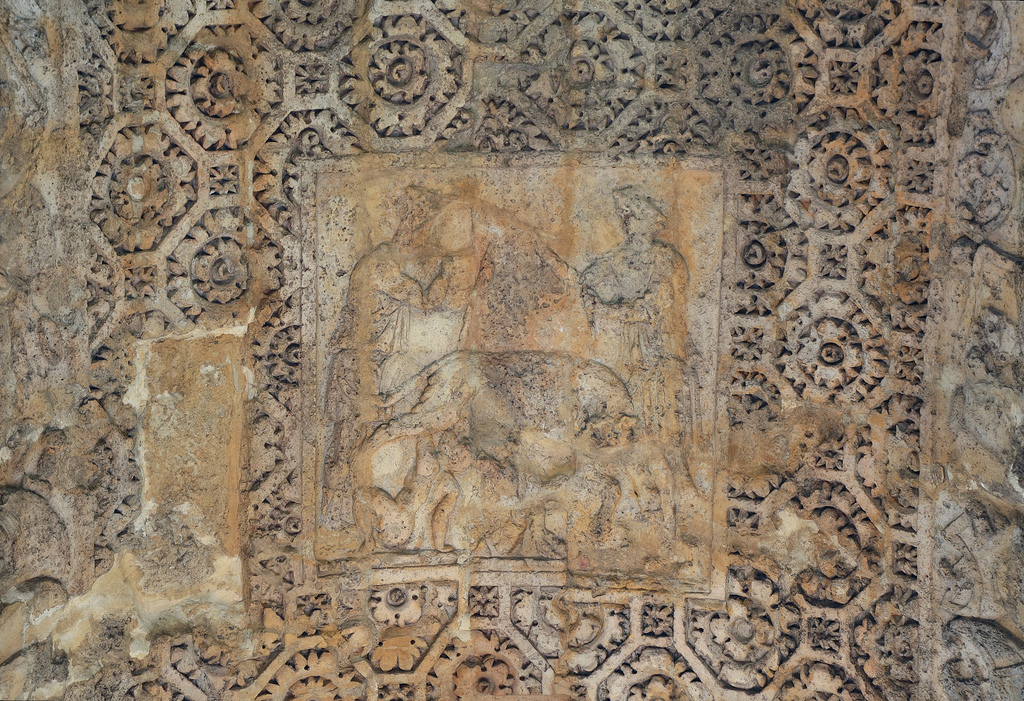
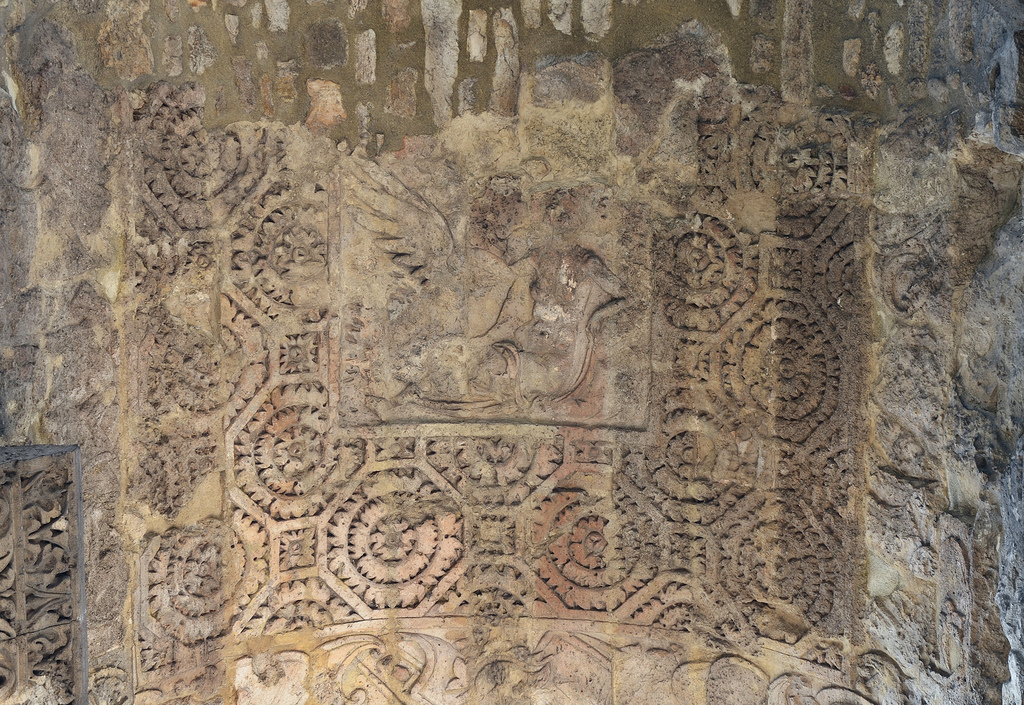
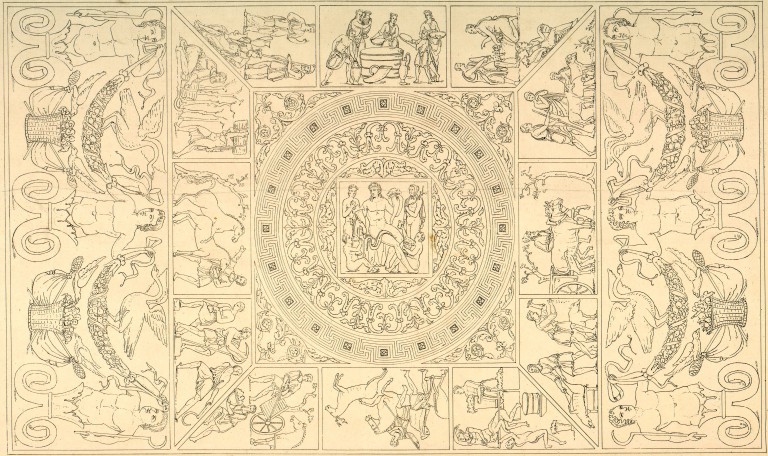
The arch has many highly detailed carvings on its exterior and on the ceilings of its three passageways. The ceilings of the side arcades are adorned with friezes portraying ancient legends and myths such as Remus and Romulus and Leda and the Swan. The ceiling of the central arch is of the most interest. It is decorated with reliefs depicting a harvest calendar and scenes of labourers, harvesters, reapers and millers. The seasons and the months of the year are illustrated by agricultural activities. One of the reliefs offers a rare and interesting illustration of a Gallic harvesting machine called a vallus, a reaping machine described by the historian Pliny the Elder in AD 77 (HN 18.72): “on the vast estates in the provinces of Gaul very large frames fitted with teeth at the edge and carried on two wheels are driven through the corn by a donkey pushing from behind; the ears torn off fall into the frame”.

Before the Roman conquest of northern Gaul, Reims founded circa 80 BC as Durocortōrum  (“round fortress”), served as the capital of the tribe of the Remi, the first Belgic people north of the Matrona river (Marne). In the course of Julius Caesar’s conquest of Gaul (58–51 BC), the Remi allied themselves with Rome, and the city later became one of the leading cities in the province and the residence of the governor of Belgica. At its height, the Gallo-roman city, with its 30 000 inhabitants, was the most populated in the North of the Alps.

Model of Durocortorum in the Musée Saint-Rémi, Reims.

Reims is most famous for its cathedral, Notre-Dame de Reims, formerly the place of coronation of the kings of France. The Frankish king Clovis was baptised by Remi, bishop of Reims, on Christmas Day AD 498 in a baptistery today situated where the Notre-Dame Cathedral of Reims stands. Thanks to Clovis’ baptism, Reims became the seat of the coronation of the kings of France.

The Porte Mars was included in the fortification wall of the late Roman Empire and, in 1228, in the wall of the castle of the Archbishops and served as a city gate until 1544. In 1854 the buildings around the arch were removed, bringing the arch into full view. Most of the finds from Durocortorum are in the Musée Saint-Rémi.

Dégagement de la porte de Mars, vers 1845-1850. Gravure d'Adrien Dauzats, éditée par Lemercier (Paris). L'arc est encore pris dans le rempart médiéval (BM Reims 22-060).
Dégagement de la porte de Mars, vers 1845-1850.
Gravure d’Adrien Dauzats, éditée par Lemercier (Paris).
L’arc est encore pris dans le rempart médiéval (BM Reims 22-060).

PORTFOLIO
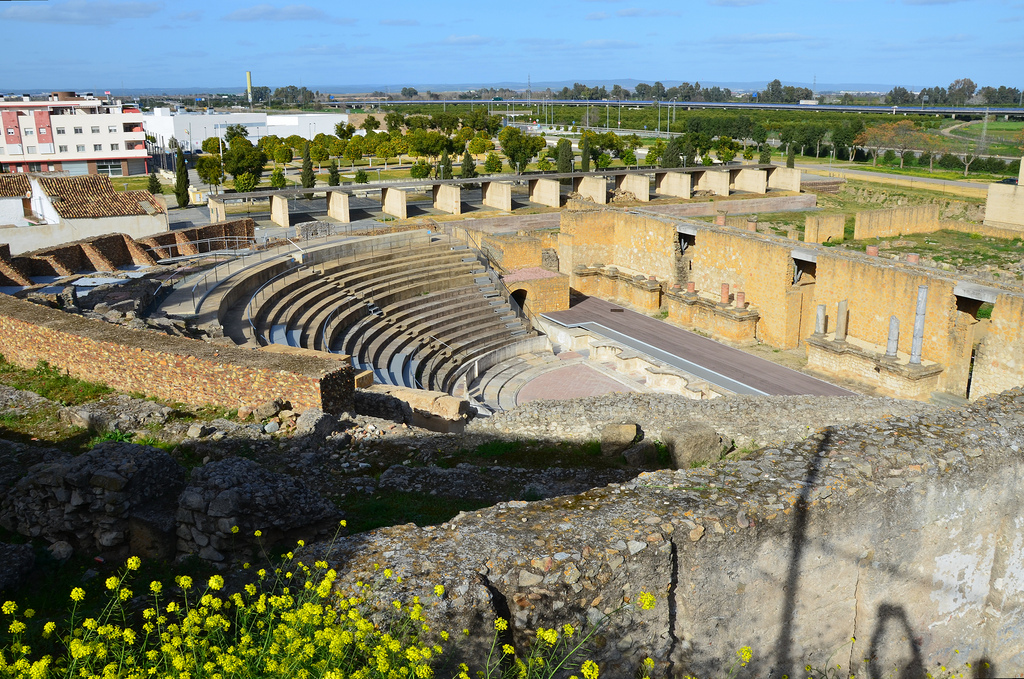
The North side of the Porte Mars.
The western end pier of the north side of the arch.
The South side of the Porte Mars.
The eastern end pier of the north side of the arch. It is decorated with a pedimental niche. clipeus (shield-like disk) with high-relief head supported by cupids.
The eastern end pier of the north side of the arch.
It is decorated with a pedimental niche, a clipeus (shield-like disk) with a high-relief head supported by cupids. Above are two crossed caducei (the staffs carried by Mercury) and two further cupids drawing back curtains.
Ceiling of the middle arch of the Porte Mars depicting Remus and Romulus in the presence of the shepherd Faustulus and his wife Acca Laurenti.
The ceiling of the east arcade depicting Remus and Romulus in the presence of the shepherd Faustulus and his wife Acca Laurenti, who raised the children.
Ceiling of the west arcade depicting Leda and the Swan.
The ceiling of the west arcade depicting Leda and the Swan.
The ceiling of the central arch is decorated with reliefs depicting a harvest calendar and showing scenes of labourers, harvesters, reapers and millers. The seasons and the months of the year are illustrated with agricultural activities.
Drawing (circa 1850): restitution of the motifs of the central vault. At the center perhaps Bacchus; Around: calendar of months and seasons (BM Reims).
Drawing (circa 1850): restitution of the motifs of the central vault. At the centre, perhaps Bacchus; Around: calendar of months and seasons (BM Reims).
The North side of the Porte Mars.

Links: