Byllis is a vast archaeological site overlooking the River Vjosa in southern Albania in the Fier County. With its fascinating ruins amid stunning views over the Vjosa valley, the ancient city of Byllis, mentioned by Caesar and Cicero, is one of the numerous hidden treasures of Albania. Founded by the Illyrians in the middle of the 4th century BC, Byllis was the largest city of Southern Illyria and the capital of the League (koinon) of the Bylliones. The remains include an impressive theatre, several Byzantine basilicas paved with outstanding mosaics, Illyrian private houses and Roman public buildings.
The Illyrian settlement of Byllis occupied a dominant position on the summit of a hill 520 meters above sea level, over the road from Apollonia to Epirus and into Macedonia. It became the headquarters of the league of the Bylliones, a Hellenized Illyrian tribe first mentioned around 380 BC by the Greek geographer Pseudo-Scylax. The Bylliones had a sophisticated system of
government, minted their own bronze coins (from around 270 BC to 167 BC when the Romans dissolved the koinon) and controlled an area of about 20km². They fortified their capital with a circuit wall around 2 km long, 3.50m thick and 8m to 9m high. Byllis adopted a fully Hellenised regular street plan and buildings, including a theatre, stoas, stadium, gymnasium and temples.
The state of the Bylliones flourished until 229 BC when the Romans landed in Apollonia, and their territory became a field of battle between the Roman and Macedonian armies for the control of Apollonia. In 49-48 BC, during Caesar’s Civil War, Byllis surrendered to Julius Caesar and became a supply base for his army. The city was later turned into a Roman colony, as shown by several Latin inscriptions that referred to the city as Colonia Iulia Augusta, which became part of the province of Epirus Nova. The city walls were rebuilt, the theatre and stoas were reconstructed, and other monuments were erected.
Byllis was attacked and sacked by the Visigoths towards the end of the 4th century AD, but the city was reconstructed under Theodosius II (408-450 AD). The city suffered another attacked by the Sclaveni (a South Slavic tribe) and was again rebuilt under Emperor Justinian I (483-565). During Justinian’s reign, Byllis became an important religious centre and bishopric seat. Several large Palaeo-Christian basilicas were built, all featuring lavishly decorated mosaics. Sadly for the visitors, all the mosaics are covered with protective layers of sand and are not visible. In 586 AD, Byllis was sacked by foreign invaders and was abandoned. The seat of the bishopric was moved to Ballsh, preserving the name of the old city.
PORTFOLIO
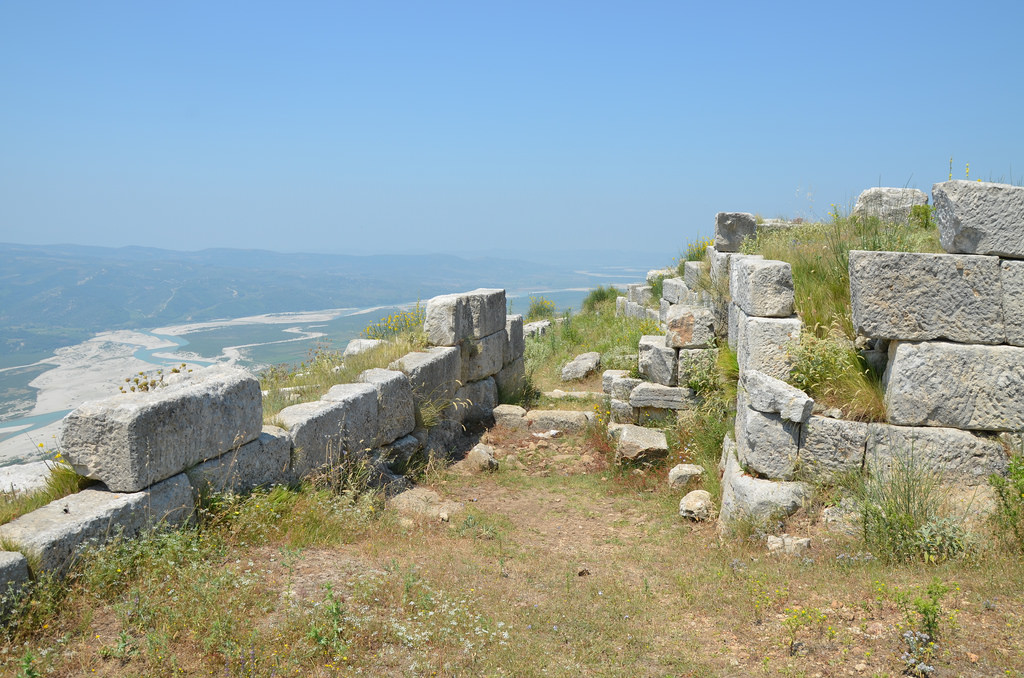
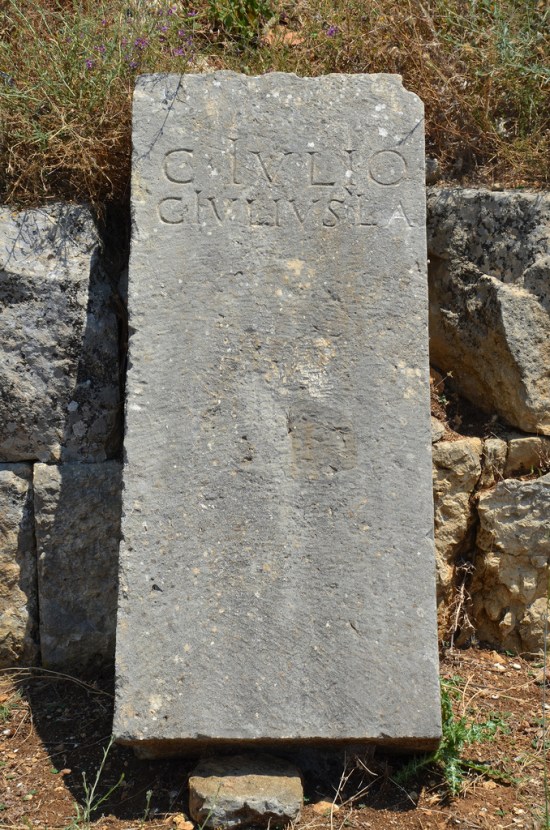
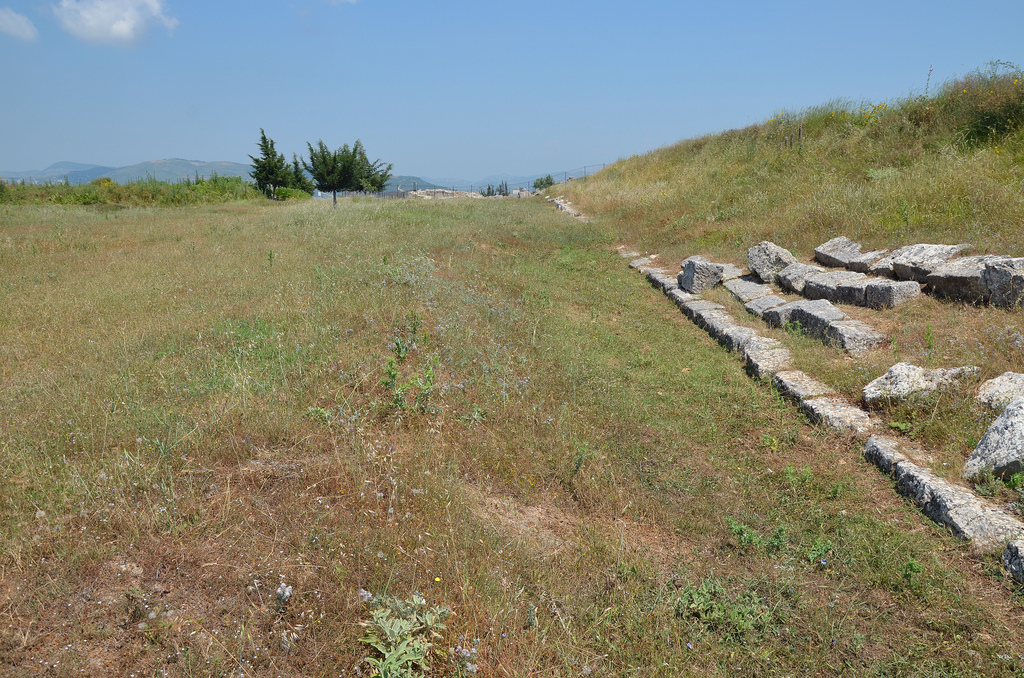
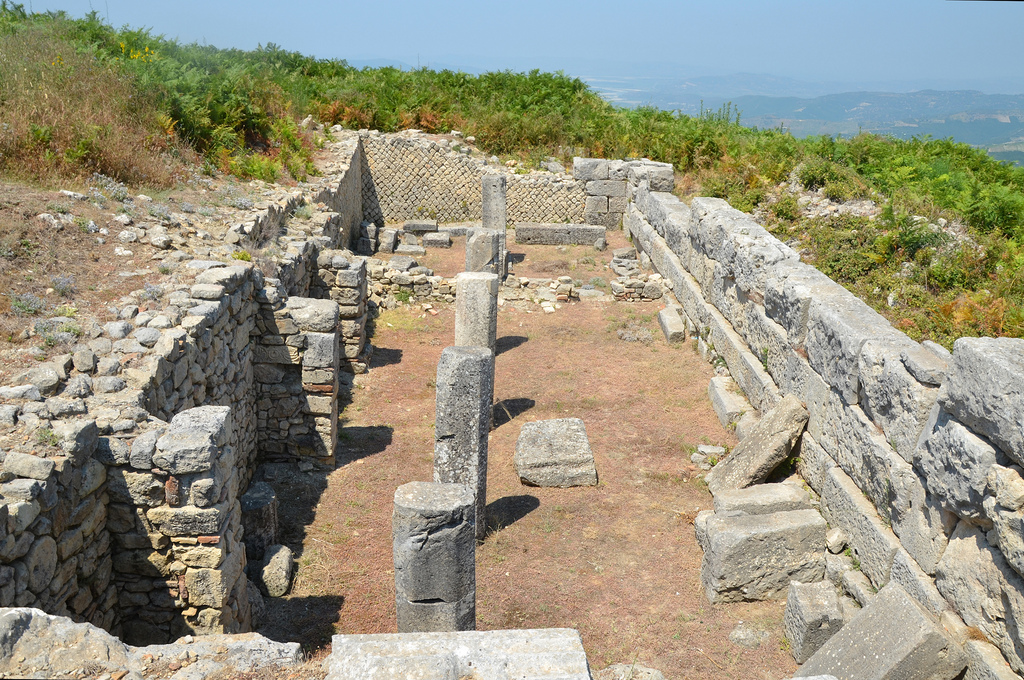
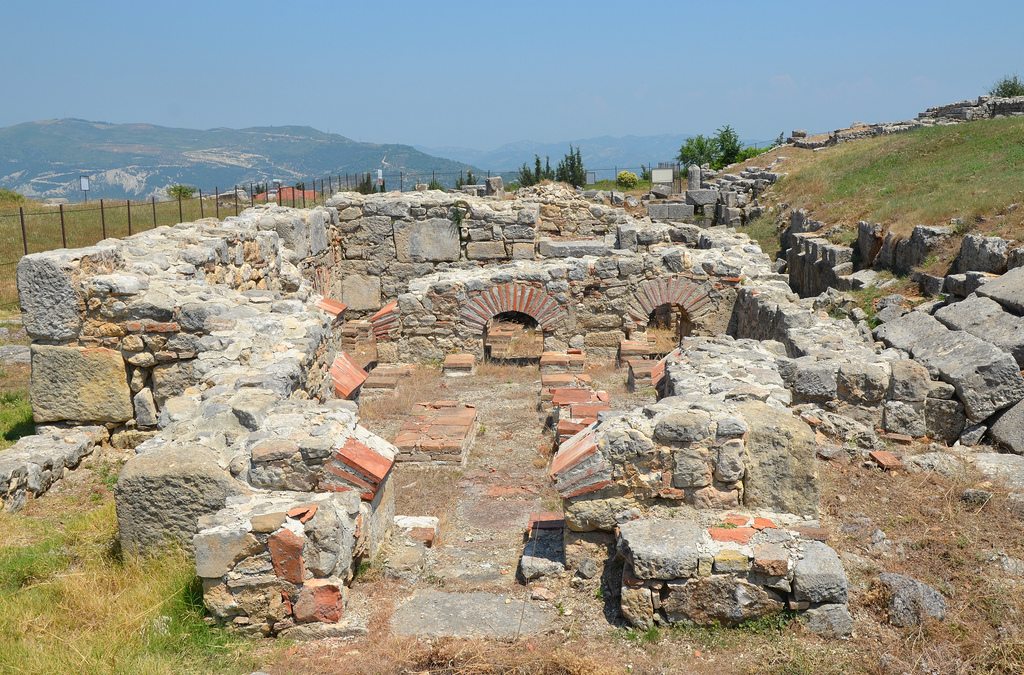
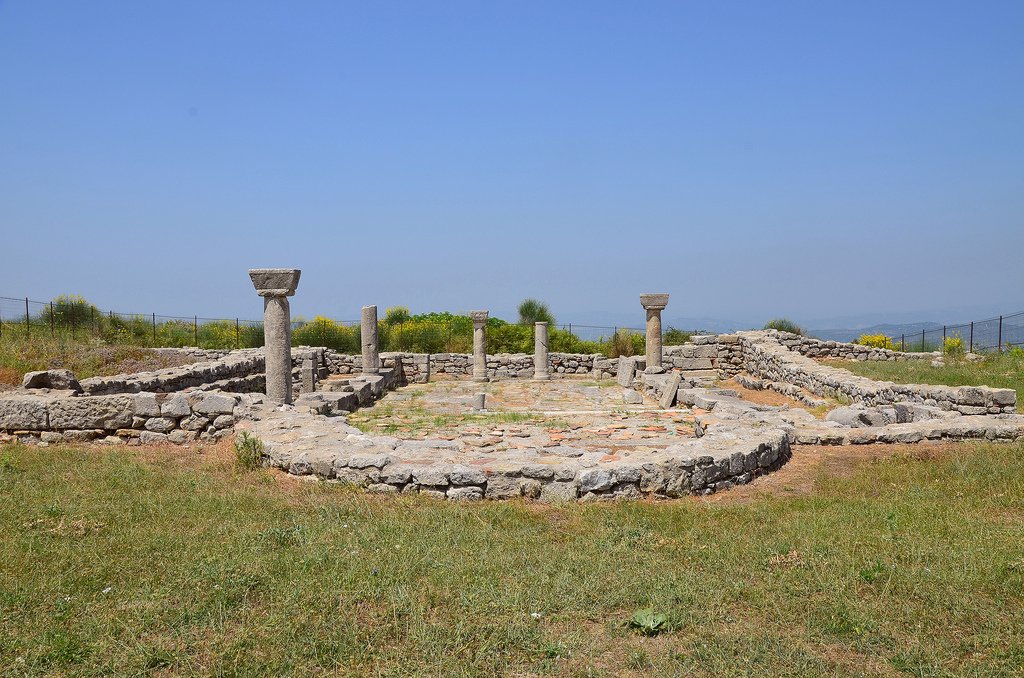
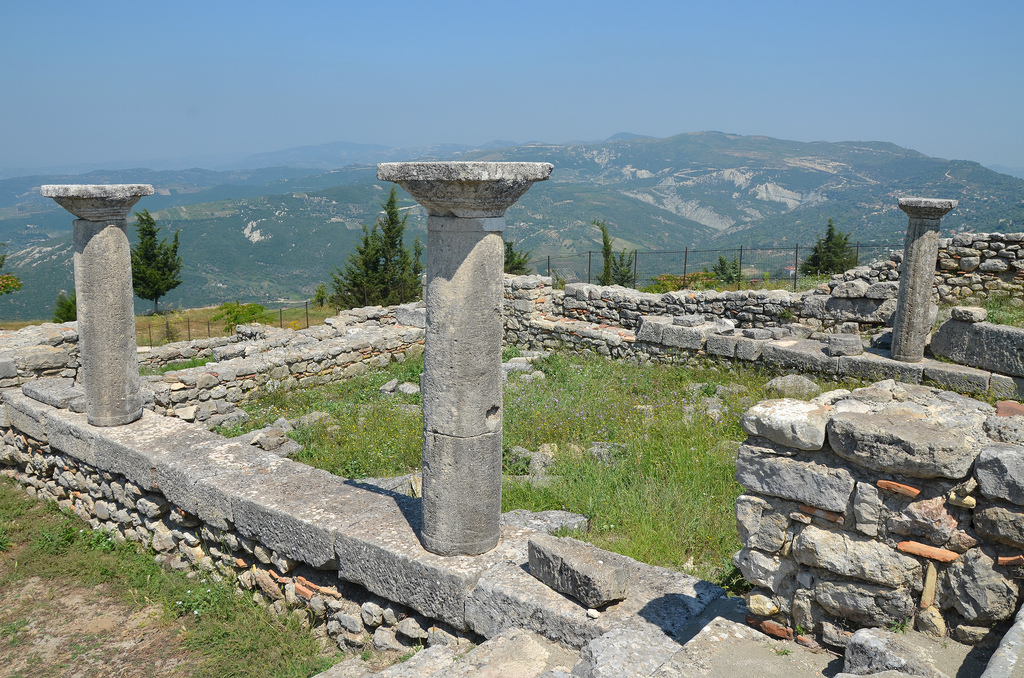
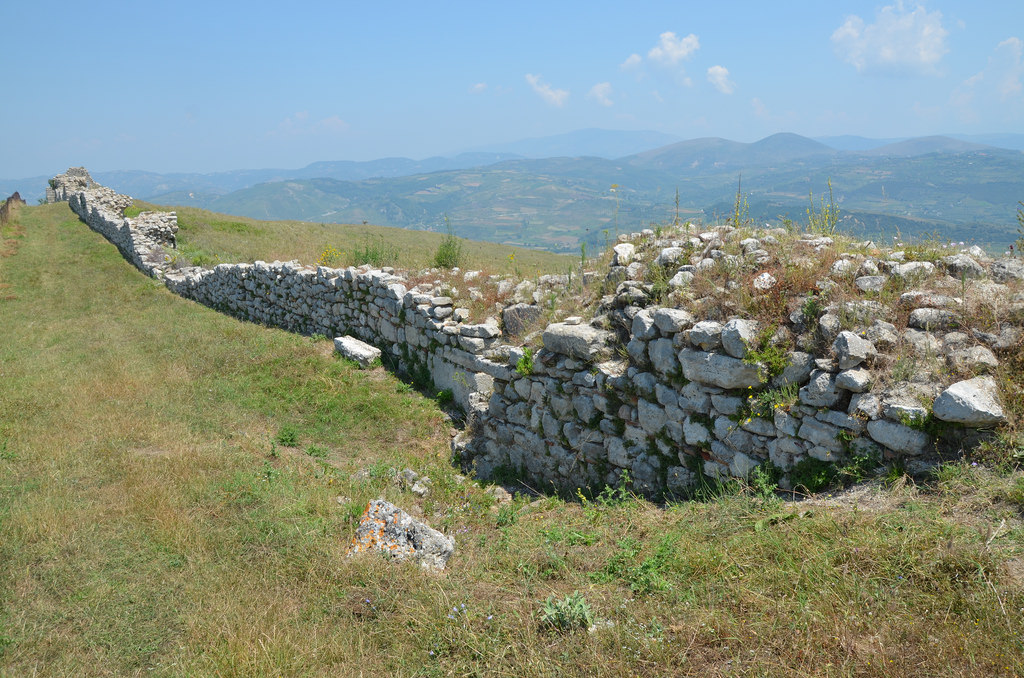
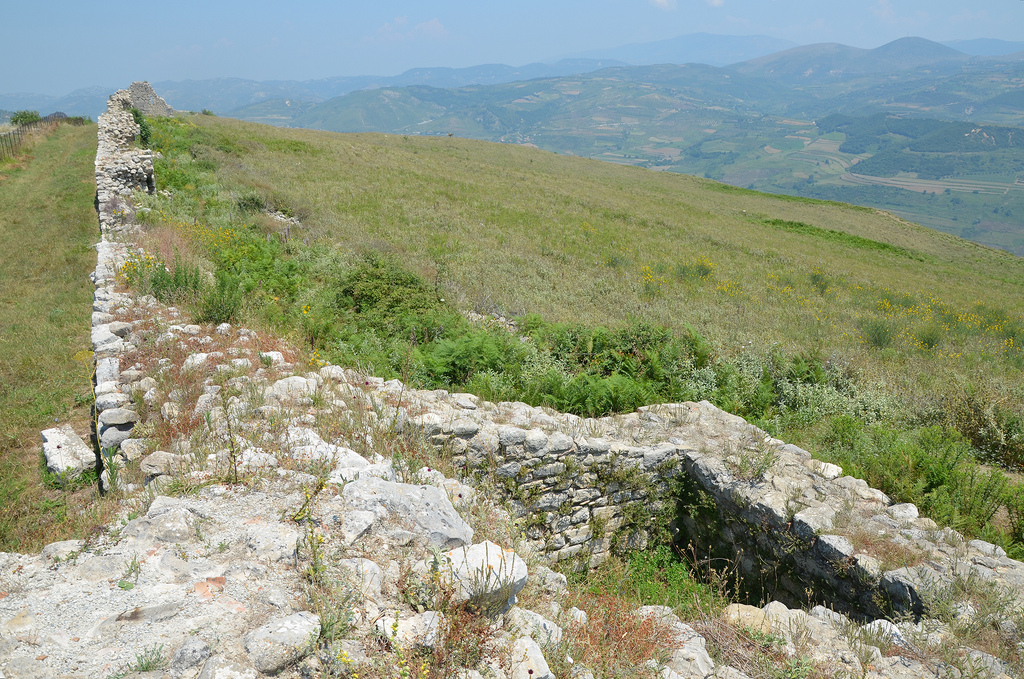
The Gate of the Agora looks towards the Vjosa valley. The city walls were built in the 1st half of the 4th century BC and were reconstructed by the Roman colonists.Latin inscription dedicated to the emperor Augustus. It was found in front of the entrance gate to the Agora. “Augustus, son of the divine Caesar, permitted it (rebuilding the walls).”General view of the Agora built in the middle of the 3rd century BC according to a single plan that harmonized the theatre, stoas, stadium and other public buildings. The Agora of the city covered an area of 4 ha.The Theatre was built against a natural slope and dates from the middle of the 3rd century BC. With its 40 steps of seats, it had a capacity of 7,500 spectators.The cavea of the theatre with decorated seats.The remains of the stage building of the theatre (scaenae frons) with architectural parts in the Doric order.Latin inscription dedicated to Caius Julius, a liberated slave of Augustus, about 30 BC.View towards the Vjosa valley.The 190m long stadium with only one ring of nineteen steps. It was built in the 3rd century BC and was accessible to the many citizens who gathered in the Agora during political activities, festivals, theatrical shows and sporting events.The ruins of the Prytaneion measure 20,10 x 5,80 m. It was the seat of the Prytaneis (executive).The Arsenal, a building for weapons standing 3m below the adjacent Prytaneion. It was built in the 3rd century BC and rebuilt using the opus reticulatum technique in the 1st century AD.Inscription dedicated to Antoninus Pius in 140 AD.The underground cistern under the stadium with a depth of 6m and a capacity of about 1200 m3. Built in the 3rd century BC, it collected water from the roof of the Great Stoa. It was in use until the Byzantine period.Remains of an Altar located in the middle of the Agora. It is believed that it was the altar of the emperor Augustus when the city had the status of Roman Colonia, 1st century BC.The Baths of Justinian I. Its structure included the apodyterium (dressing room), the frigidarium (cold room), the tepidarium (warm room), the caldarium (hot room) and the sudatio (sweat room).Basilica C, a church of medium size built in 525-550 AD and paved with mosaics.Basilica C. It had three naves, a narthex covered by a gallery, preceded by a portico and several annexes.The Cathedral or Basilica B consists of a church, a baptistery and an episcopal palace. It was built at the end of the 4th century or the beginning of the 5th century AD.The Cathedral (Basilica B) was the city’s largest monument in Late Antiquity. The floor of the exonarthex, the naves, the sanctuary and the northern wing were paved with mosaics, making this the largest surface covered with mosaics so far discovered in Albania.The Cathedral (Basilica B) was destroyed during the Slavic invasions around 547-551 AD.The Byzantine City Walls were built in opus incertum by Victorinus after the destruction of the city by the Slavs in 547-551 AD.The Byzantine City Walls were equipped with towers at regular intervals. This wall reduced the fortified city from 30 to 11ha.View towards the Vjosa valley.
Centrale Montemartini is an ancient sculpture museum in Rome, located on the Via Ostiense, just outside the Aurelian walls. Set in a former power plant, Centrale Montemartini displays Greek and Roman statues, busts and friezes. It is an annexe of the Capitoline Museums.
Centrale Montemartini was Rome’s first electrical power station when it opened in 1912 and was later converted into a museum of ancient art in the late 1990s. Like the Tate Modern in London, Centrale Montemartini places art in an industrial setting but, unlike the Tate, the imposing machinery has not been moved out. The engines’ grey mass provides a stark contrast to the white marble and offers a unique backdrop for classical art.
The entrance to Centrale Montermartini.
Centrale Montemartini has a collection of about four hundred sculptures, reliefs and mosaics dating from the Republican to the late Imperial era. The works of art, exhibited in chronological order, are part of an outstanding collection of classical sculptures from the excavations carried out in Rome between the end of the 19th century and the beginning of the 20th. The masterpieces were moved here during the reorganisation of the Capitoline Museums in 1997 to create space in the Palazzo dei Conservatori and the Museo Nuovo. The Montemartini power plant’s outstanding space made it possible to display monumental sculptures and reconstructions of architectural structures, such as the pediment of the Temple of Apollo Sosianus and the huge mosaic of hunting scenes from Santa Bibiana.
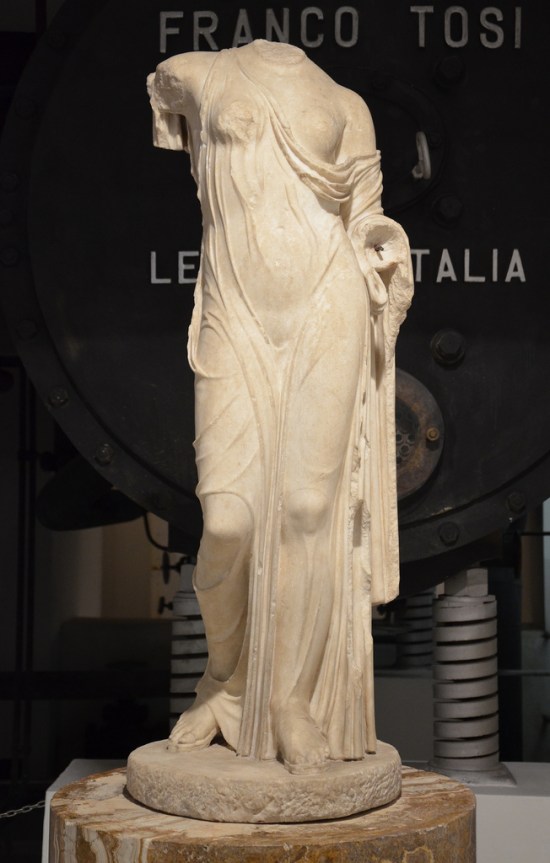
Statue of Aphrodite, replica of the Aphrodite carved by Kallimachos at the end of the 5th century BC, from the Esquiline Hill.
Centrale Montemartini is one of Rome’s most striking exhibition spaces and offers a unique museum experience.
selected masterpieces
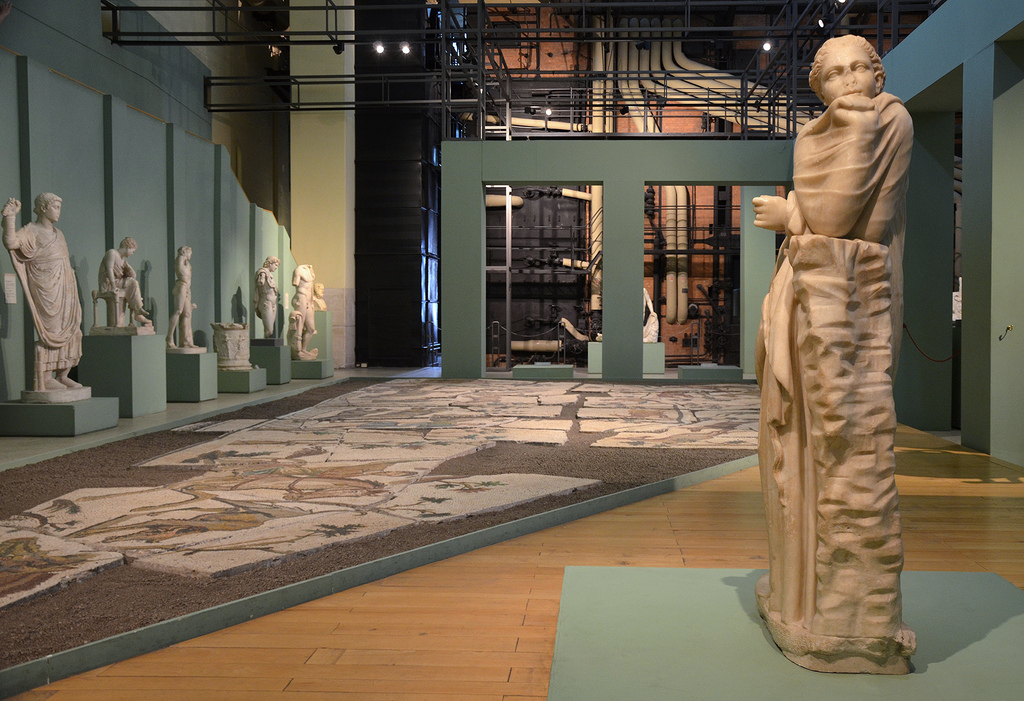
The Column Room: displays a rich collection from the Republican era. Exhibited in this room are architectural decorations, a group of sculptures in Peperino tufa (a grey volcanic stone from the Albani Hills), beautiful mosaics with seascape and a series of portraits dating to the 1st century BC.
Architectural decorations from the Republican era and sculptures in Peperino tufa.Statue of Orpheus charming the animals in Peperino marble, 2nd century BC, from the Via Tiburtina.
Mosaic with maritime scenes, from the Via Panisperna in Rome, late 2nd – early Ist century BC, it once decorated the pool of a Roman bath.
Mosaic with maritime scenes, from the Via Panisperna in Rome, late 2nd – early Ist century BC, it once decorated the pool of a Roman bath.
Funerary relief with six figures, from the ramparts of the Porta Flaminia, 1st century BC.
Portrait of Marcus Vispanius Agrippa.
Portrait of Augustus, 27-20 BC.
Portrait of a political personality, this portrait can be indenfied as Mark Antony.
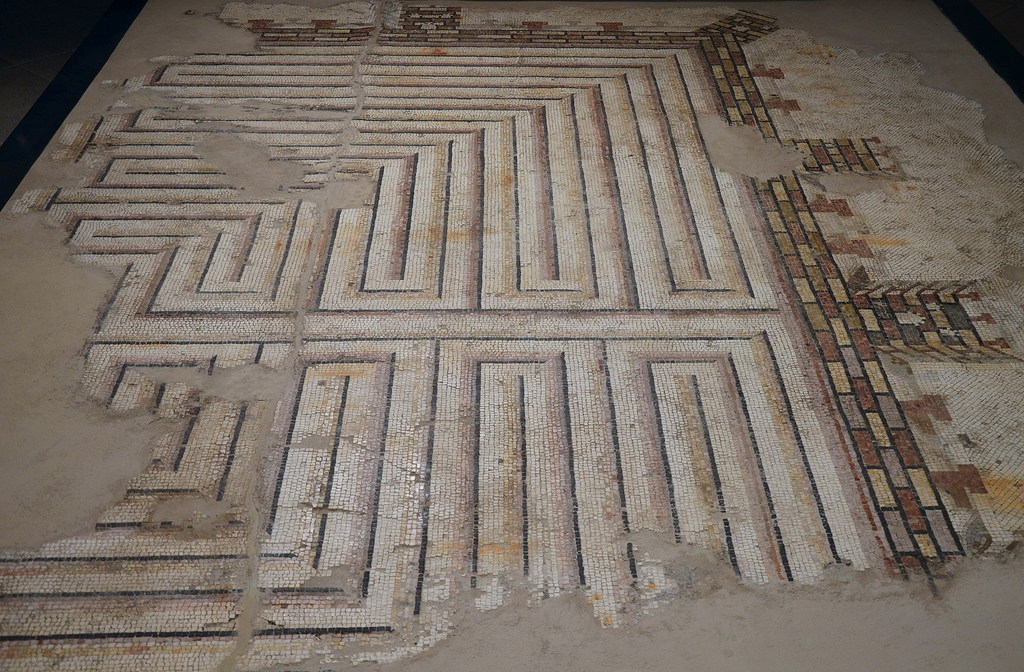
Mosaic depicting a labyrinth surrounded by city walls with towers, 100-80 BC, from Piazza San Giovanni in Laterano, excavation of a Republican Domus.
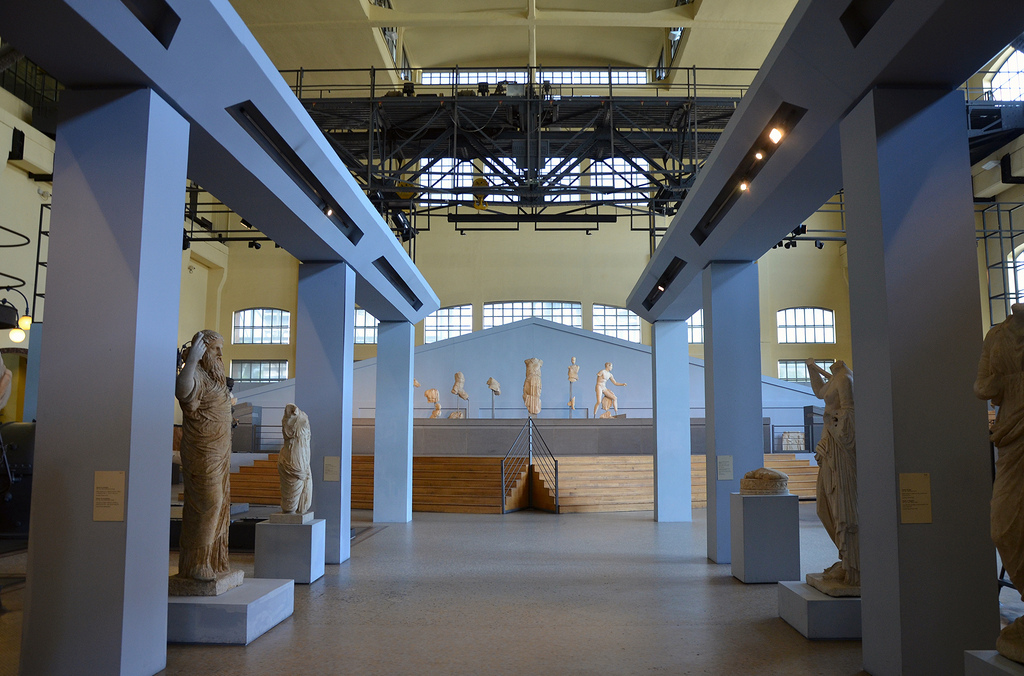
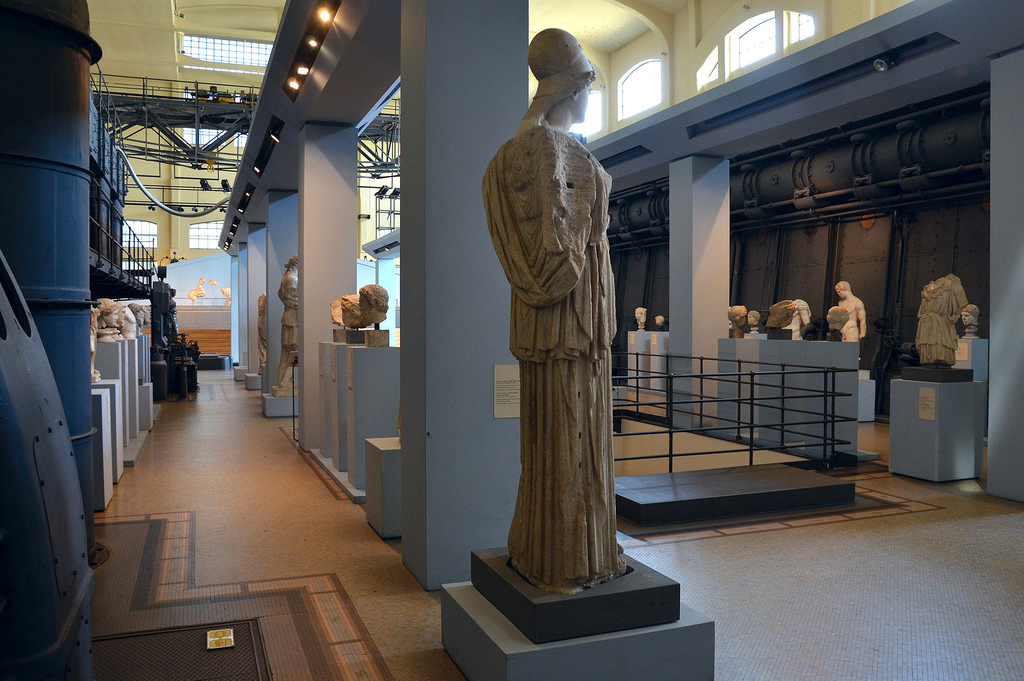
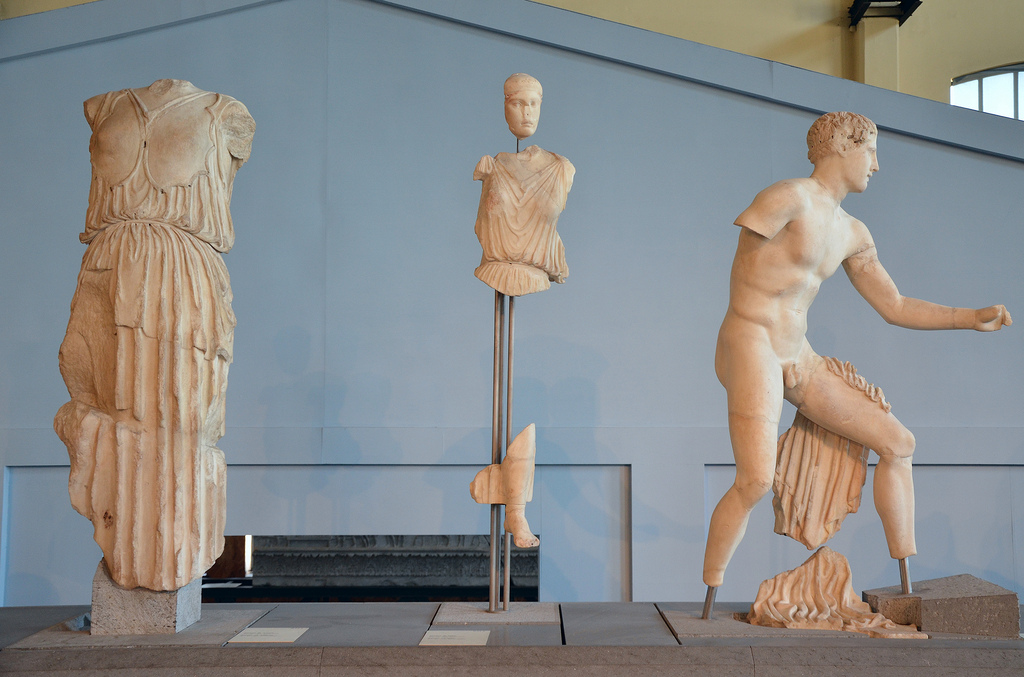
The Engine Room: the largest and most impressive room displaying a series of exquisite marble statues and rare Greek originals, arranged around two huge diesel engines and a steam turbine. Occupying the other end of the room is a reconstruction of the pediment of the Temple of Apollo Sosiano, a temple dedicated to Apollo in the Campus Martius.
The Engine Room.
Statue of the so-called Athena of Castro Pretorio, Hellenistic statue (mid 3rd century BC) based on 6th century BC models.
Statue of bearded Dionysus, copy after Greek original of the 2nd half of 4th century BC.
The Engine Room.
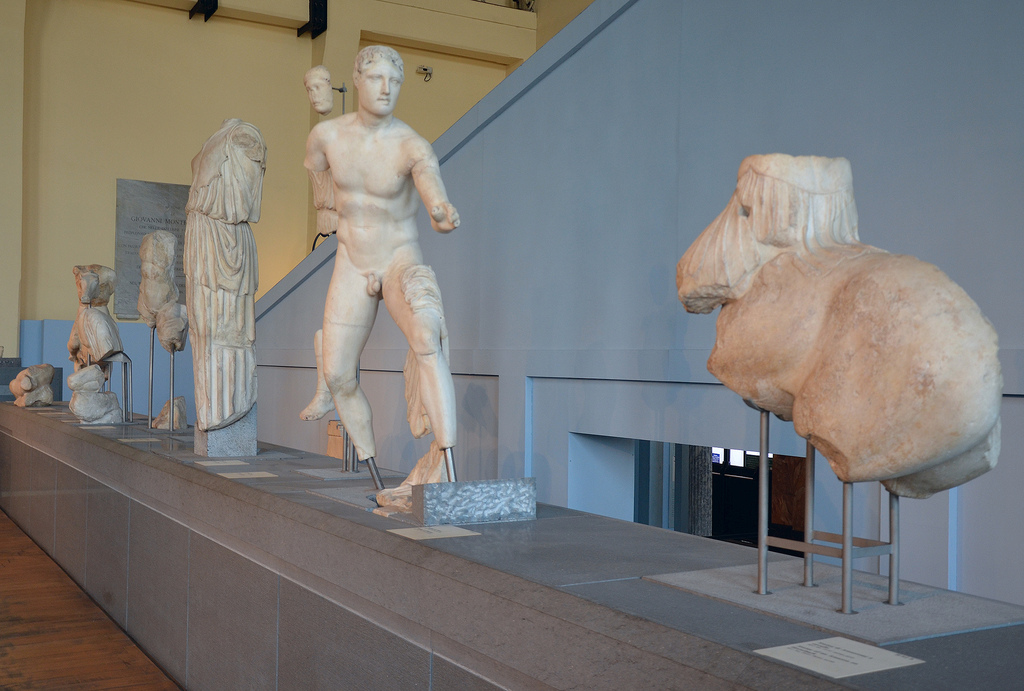
Discophoros (disk-bearer), Roman copy of a Greek original of the late Classical period attributed to Naukydes of Argos.
Statuette of Asklepios, small-scale copy after a 5th century BC original attributed to Phidias or Alkamenes.
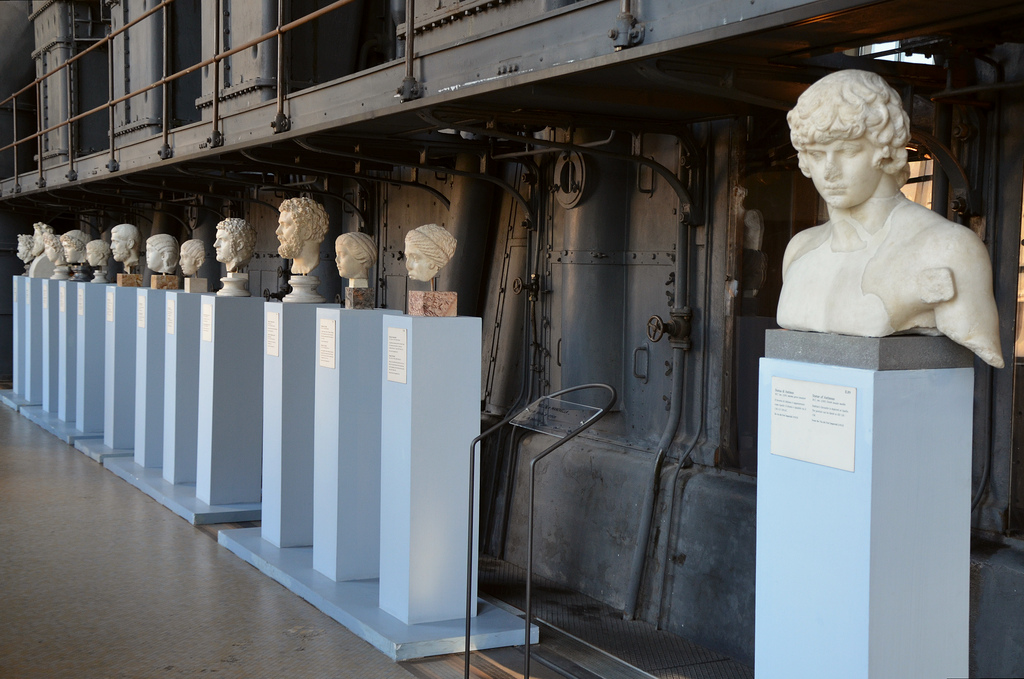
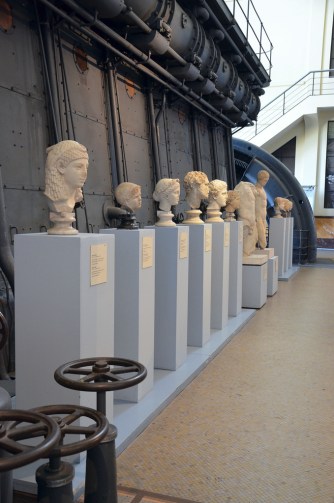
The Engine Room, Imperial portraits and Roman copies of Greek originals.
Portrait of Septimius Severus.
Portrait of Claudius, probably refashioned during the age of Claudius on the basis of a portrait of Caligula.
Portrait of Caracalla, 212 – 217 AD.
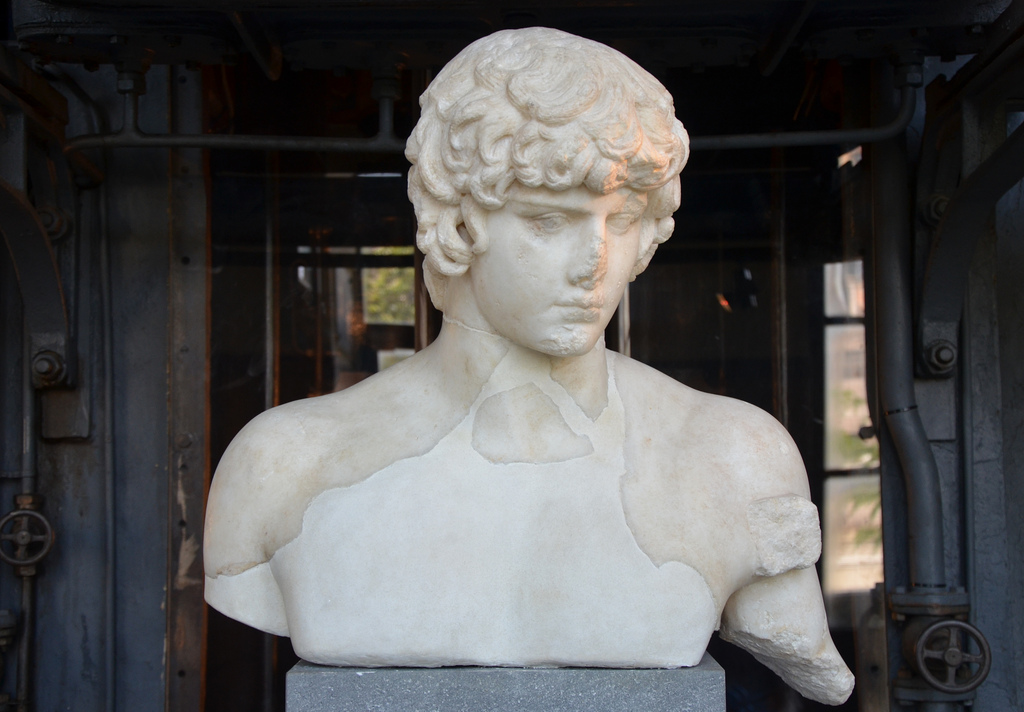
Part of a statue of Antinous depicted as Apollo, 130-138 AD, from the Via dei Fori Imperiali.
Head of Silvanus crowned with pine.
Head of Apollo crowned with a laurel wreath, Roman copy after a Hellenistic work.
Head of Apollo, Roman copy of a Greek bronze original (460-455 BC).
The Engine Room.
Basanite statue of Agrippina the Younger depicted as a priestess, 54-59 AD.
Statue made in dark grey marble (bigio antico) known as the Victory of the Symmachi, probably representing a dancing woman.
The reconstructed pediment of the Temple of Apollo Sosianus with sculptures narrating the battle between the Greeks and the Amazons.The reconstructed pediment of the Temple of Apollo Sosianus with sculptures narrating the battle between the Greeks and the Amazons. The sculptures are Greek originals (c. 450 – 425 BC) brought to Rome in the Augustan period.Frieze from the College of the Fabri Tignarii showing a work scene in a carpenter’s shop, Flavian Age, from the slopes of the Capitoline Hill.Colossal head of Fortuna Huiusce Diei, from an acrolith statue with uncovered parts in marble and the drapes in bronze, it was meant to be 8m high and dates back to 101 BC, from the sacred area in Largo Argentina.
The Boiler Room: named after the huge steam boiler dominating the room, this room is home to a number of beautiful statues and decorative sculptures that once adorned the gardens of sumptuous imperial residences (Horti Sallustiani, Horti Liciniani, Horti Lamiani, Horti Caesaris). Funerary monuments from the Ostiense Necropolis are also on display in this room.
The Boiler Room.
Head of Priapus, refined Augustan version of archaic models dating back to the late 6th century BC, from the Horti Lamiani.
Group with Satyr and a Nymph, Roman copy after work of the Pergamene school dating back to the mid-2nd century BC.
Seated girl, Roman copy of the Hadrianic period after a Greek original of the school of Lysippos or a Roman creation, from the Horti Liciniani.
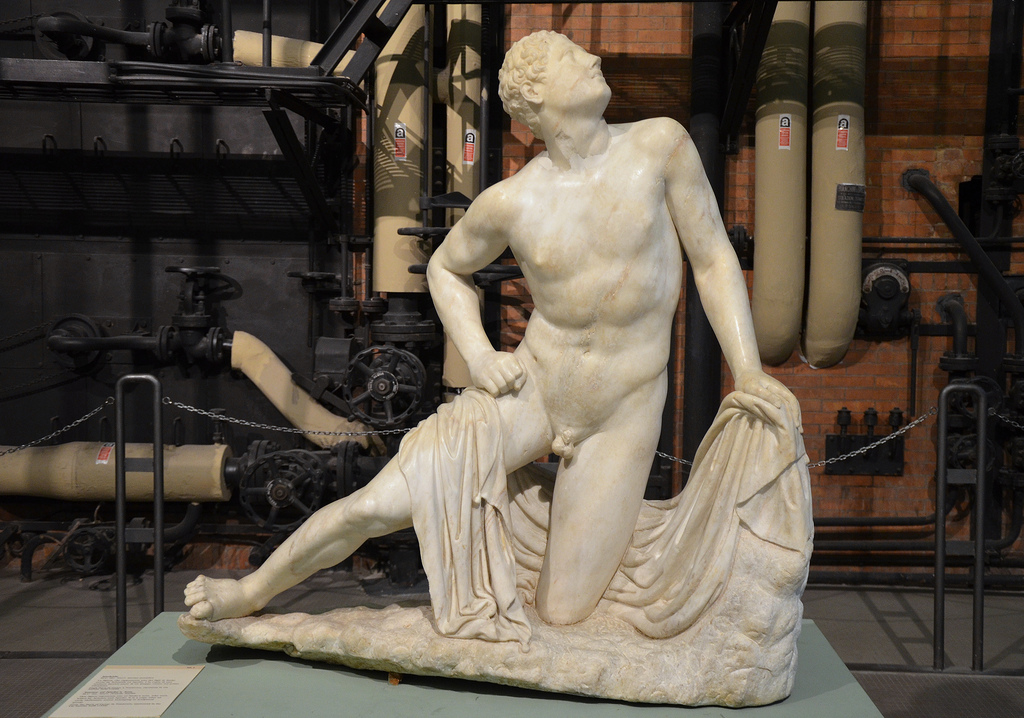
Statue of one of Niobe’s sons who were killed by Artemis and Apollo, Roman copy after an early Hellenistic statue belonging to a sculptural group, from the Horti of Caesar in Trastevere.
Statue of Pothos, copy of the original created by Skopas for the town of Megara, from a Domus dating back to the 2nd century AD.
Acephalous statue of Pothos.
Mosaic with hunting scenes, from the Horti Liciniani, early 4th century AD.
Statue of a Muse (Polyhymnia?), Found in via Terni inside an ancient underground passage in the area of the Horti Variani, 2nd century BC.
2nd c. AD statue in red marble of Marsyas, a satyr who dared challenge Apollo to a music contest , found at the Villa Vignacce in southeastern Rome during 2009 excavations carried by the American Institute for Roman Culture.
The Boiler Room.
Opening hours:
Tuesday-Sunday: 9.00 – 19.00;
24 and 31 December: 9.00 – 14.00;
Last admission 1/2 hour before closing time.
Regular Fees:
Adults € 7,50
Concessions € 6,50 Roman Citizens only (by showing a valid ID):
Adults € 6,50
Concessions € 5,50
Capitolini Card (Capitoline Museums + Centrale Montemartini – valid 7 days):
Adults € 16,00
Concessions € 14,00 Roman Citizens only (by showing a valid ID):
Adults € 15,00
Concessions € 13,00





























 Opening hours:
 following hadrian photography