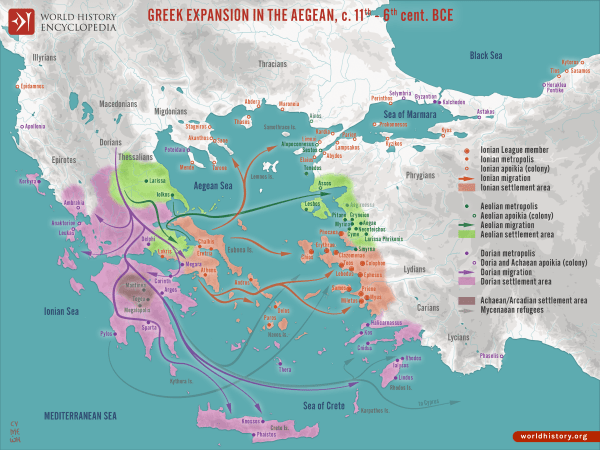
Teos, an ancient Greek city located in the Ionia region on the west coast of Anatolia (present-day Turkey), was founded in the 8th century BC during the Ionian colonisation. Strategically situated on the coast, it benefited from its proximity to the sea, becoming a thriving maritime and trading centre. Teos was one of the twelve cities forming the Ionian League, a confederation of Greek city-states established after the Meliac War in the mid-7th century BC. Throughout its history, the Ionian city underwent periods of prosperity and cultural development. Teos is home to the largest temple of Dionysus in the ancient world, designed by the famous architect Hermogenes of Priene.
Teos was once a thriving seaport along the Ionian coast, boasting two excellent harbours. According to tradition, the city was initially established by Athamas, who brought Minyan colonists from Orchomenus (Paus. 7.3.6). They were followed by Ionians (when the city was re-founded by Nauklos), Boeotians (with Geres as founder) and Athenians (with Apoikos and Damasos as founders). Teos was a member of the Panionium, an Ionian sanctuary devoted to Poseidon Helikonios located on Mount Mycale and the gathering place of the Ionian League. The city developed rapidly and soon reached the stage where colonists from Teos settled in Phokaia (Phocaea). When the Persians seized the cities of Ionia in 546 BC, some of Teos’ inhabitants abandoned their hometowns. They established significant colonies at Abdera in Thrace and Phanagoreia on the Asian side of the Bosporus, while they participated in the establishment of the Greek trading station at Naukratis in Egypt.
Greek Expansion in the Ancient Aegean. Map created by Simeon Netchev for World History Encyclopedia (link).
Teos took part in the Ionian Revolt against Persian rule (499-493 BC), which led to the Greco-Persian Wars and the first invasion of Greece. After its liberation from Persian domination, Teos joined the First Athenian League and remained a member until 412 BC. Later, the city became a part of the Delian League and paid an annual tax of 6 talents, demonstrating Teos’s thriving economy at that time.
After the Peloponnesian War (431–404 BC), Teos came under Spartan and Persian control. The Persian rule was eventually overthrown with Alexander the Great‘s conquests. During the Hellenistic period, Teos flourished as a cultural and economic centre. According to Strabo (14.644), a sanctuary dedicated to the Macedonian king was founded in Teos, and a festival known as the Alexandreia was held there. When the kingdom of Alexander fell, the city was successively occupied by Antigonids, Seleucids, and Ptolemies.
In 190 BC, the allied Roman and Rhodian fleets defeated the Seleucid navy of Antiochus III, commanded by Hannibal, in the bay of Teos. As a result of the defeat, the city of Teos, which stood on Antiochus’ side, surrendered to the Romans. Through the Peace of Apamea of 188 BC, the Kingdom of Pergamon gained control of the city. From 129 BC onwards, Teos became part of the Roman province of Asia.
Teos was renowned for its production of wine, olive oil, and marble. This contributed significantly to its wealth and influence in the region. It was also a centre of artistic and intellectual activity, attracting poets, philosophers, and artists from across the ancient Greek world. Anacreon, the famous poet, who makes an interesting appearance on the provincial Roman coinage (see here), hailed from Teos, while Epicurus reportedly studied in the city for three years. In the Roman period (late 1st century AD), Tiberius Claudius Philistes was the most eminent Teian citizen. He was honoured as the ‘new Athamas’, the first mythical founder of the city (see here). Philistes served as priest of Dionysus and held several other official positions in Teos. He spent most of his wealth on public benefactions.
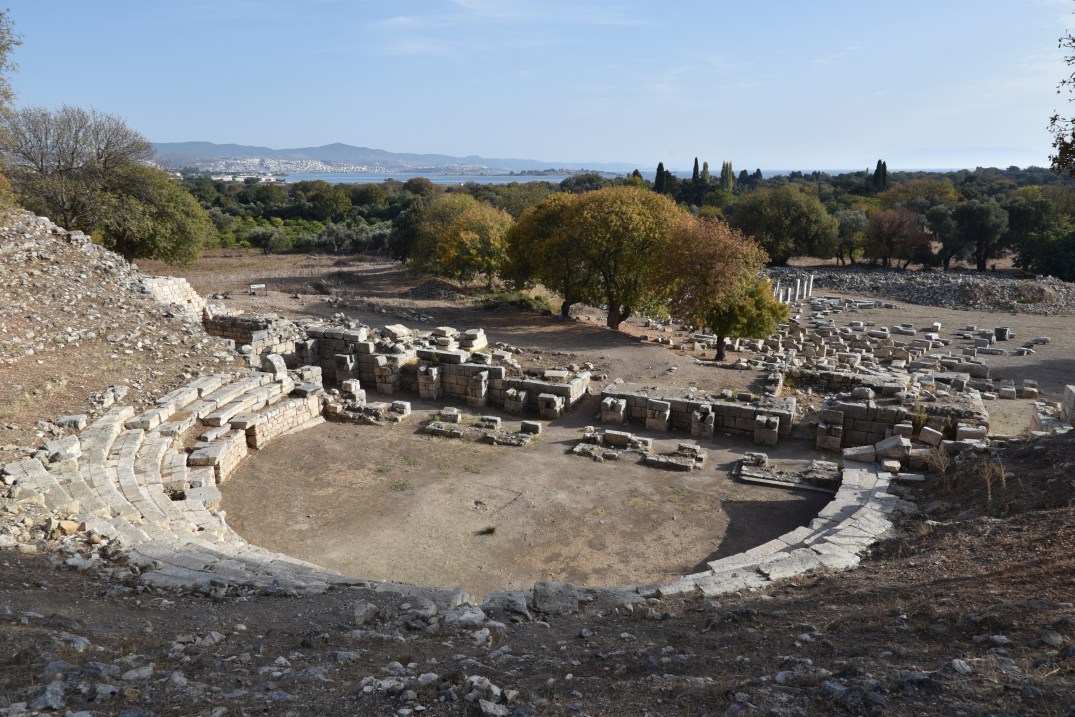
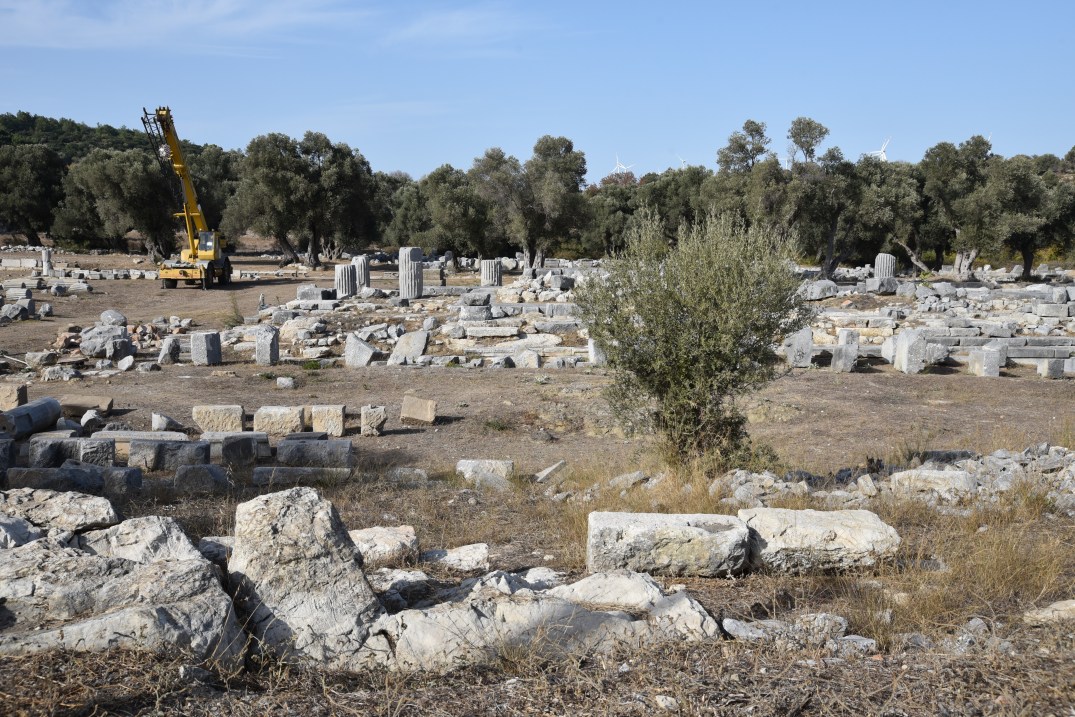
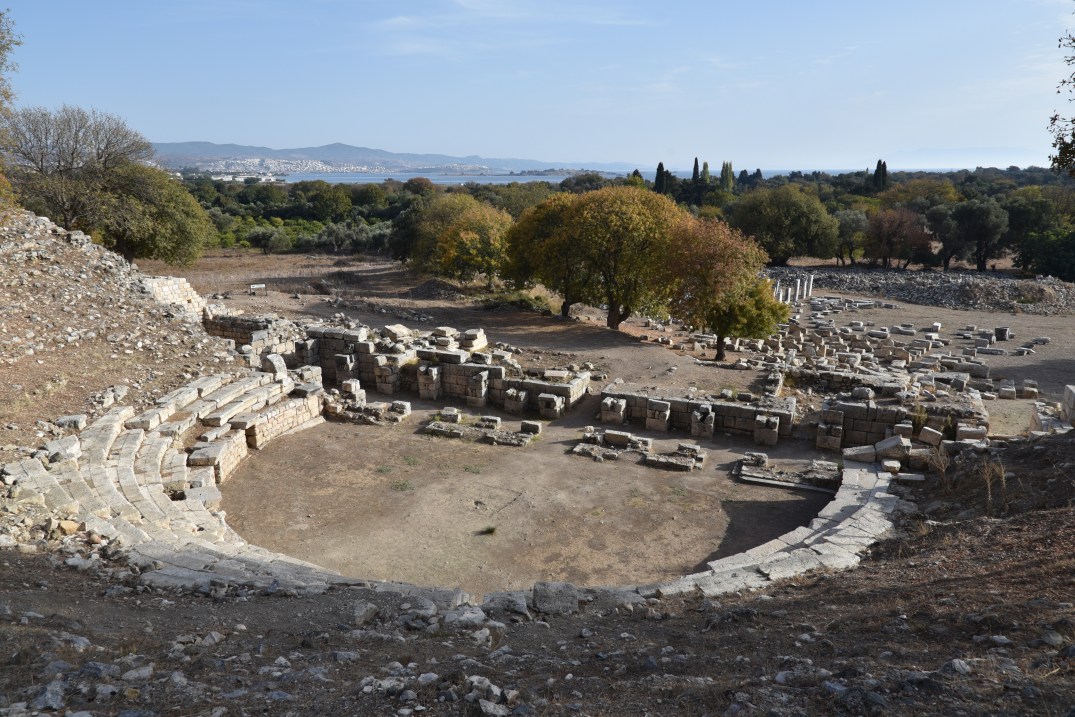
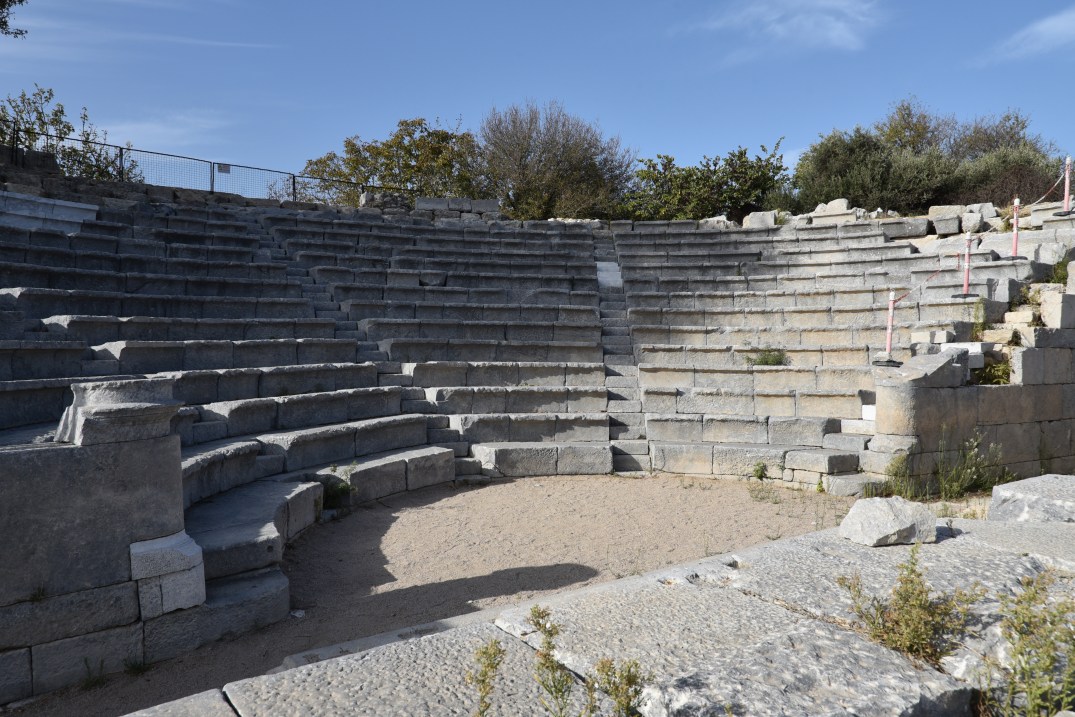
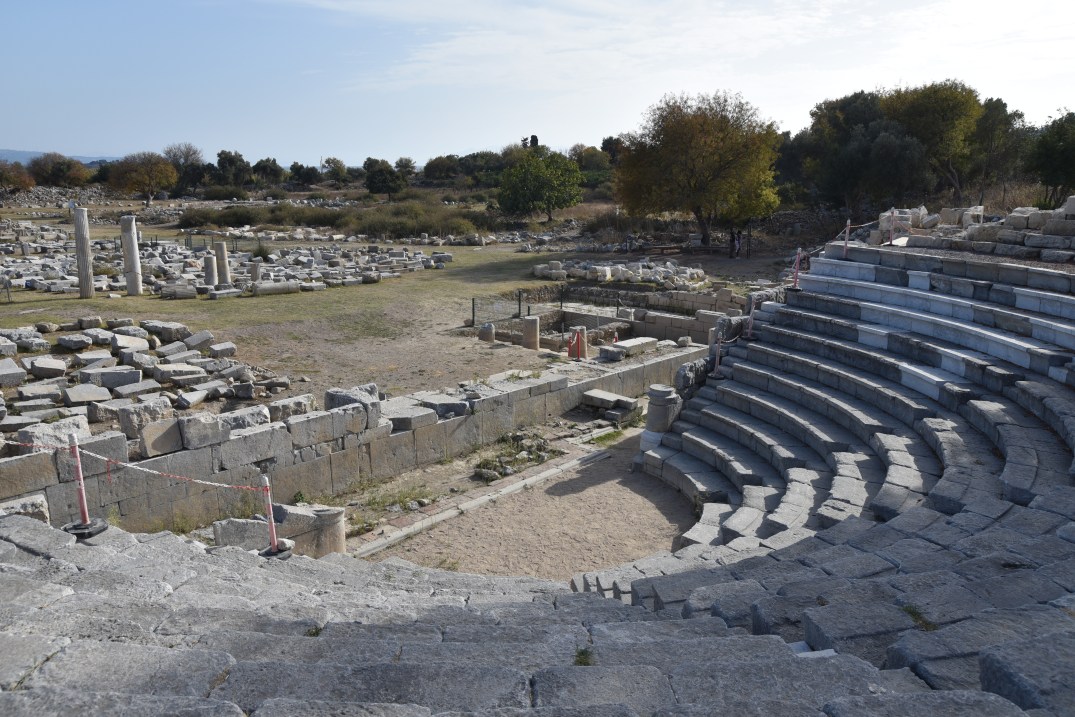
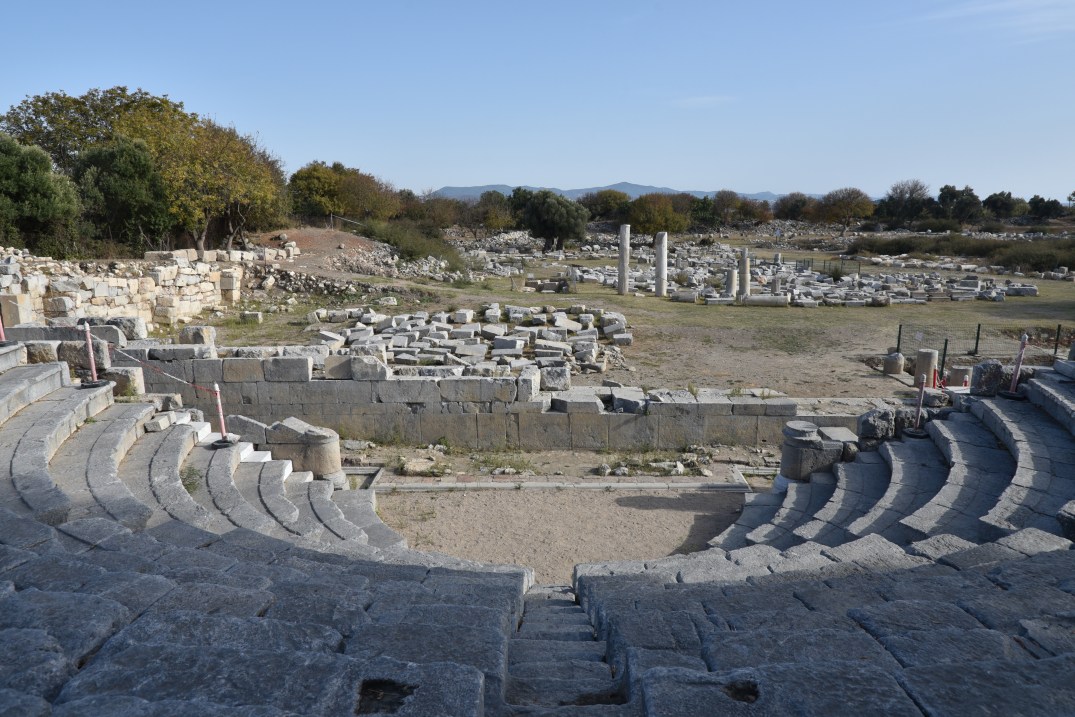
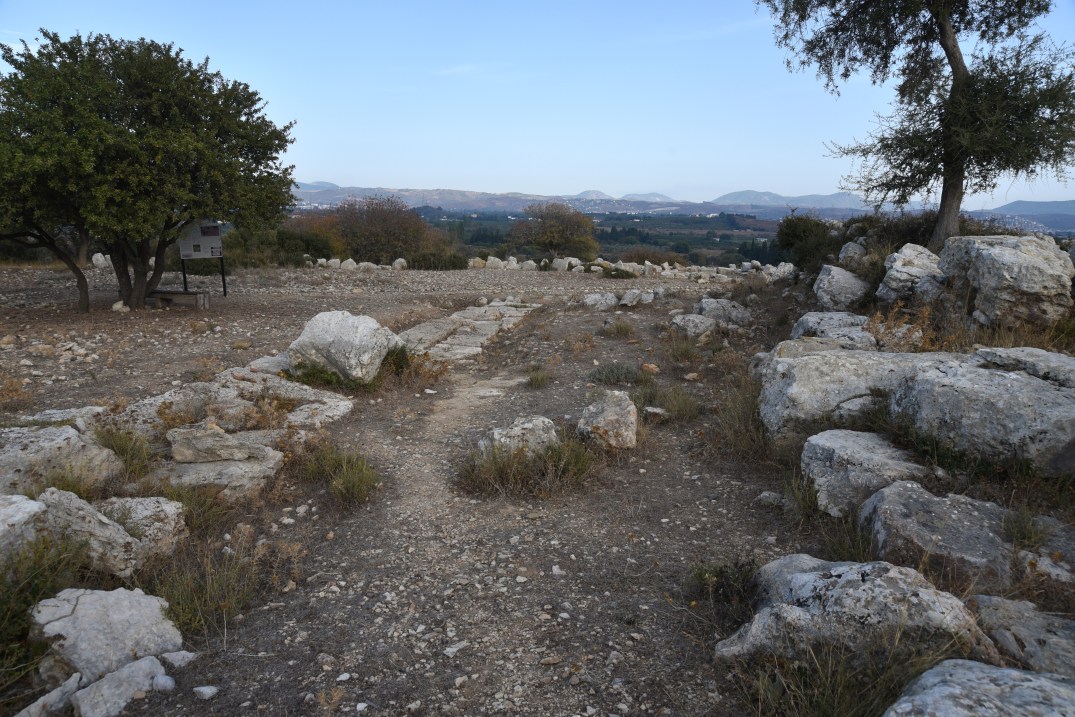
The ruins of ancient Teos can still be visited today, offering a glimpse into the city’s rich history and legacy as a prominent Ionian city in antiquity. The ruins include a harbour, temples, an Agora, a bouleuterion, and a Hellenistic theatre located at the foot of the Acropolis. The Temple of Dionysus is the most significant building in Teos and was the largest temple dedicated to the god of wine in the ancient world, measuring 18.50 meters by 35 meters. The temple was also associated with the celebrated synod, an organisation of actors related to the cult of Dionysus, who established their headquarters in Teos in the late 3rd century BC.
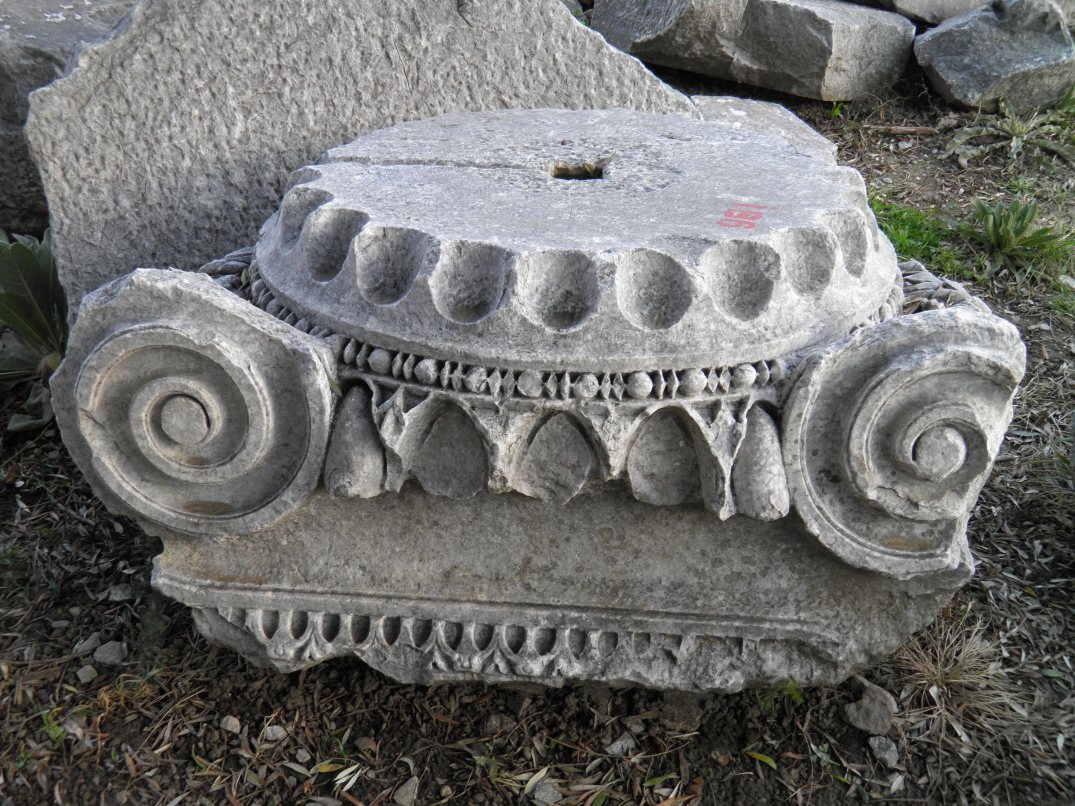
Reconstructive drawing of the Temple of Dionysus at the ancient city of Teos (1782). CHOISEUL-GOUFFIER, Gabriel Florent Auguste de. Voyage pittoresque de la Grèce, Paris, J.-J. Blaise M.DCC.LXXXII [=1782].The Temple of Dionysus was built in the Ionic order, entirely of marble. It had eleven columns on the longer side and six on the shorter side. Hermogenes was mentioned as the architect of the temple in Vitruvius’ Ten Books on Architecture (III.3.6-8, IV 3.1). The temple was constructed in the last quarter of the 3rd century BC, as indicated by an inscription related to Antiochus III. However, the Hellenistic temple was destroyed, possibly due to an earthquake in 14 BC. It was later reconstructed twice, first during the reign of Augustus and later during the reign of Hadrian, possibly after another earthquake in the mid-1st century AD. A fragmentary inscription on an architrave (Teos 76) to Hadrian’s responsibility for restoring the temple towards the end of his life. The emperor visited Ionia in AD 124, 129, and 131; thus, the decision to restore the temple at Teos was likely taken during one of these visits.
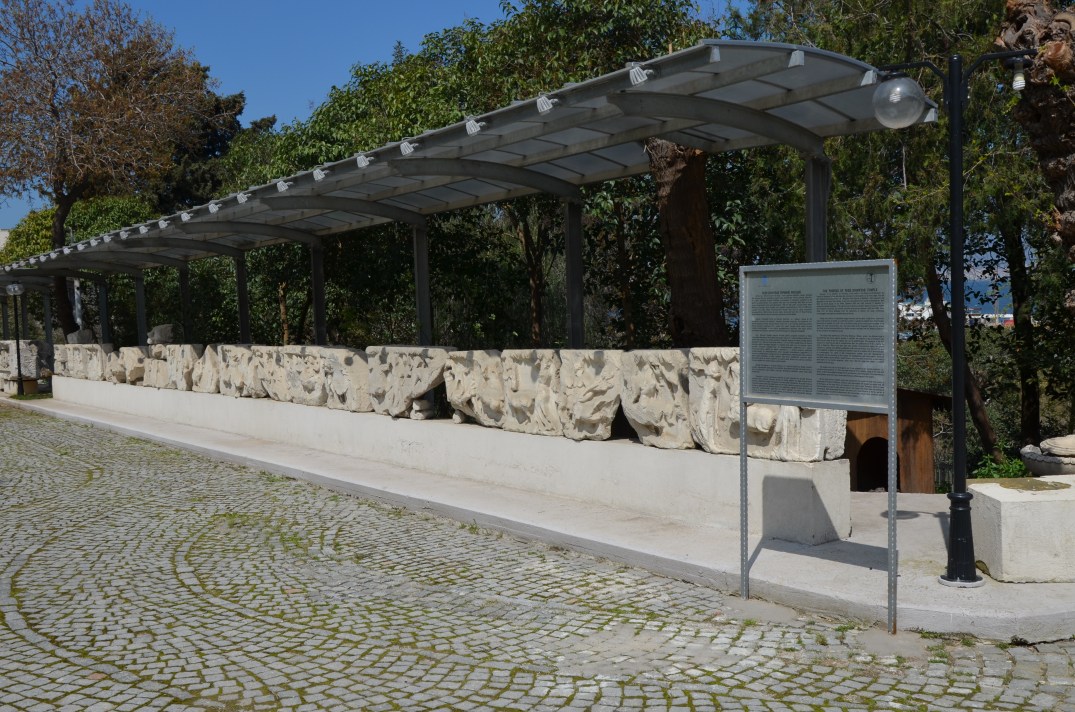
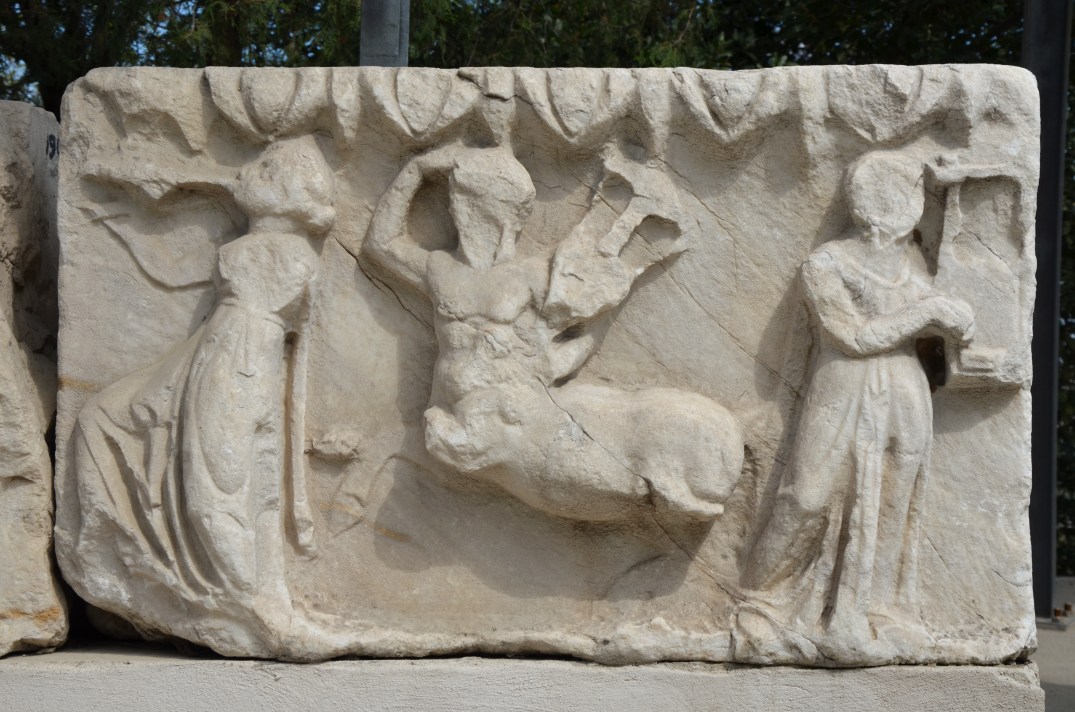
Some of the columns of the Temple of Dionysus have been restored, while parts of the relief frieze and an acroterion are exhibited in the Archaeological Museum in Izmir.
The reliefs from the Temple of Dionysus in the garden of the Izmir Archaeological Museum.
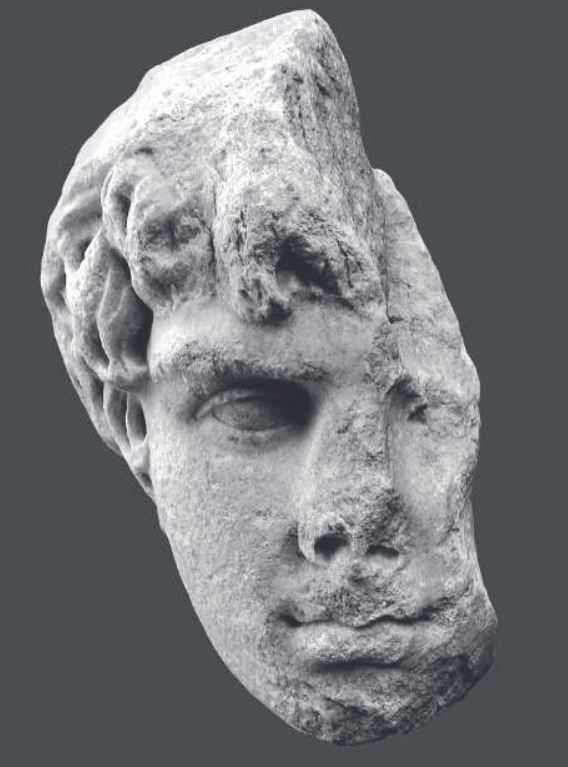
Another temple, located in the agora, was dedicated to the goddess Roma and the emperor Augustus. During excavations in the southeast corner of this temple, a marble portrait head of Antinous was discovered. This discovery could be related to the imperial cult or to the Emperor’s last visit in AD 131 (Kadioğlu, 2022).
PORTFOLIO
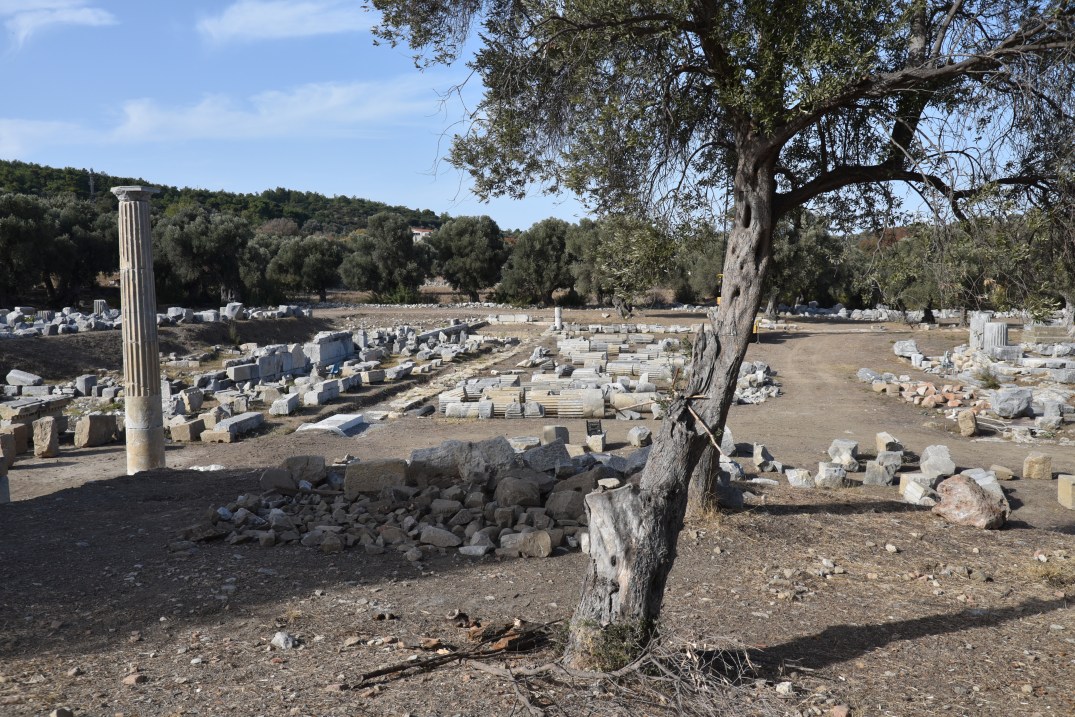
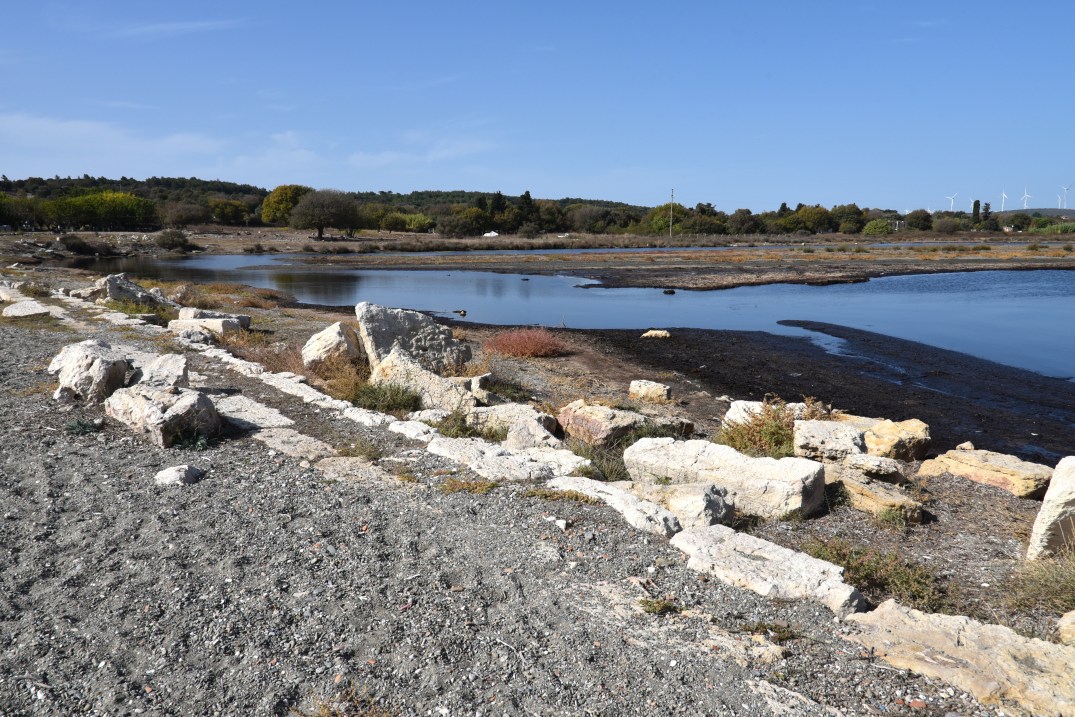
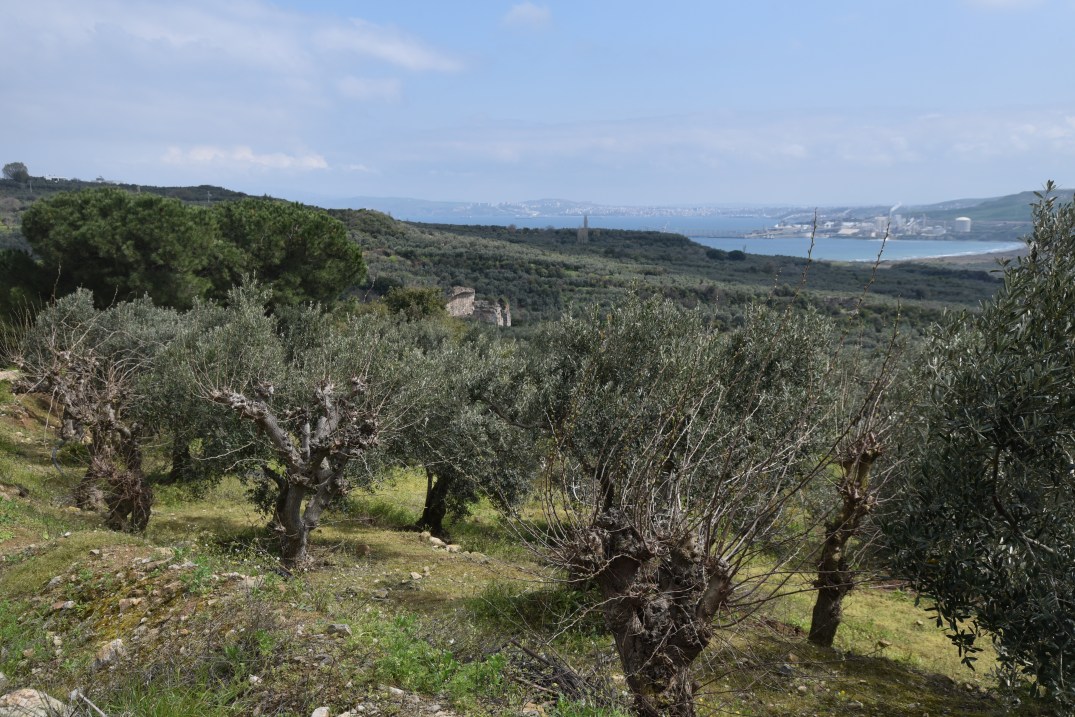
The “Gate of Dionysus” is a well-preserved section of the Hellenistic City Wall. The Hellenistic walls were 4m thick, composed of a double circuit built of local limestone in isodomic masonry. The wall was c. 3.8 km long and encircled an area of 65 hectares, with twelve towers identified in the recently undertaken geomagnetic survey.The West Temenos wall of the Hellenistic Sanctuary of Dionysus. The temple was constructed between the last quarter of the 3rd century BC and AD 120-138.The Temple of Dionysus was built on the western border of the ancient city, in the Ionic order, at the centre of a trapezoidal temenos. The temenos was surrounded by four stoas: two Doric (north and south) and two Ionic (east and west).The Temple of Dionysus was a peripteros structure with six columns on its front and back and eleven along its sides, which rose from a stylobate measuring 18.5m x 35m.The Sanctuary of Dionysus (view from the south temenos).Considered by Vitruvius to be the work of Hermogenes, the hexastyle peripteral temple in Teos was described by Vitruvius as having been completed according to the eustyle principles. However, most Ionic capitals are Roman reinstalled in Hadrian’s rebuilding. Some acroteria are also Hadrianic.The cella of the Temple of Dionysus consisted of three sections: a deep pronaos, a naos, and a narrow opisthodomos.An Ionic column from the Temple of Dionysus.Dionysian frieze in the Izmir Archaeological Museum.Dionysian frieze in the Izmir Archaeological Museum.The Propylon of the Sanctuary of Dionysus. The structure was probably built during the reign of Augustus, as suggested by the Latin inscription dated 3 BC.The Roman Propylon of the Sanctuary of Dionysus.Fragments of columns from the Sanctuary of Dionysus.The theatre of Teos is located on the south-eastern slopes of the Acropolis. The structure is oriented to the southeast. Although it is built according to Greek traditions, nothing dating to the pre-Roman period has been found.The seating steps of the lower cavea were built in opus incertum, and the upper cavea was constructed on a vaulted substructure.The decorated architectural blocks of the scaenae frons (stage building) and the facade of the proscaenium, as well as the column bases with inscriptions, point to building activities at the end of the 1st century AD (Flavian period).Inscriptions honouring Tiberius Claudius Philistes of Teos (the new Athamas), who spent most of his wealth on public benefactions. One of these statue bases was found in the theatre.The Bouleuterion was built towards the end of the 1st century AD. Located in the northwest corner of the agora, the bouleuterion is the best-preserved building in the ancient city.The Bouleuterion was built on a flat area and rested on 1 m thick walls made of squared stone ashlars. It comprised a cavea with seventeen rows of seats made of grey Teos marble, an orchestra, and a low proscaenium/pulpitum (stage).The Bouleuterion was enclosed in a large rectangular building (33.05 x 21.90 m) accessed from the east by two monumental doors, one to the north and the other to the south.A door opening in southern end of the analemmata, which lead, via a staircase, to the upper seats of the cavea.Architectural fragments in front of the Bouleuterion.The Temple of Rome and Augustus in the agora. The temple, dedicated to the goddess Roma and Augustus (as suggested by a building inscription on the architrave Θεᾶι Ῥώηι καὶ Σ[εβαστῶι]), was a peripteral temple with 6 × 12 columns in the Corinthian order. Excavations in the southeast corner of this temple yielded a portrait head of Antinous.The portrait of Antinous from Teos.The Agora. Very little is known about the agora of Teos, which was at the centre of the social and political life of the city.The Acropolis. The Acropolis of the ancient city’s was located on a rocky hill, dominating the North and South Harbours. Today, traces of the structure called the Hekatompedon can be seen on the Acropolis, as well as a possible altar to the east of it, and the terrace wall confining the Acropolis to the east.The Southern Harbour with traces of the ancient piers.The south harbour is one of the best preserved ancient ports in western Anatolia.
Cyzicus is a city of Mysia in Asia Minor built on the southern coast of Propontis (Sea of Marmara) on the isthmus of the Arctonessos peninsula near present-day Erdek in Balıkesir Province. It was founded around 680 BC by a group of Greek colonists from the city of Miletus, making it one of the oldest Greek settlements in the region. Cyzicus developed into a thriving city-state with a strong maritime tradition. Its privileged location made its two ports commercial hubs, and the city became a key hub for trade and commerce between the Greek world and the Anatolian interior. Under Roman rule, Cyzicus flourished as a prosperous urban centre. New public buildings and monuments were constructed, including a massive temple to Hadrian, considered one of the wonders of the ancient world.
According to mythology, the city was named after King Cyzicos (or Kyzikos), a Thessalian migrant who was accidentally killed by Jason. When the Argonauts journeyed to Colchis and landed on the island of the Doliones, King Cyzicos received them with generous hospitality. But after their departure, a storm drove them back to the Cyzicene coast. They landed again at night-time, but they were mistaken by the Doliones for hostile people, and a struggle ensued in which Cyzicos was killed either by Jason or Hercules. When the day broke, the Argonauts realised their tragic mistake, granted Cyzicos an elaborate burial, and celebrated funeral games (Apollonius of Rhodes 1,949).
In the early historical years, Cyzicus accepted colonists from Ionian Greeks from Miletus. The Milesian colony was established around 680 BC, when Miletus began systematic colonisation of the area. It may have begun minting electrum coins in the first half of the 6th century BC. Due to commercial activities, Cyzicene staters were used as the primary foreign currency outside the Marmara Region, especially along the Black Sea coast. The coins featured a wide variety of obverse motifs, including over 250 unique designs depicting animals, heroes, mythological creatures, and gods.
The Propontis was famous for its abundant fish, one of the main sources of wealth in Cyzicus. As early as 600 BC, Cyzicus used a tunny fish (Euthynnus alletteratus) as its civic emblem on its coinage.
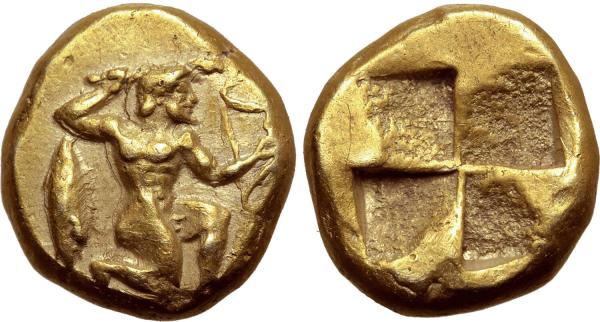
Electrum stater from Cyzicus with Herakles holding club and bow with a tunny fish downwards to the left. Dated circa 550-450 BC. CoinArchives
During the Peloponnesian War (431-404 BC), Cyzicus changed hands between Persian and Athenian control several times. It became a member of the Delian League, paying an annual tax of nine talents. Sometime later (373 BC), Cyzicus joined the Second Athenian League, which it abandoned during the Allied War (357-355 BC). It remained a free city in the Hellenistic Period. It consolidated its economic domination by annexing several nearby towns, but later came under Seleucid and Pergamene control (281 BC). When the Kingdom of Pergamon was annexed by Rome in 133 BC, Cyzicus became part of the Roman world and entered a period of prosperity. It was a loyal and powerful ally of Rome in the Mithridatic Wars. When consul Lucullus won a victory over Mithridates in the Third Mithridatic War (74-67 BC) after the Siege of Cyzicus in 73 BC, he liberated Cyzicus and declared it a free city.
The city’s strategic location and economic significance made it a valuable asset for the Roman Empire, which sought to control key trade routes and resources in the eastern Mediterranean. The Romans further developed the city’s infrastructure, expanding its harbour facilities and enhancing its commercial capabilities. Cyzicus continued to mint its own coins, widely used in trade and commerce throughout the Roman world.
Cyzicus was known for its skilled shipbuilders and seafarers, who navigated the waters of the Sea of Marmara and the Aegean Sea to establish trade networks with other Greek cities and beyond. The city’s prosperity was also fueled by its agricultural wealth, as the fertile lands surrounding Cyzicus allowed for the cultivation of crops such as grain, olives, and grapes. Cyzicus was also an important centre of letters and sciences.
Cyzicus remained an important Roman city in Mysia, becoming the capital of the Hellespont province during Diocletian‘s reign (r. AD 284-305) and later, becoming part of the Eastern Empire. The city’s fate was intertwined with the invasions by barbarian tribes and successive devastating earthquakes. Because of its location on the south branch of the North Anatolian Fault zone in the Marmara Sea, the ancient city was destroyed by a series of earthquakes. Fifteen destructive earthquakes occurred between AD 29 and 1887, including one during the reign of Hadrian. The final blow was given by the Arabs, who besieged the city (AD 675), and an earthquake (AD 1063), which devastated the city completely.
Plan of the ancient city of Cyzicus.
Many ancient writers wrote about the grandeur of the ancient city of Cyzicus. Strabo thinks that “this city rivals the foremost of the cities of Asia in size, in beauty, and in its excellent administration of affairs both in peace and in war” and that “its adornment appears to be of a type similar to that of Rhodes and Massalia and ancient Carthage.” (Strabo 12.8.11). Unfortunately, Cyzicus remains the least studied and excavated city among the other major cities of Asia Minor. Little research has been done in the area, and only a few sparse ruins remain today.
Among the ruins of Cyzicus, outside the city walls and to the north, are very few traces of the 2nd-century AD Roman amphitheatre. However, on the plain outside the western walls are scattered remains of particular importance, belonging to a temple dedicated to Hadrian (perhaps originally a temple of Zeus begun by the kings of Pergamon), the city’s greatest monument. In AD 124, during his travels to Asia Minor, Hadrian visited Cyzicus. The city had just been struck by a devastating earthquake, and the emperor made large donations to help rebuild it.
The history and general character of the Temple are well-documented in literary sources. The Chronicon Paschale states that Hadrian founded a temple there and paved a marketplace with marble (Chronicon Paschale 475.10). The Byzantine chronicler John Malalas called the temple “a very large temple, one of the wonders,” with a massive bust of Hadrian on the roof and a marble stele inscribed “of Divine Hadrian” (Malalas, Chronography Bks 1-7, 10-18). Cassius Dio called it “the largest and most beautiful of all temples,” writing that “in general, the details were more to be wondered at than praised.” (Dio 70.4.1–2).
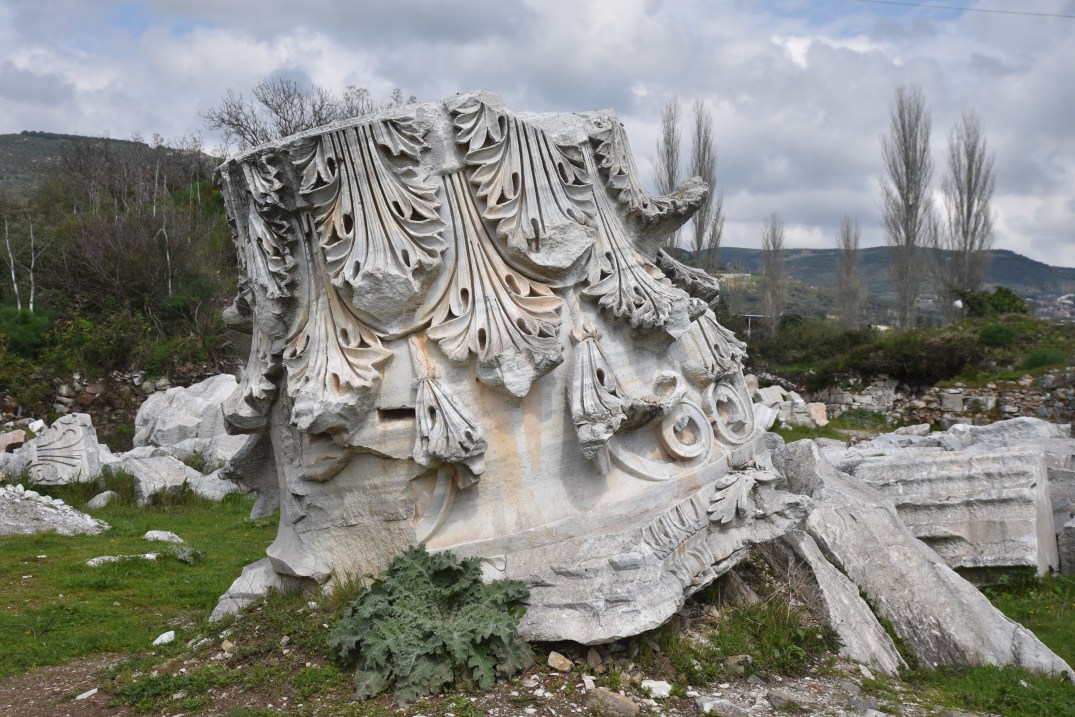
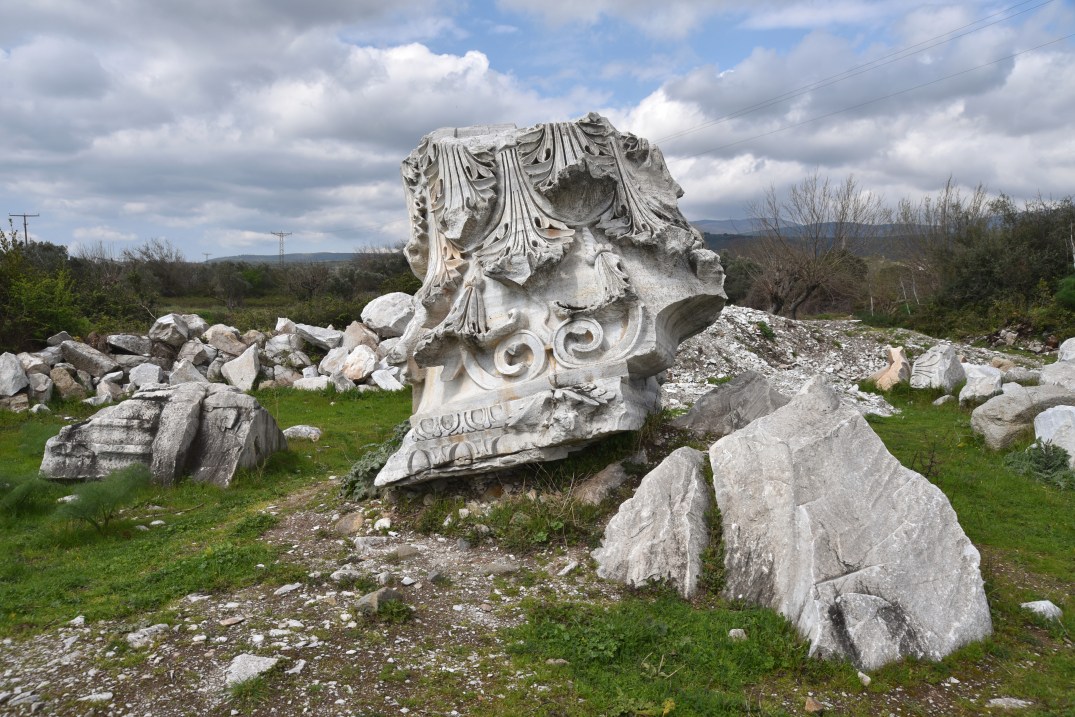
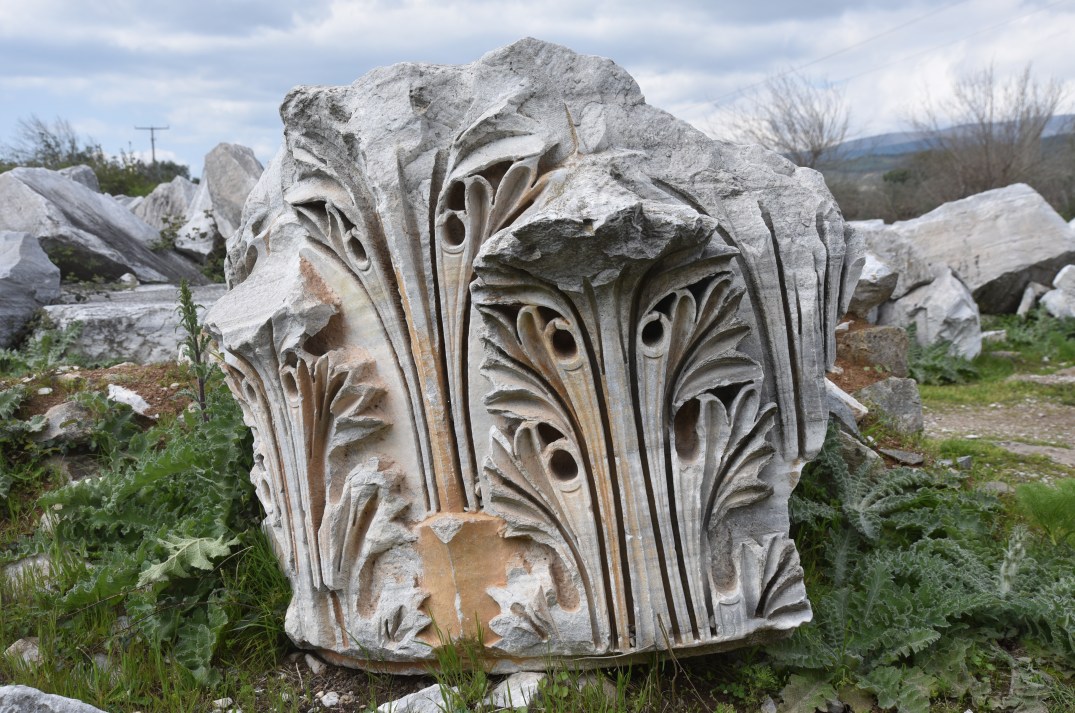
The Temple was a monumental octastyle (8 x 15) building of the Corinthian order, about as big as the Ephesus’ Artemision or Apollo’s Temple at Didyma. It measured 120 m in length and 50 m across. The sixty massive columns surrounding the cella were well over 2 m in diameter and more than 21 m high. The Temple was topped with the largest Corinthian capitals ever sculpted, one of which, 2.5 metres in height, 1.9 metres in diameter and 20 tons in weight, was unearthed in 2013.
The Temple was probably still unfinished when it was thrown down by an earthquake late in Antoninus Pius‘ reign, and was finally dedicated in 166 or 167, when the orator Aelius Aristides delivered a speech in the city of Cyzicus at a festival celebrating the restoration of the Temple of Hadrian. The most important attribute of the Temple of Hadrian, according to Aristides, was its extreme size, which made it appear ‘beyond the power of man to accomplish”, and it was this element that may have led Nicetas of Heraclea, an 11th-century Greek clergyman and writer, to compare the Temple with the Seven Wonders.
Cyriacus of Ancona, an Italian traveller and antiquarian, visited the site of Cyzicus in 1431 and reported that thirty-one of its columns were still standing (half of the original total), but the splendid ruin was being used as a stone quarry for nearby Bursa. Fifty-four years later, only twenty-six columns stood, and by the 19th century, the Temple’s superstructure was gone. Cyriacus of Ancona created detailed sketches of what remained of the Temple, which helped archaeologists recognise the Temple’s fragment among the ruins and restore the building’s plan, together with the reverses of coins showing the Temple (RPC IV.2, 11185).
An octastyle Corinthian temple with the legend neokoros (ΝΕΩΚΟΡΩΝ) begins to appear on Cyzicene coins late in the reign of Antoninus Pius. The Temple also appears on the first coins of Marcus Aurelius and Lucius Verus.
With the new Temple that Hadrian allowed to be built for his cult, the city of Cyzicus was granted the role of neokoros, temple warden of the imperial cult, joining Pergamon, Ephesus, Smyrna, and Sardis. In his Antilogy about Julian to the sophist Libanius, the 5th-century AD church historian Socrates of Constantinople states that the people of Cyzicus declared Hadrian the 13th god (Socr. Hist. Eccl. 3,23) while Antinous was also worshipped with heroic honours. Olympios was, therefore, an epithet associated with Hadrian, and there were dedications to Hadrian Olympios as the saviour and founder of the city. Linked with the city’s new status as neocoros in 124 (or later) was a Hadrianic festival called Hadrianeia Olympia, in which Aelius Aristides participated.
Base for a statue of Hadrian at Cyzicus in Mysia, naming the Emperor “Olympian, Saviour, and Founder”. (IMT Kyz Kapu Dağ 1494) Αὐτοκράτορι Τραιανῷ Ἁδριανῷ Καίσαρι Σεβαστῷ Ὀλυμπίῳ Σωτῆρι καὶ κτίστῃ. Bandırma Archaeological Museum.Coin of Antinous as the founding hero of Kyzikos standing in front of a horse. Minted in Cyzicus during the archonship of Claudius Euneos. Dated c. AD 130-138. (RPC III, 1528)
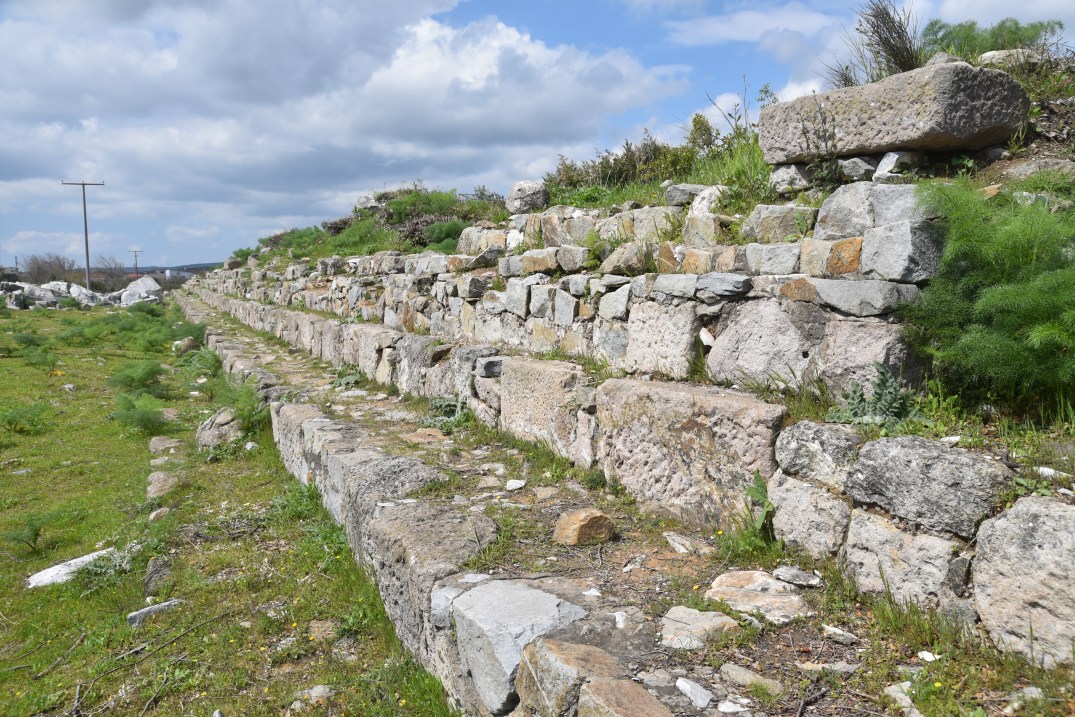
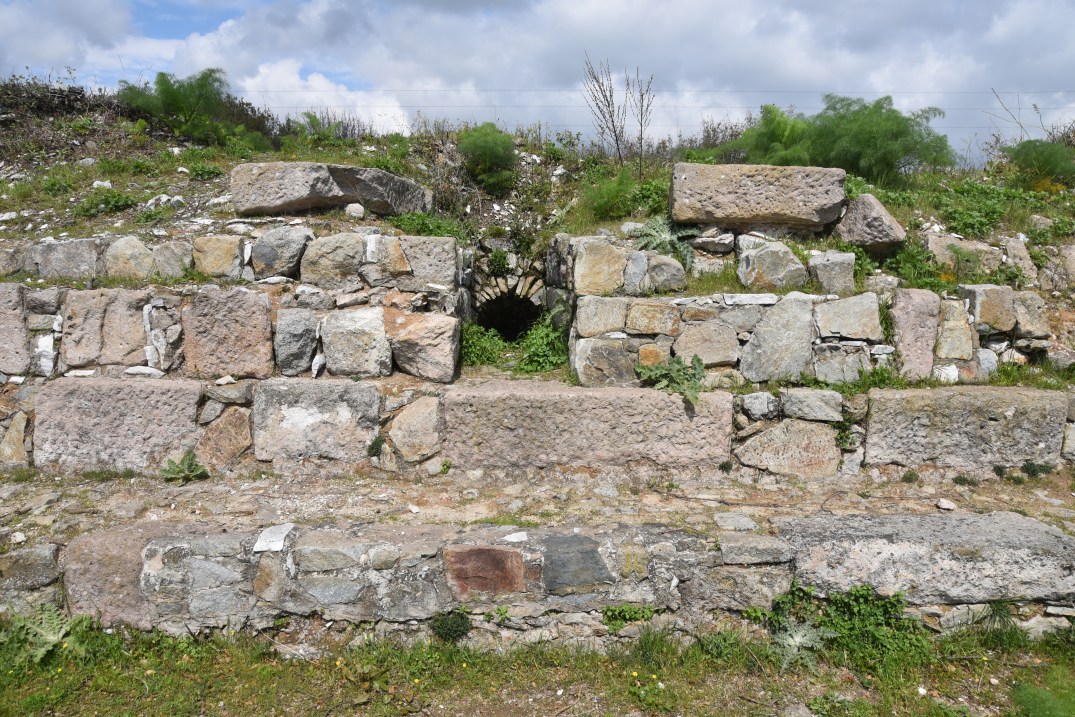
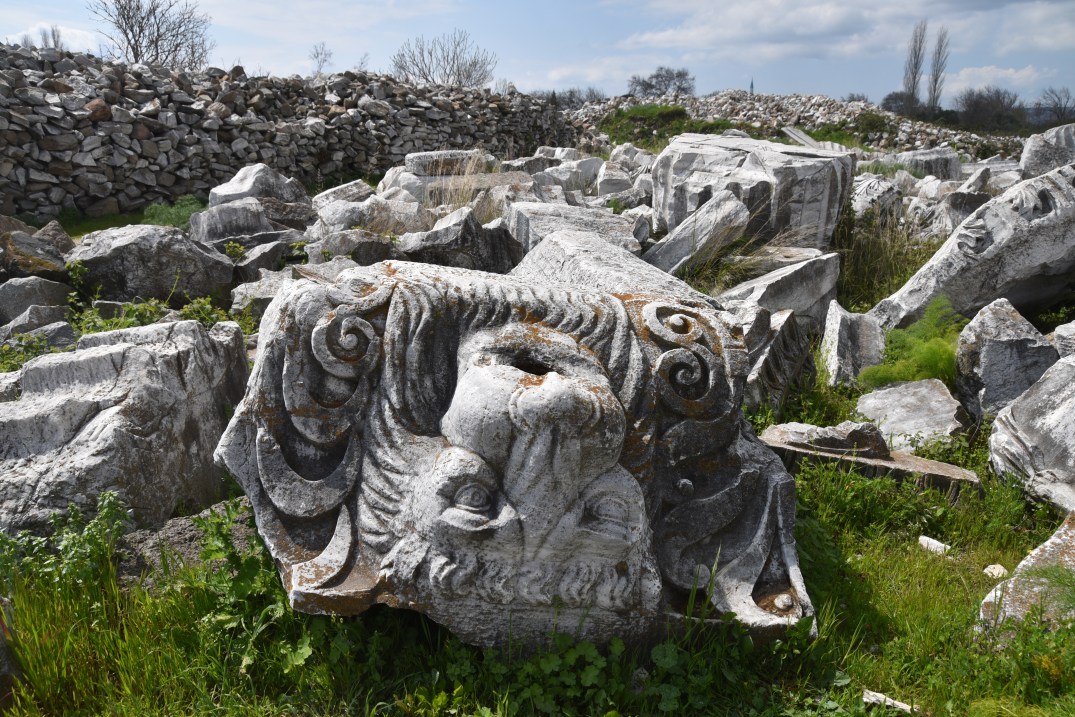
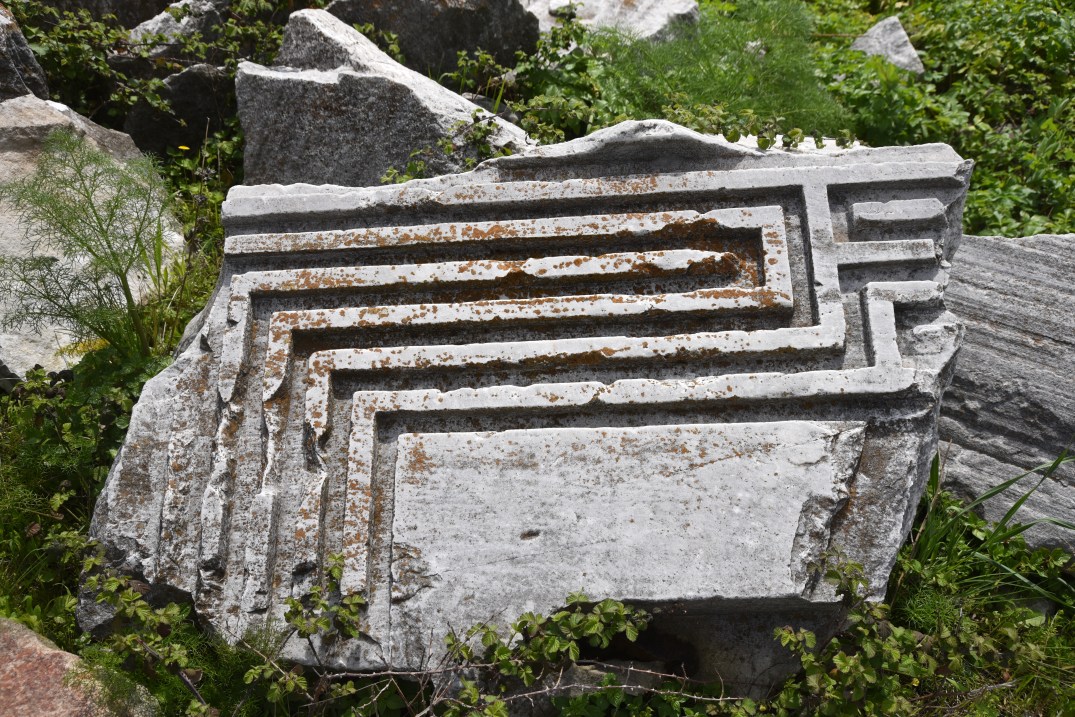
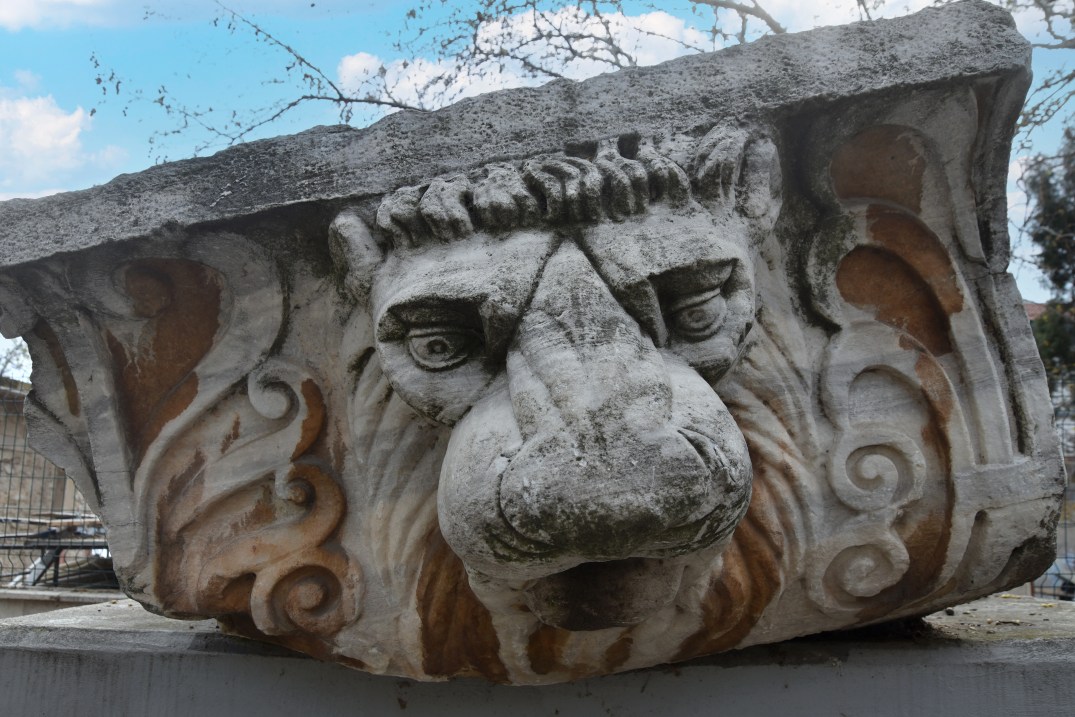
The Temple is today represented only by the substructures of the podium, with fragments of decorative and architectural elements scattered around, including marble roof tiles measuring 105 x 85 cm, marble gutters with lion heads, and the largest Corinthian capitals ever sculpted. While excavation works continue at the Temple of Hadrian, numerous stone objects have been found, including sculptures from the Temple with traces of red and blue paint and gold gilding.
Sculptures unearthed at the excavation site of Hadrian’s Temple (AA Photo).
An exceptionally large amphitheatre was situated in the valley on both sides of the sloping hills beneath the Acropolis. Its elliptical shape may be traced from the few pilasters and arches rising from the thickly wooded slopes of the old cavea. As at Pergamon, a small stream flowed through the building, presumably for use in naumachiae (naval spectacular displays) and for the cleansing of the arena. The amphitheatre was oval and surrounded by two tiers of arcading. There were originally thirty-two vomitoria (entrances). The central axis measured around 140 meters. Hadrianic inscriptions found among the ruins of the amphitheatre have allowed its dating in the reign of Hadrian.
PORTFOLIO
Panoramic view of the isthmus of the Arctonessos peninsula.The steps of the podium of the Temple of Hadrian. The Temple was set on a high platform c. 80 x 140 m.The most recent attempt at reconstructing the basic plan produces a huge octostyle temple measuring 46 x 90 m, with sixteen Corinthian columns reaching 21.3 metres in height and 2.3 metres in diameter.
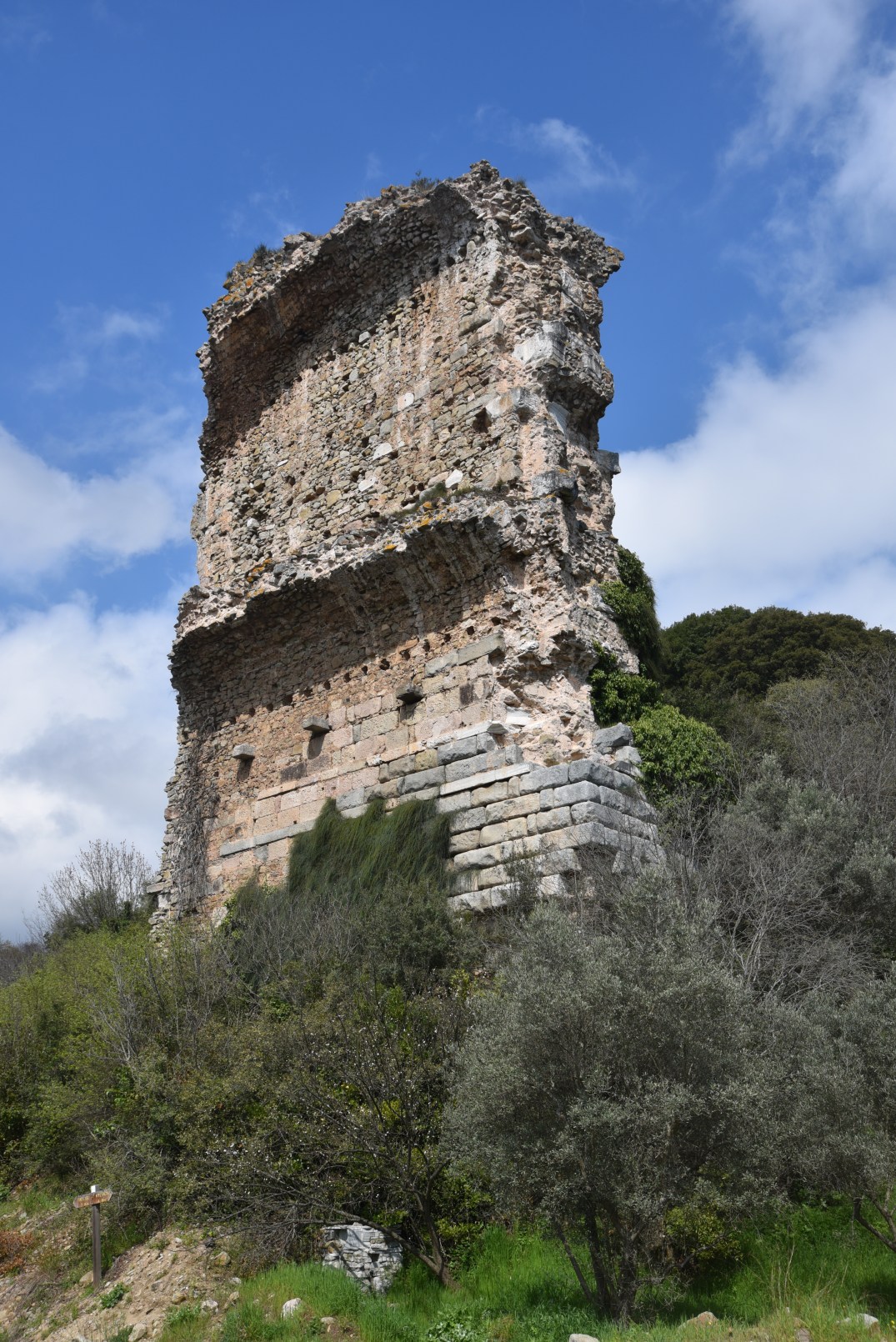
Vaulted structures at the northern end of the Temple of Hadrian.Remains of dependencies at the northern end of the podium of the Temple of Hadrian.The Temple was topped with the largest Corinthian capitals ever sculpted, one of which, 2.5 metres in height, 1.9 metres in diameter and 20 tons in weight, was unearthed in 2013.The largest Corinthian capital known to date.
Fragments of decorative and architectural elements of the Temple of Hadrian.Fragments of decorative and architectural elements of the Temple of Hadrian, including a gutter with a lion head.Column drum from the Temple of Hadrian.Corinthian capital from the Temple of Hadrian.
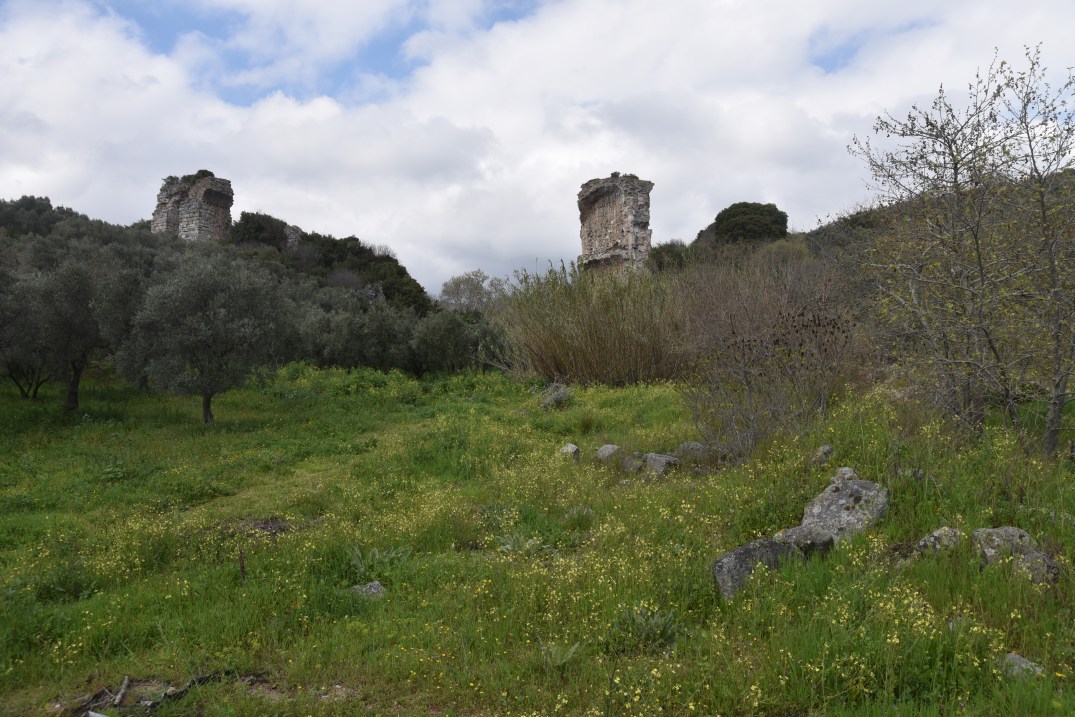
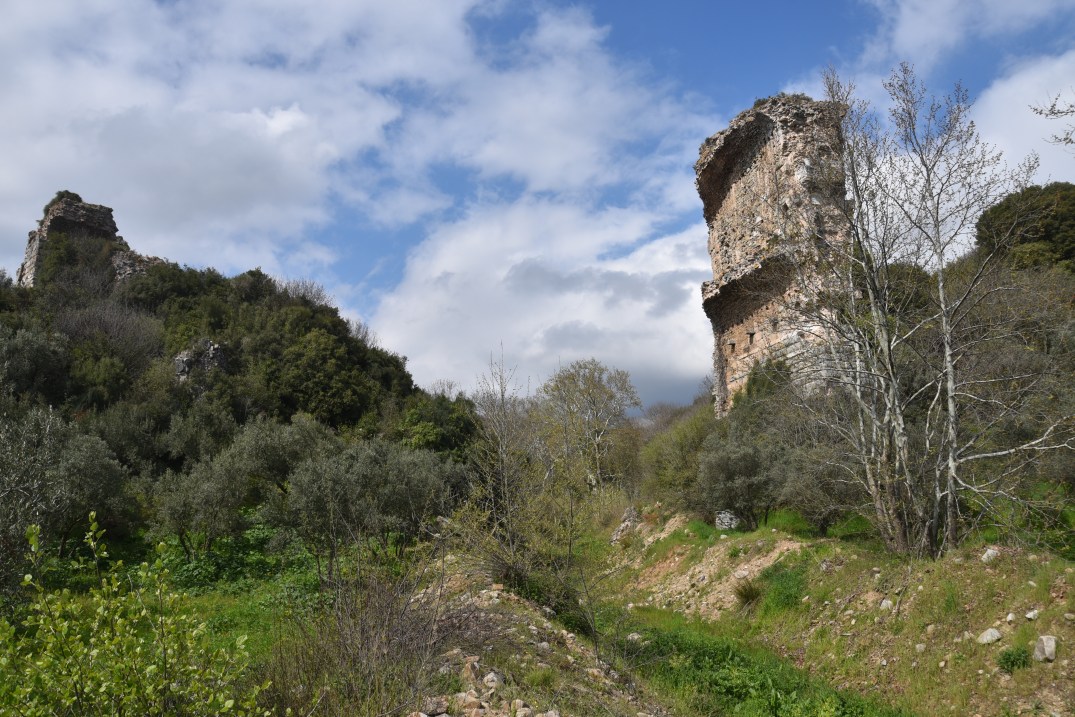
Fragment of a vine-wreathed column from the Temple of Hadrian at the nearby Erdek Açık Hava Müzesi.Fragments of decorative and architectural elements of the Temple of Hadrian.Gutter with a lion head from the Temple of Hadrian at Cyzicus in the Erdek Açık Hava Müzesi.Panoramic view of Cyzicus with the amphitheatre in the distance buried and invaded by a dense forest.Pilasters of ashlar belonging to the amphitheatre of Cyzicus.Remnant of the biggest pilaster of the Roman amphitheatre, one of the two superstructures that formed the amphitheatre’s main door.View from the arena of the amphitheatre.The small stream that flows through the building was presumably used for spectacular naval displays (naumachiae).Gravestone of the provocator Euprepes found in Cyzicus. (IMT Kyz Kapu Dağ 1418)














 The Temple was a monumental octastyle (8 x 15) building of the Corinthian order, about as big as the Ephesus’ Artemision or Apollo’s Temple at Didyma. It measured 120 m in length and 50 m across. The sixty massive columns surrounding the cella were well over 2 m in diameter and more than 21 m high. The Temple was topped with the largest Corinthian capitals ever sculpted, one of which, 2.5 metres in height, 1.9 metres in diameter and 20 tons in weight, was unearthed in 2013.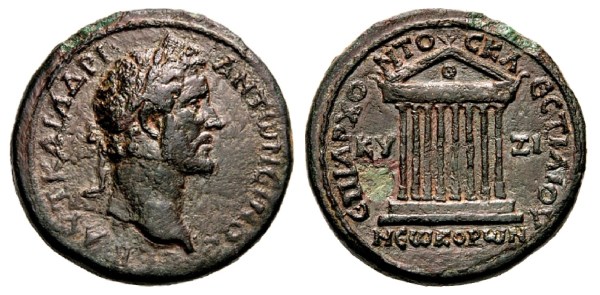











 following hadrian photography