The site of Oudhna, ancient Uthina, lies southwest of Tunis in the fertile Wadi Meliane plain. Founded as Colonia Iulia Tertiadecimanorum Uthina by veterans of Augustus’ 13th Legion, it prospered from the 1st to the 3rd centuries AD, reaching its zenith in the 2nd century AD, during which significant constructions took place, including an amphitheatre, a Capitol building, public baths, and private residences housing mosaics.
Uthina, a former Berber settlement, is one of the oldest Roman colonies in Africa. It was founded during the reign of Augustus, who granted the town and the surrounding land to the veterans of Legio XIII Gemina as a reward for their services. It earned the prestigious title of Colonia Iulia Tertiadecimanorum Uthina and flourished during the Antonine and Severan dynasties, with the construction of its principal monuments, including an amphitheatre, a capitol, and large public baths.
Christianity began to emerge in Uthina as early as AD 217, when Tertullian referenced its bishopric. In the centuries that followed, the city’s urban development declined, leading to the abandonment or disuse of several major structures. This decline became more pronounced during the Arab-Muslim period; however, ceramics found in the area indicate that people continued to inhabit the region.
In modern times, part of the site was acquired in the late 19th century by the French lawyer L. Ducroquet, who built his residence on top of the Capitol. After Tunisia gained independence, Oudhna fell into neglect. However, systematic excavation, restoration, and development resumed in 1993 under the direction of the National Heritage Institute and the Agency for Heritage Development and Cultural Promotion.
PORTFOLIO
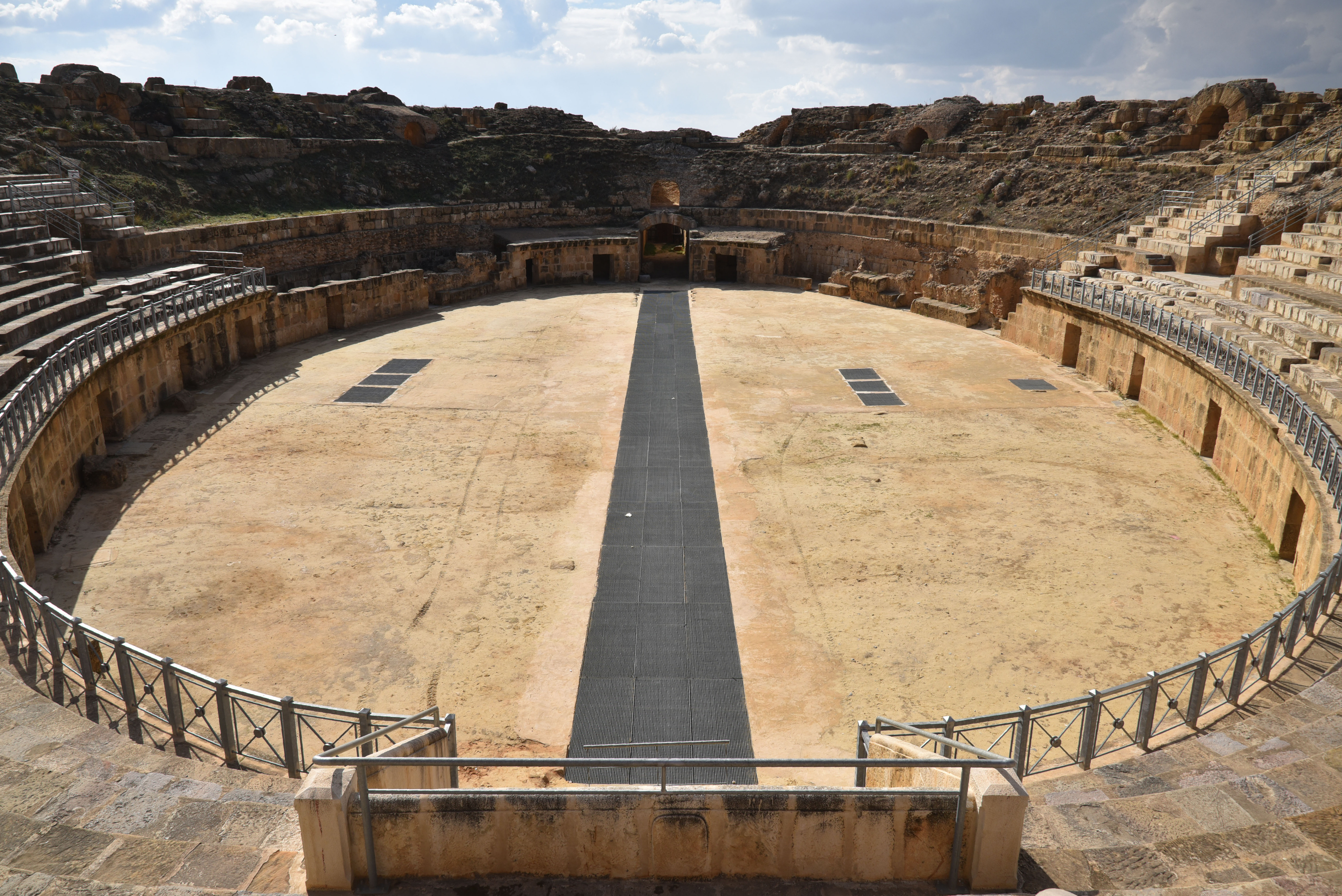
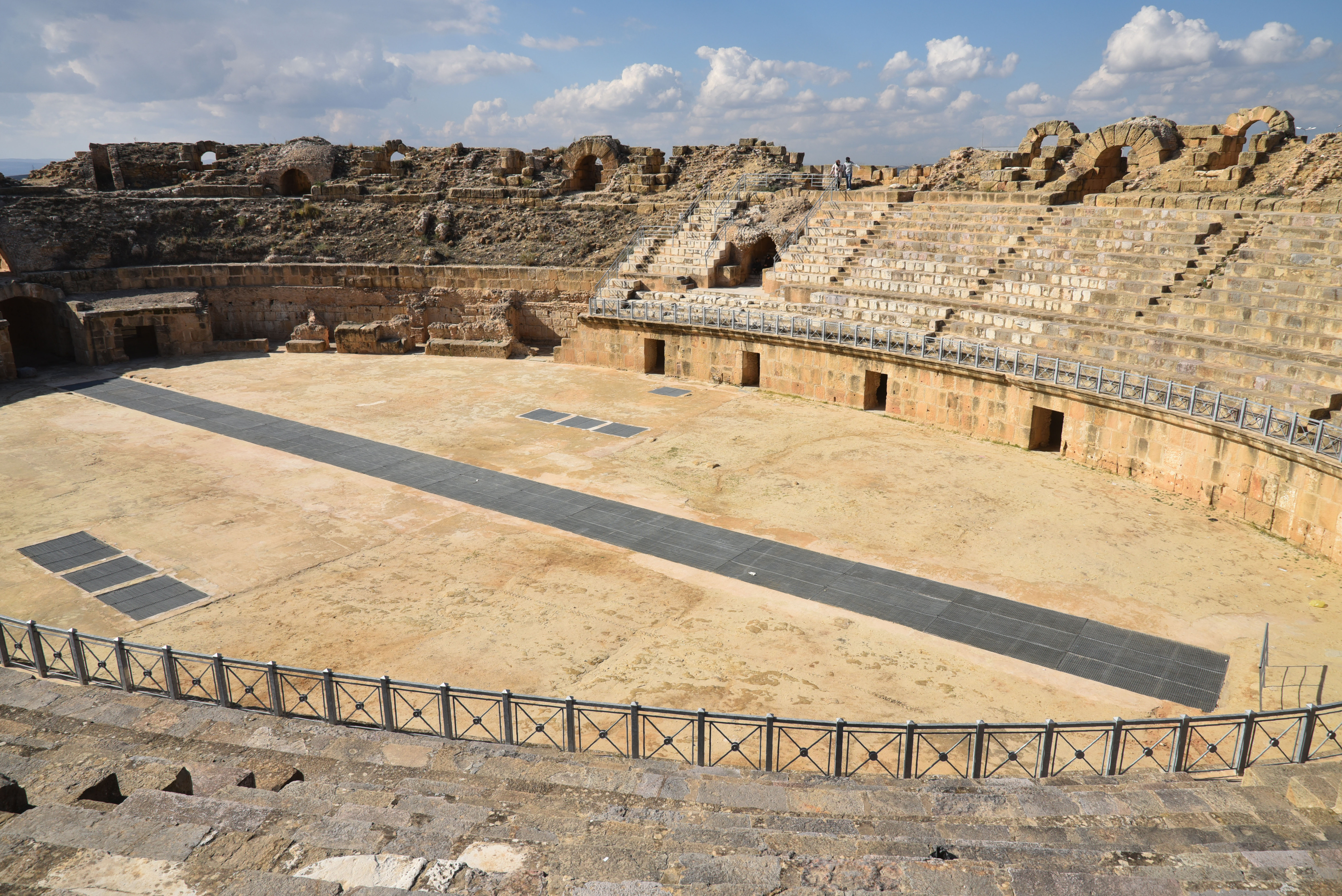
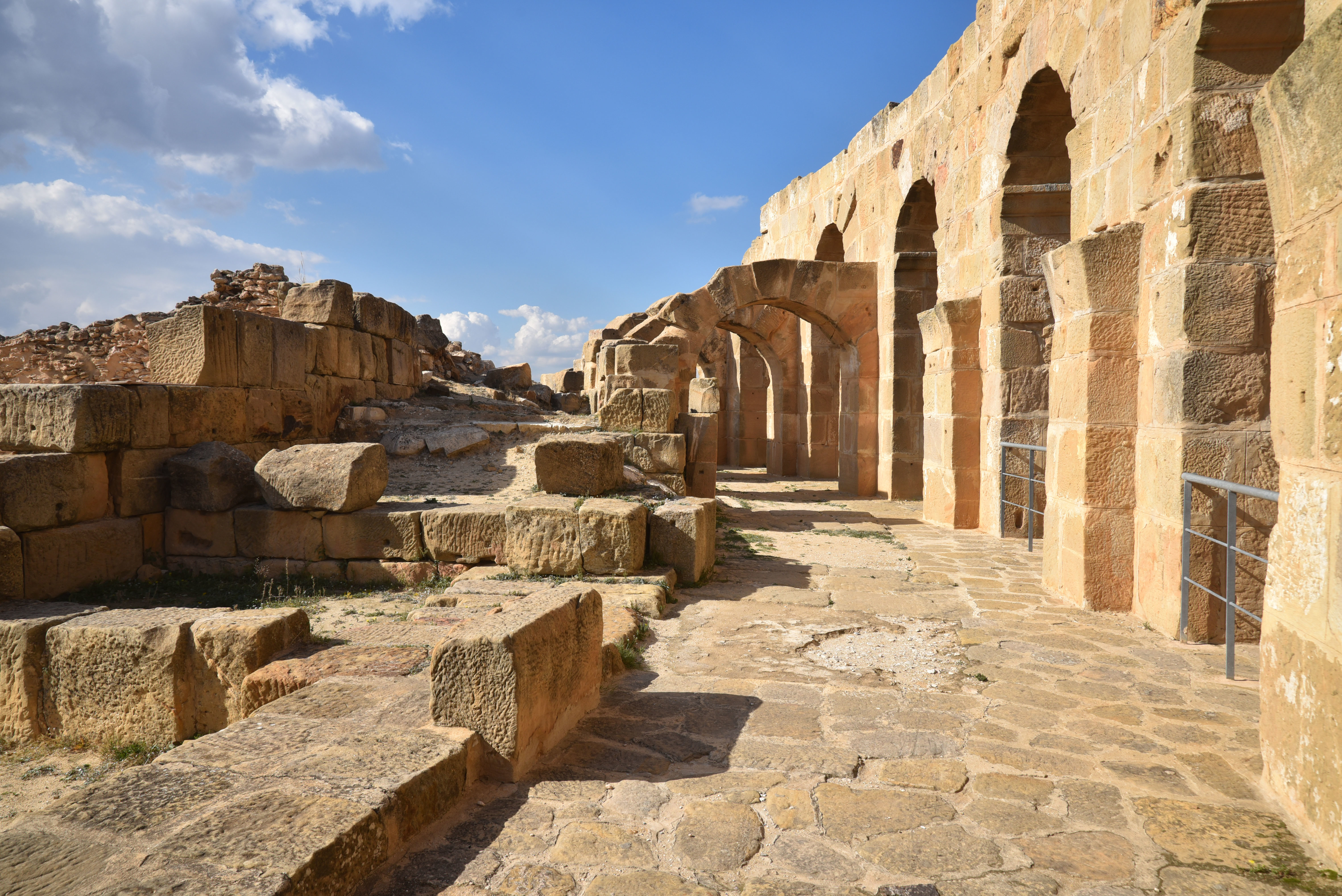
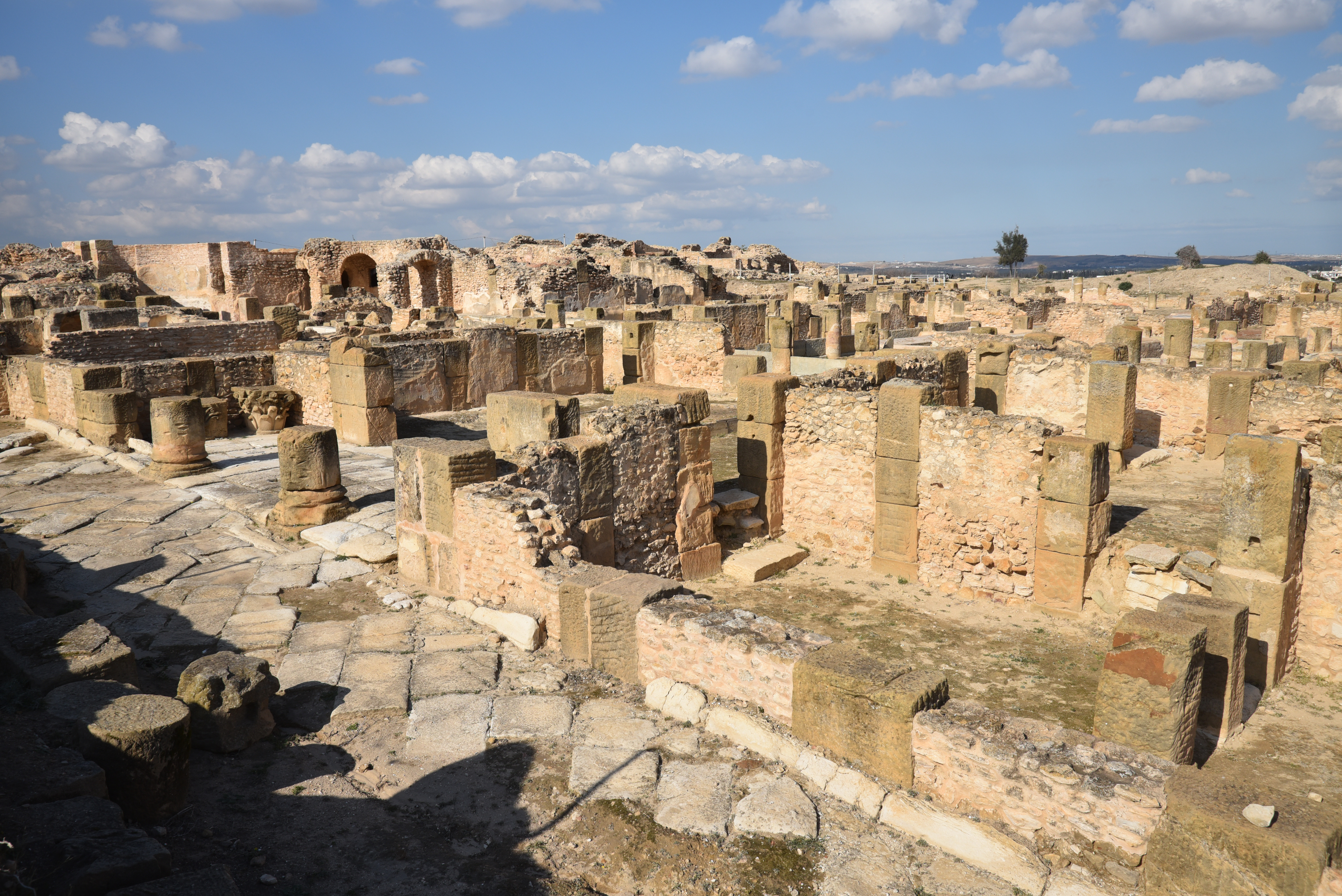
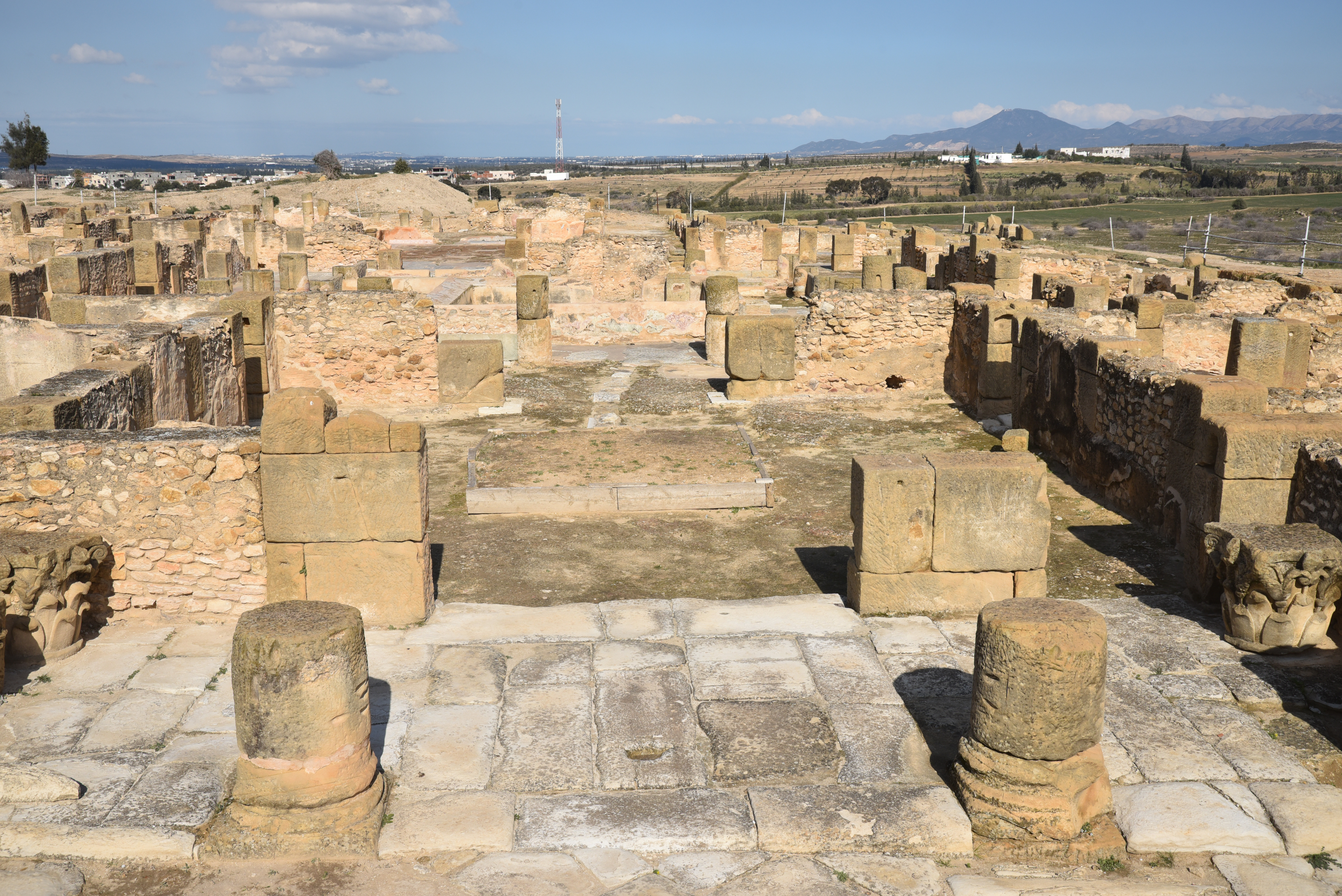
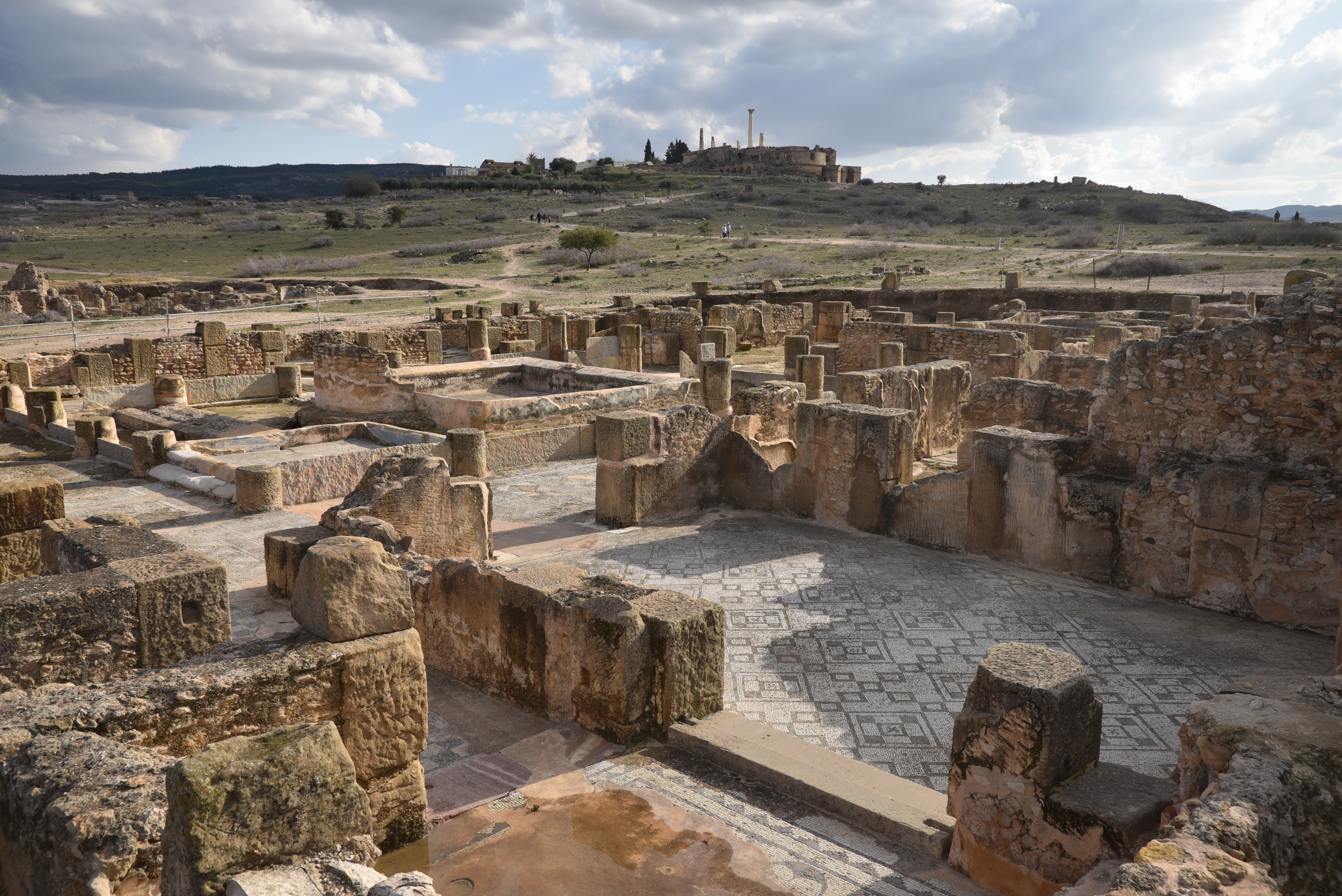
Inscription by soldiers of the legion XIII Gemina at the entrance to the archaeological site.The amphitheatre of Uthina, with a capacity of around 16,000 spectators, was the third-largest theatre in Tunisia after those at Carthage and El Djem. The central arena measures 58mx35m.The nearly fully restored amphitheatre, situated on the northern edge of Uthina, dates to the reign of Hadrian (AD 117-138).An underground vaulted gallery, aligned along a major axis, provides access to the amphitheatre’s basement, featuring symmetrical vaults and rooms beneath the central arena.The Baths of the Fishing Angels, constructed in the 2nd century AD. The baths are named after the well-preserved mosaic depicting the mythical “Fishing Angels” (Erotes) fishing in a stream.The Baths of the Fishing Angels.The Baths of the Fishing Angels.The finely decorated communal latrines in the Baths of the Fishing Angels.The House of the Laberii. Built towards the end of the 3rd century AD, the house features numerous rooms and spans approximately 1600 m².Copy of the mosaic in the House of the Laberii depicting Dionysus donating the grapevine to King Ikarios. The original mosaic is in the Bardo Museum in Tunis.The Baths of The Laberii. The Baths of the Laberii derive their name from an inscription found on a mosaic depicting Orpheus charming the animals, now housed in the Bardo Museum in Tunis.The Baths of the Laberii were constructed in the 3rd century AD by the Laberii, the wealthiest family in Uthina.The partly reconstructed Capitolium on the acropolis of Uthina. This impressive structure was erected under Emperor Hadrian and was dedicated to the Capitoline Triad of Roman gods: Jupiter, Juno, and Minerva.The Capitolium was built on a high podium, made possible by constructing an artificial terrace at the hill’s edge, which allowed it to be seen from a distance.The partially reconstructed columns of the Capitolium.The Capitolium stood in the Forum, at the top of the hill. It must have had a porticoed square, a basilica and other public buildings.Floor mosaic with Solomon’s knots near the Capitolium.The urban section of the aqueduct. Uthina was supplied with water by an aqueduct that captured water from three springs located to the south-east of the town, spanning a total length of 10 km.A cistern next to the urban section of the Aqueduct of Uthina. The water was stored in cisterns, which supplied the Great Baths with a steady supply of water. The aqueduct and cisterns were constructed in the 2nd century AD, alongside the town’s other main public monuments.
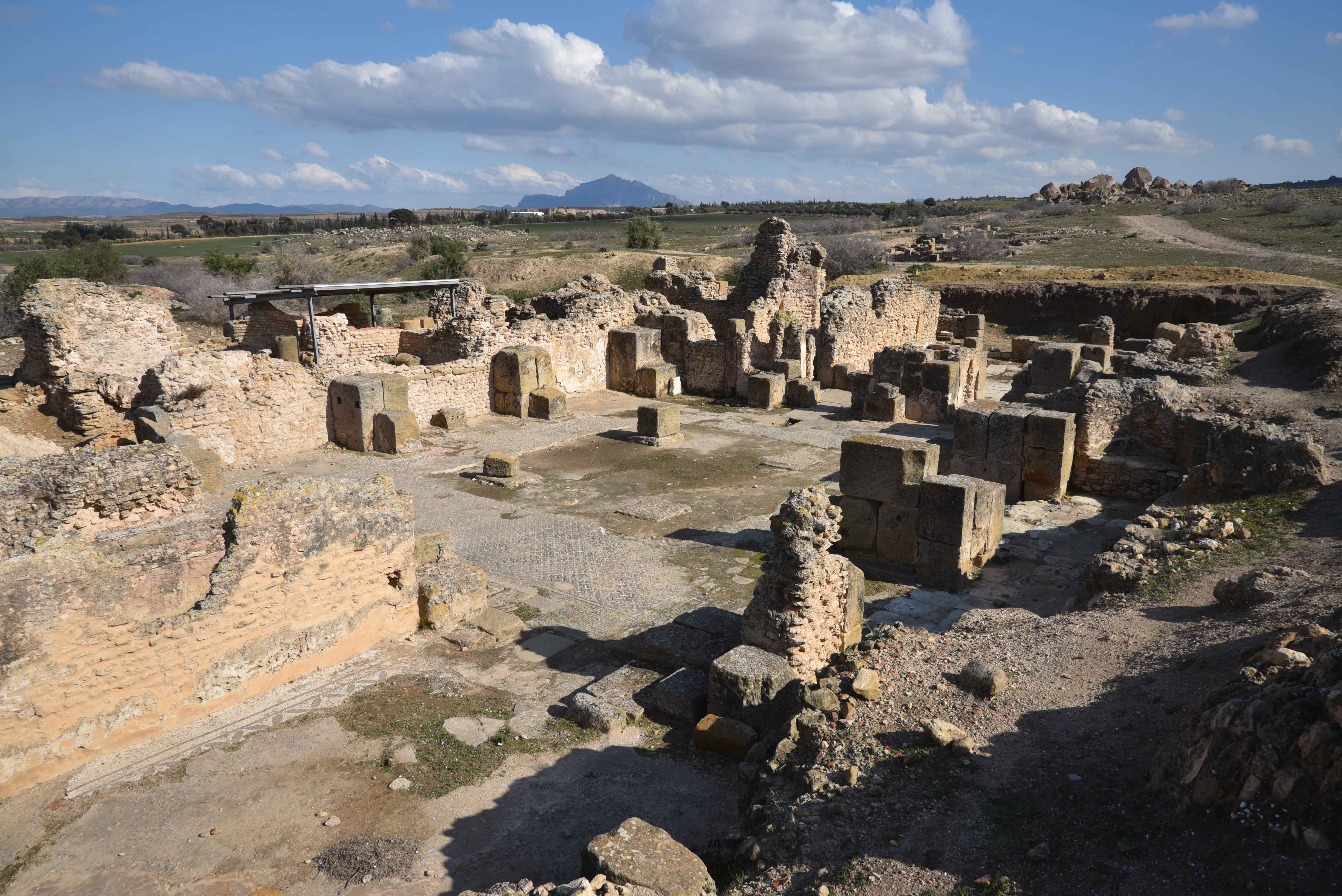
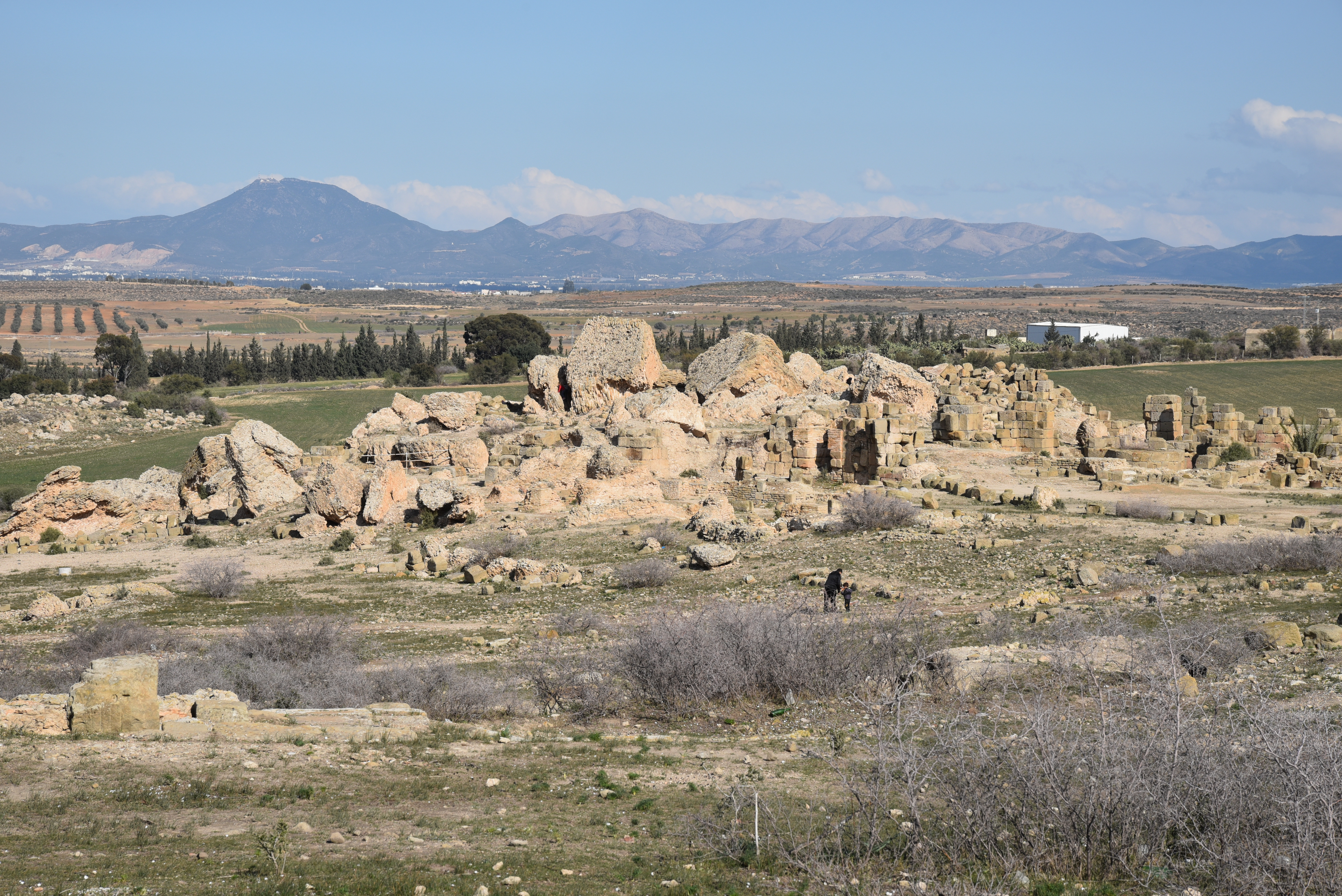
View over the Great Baths, built in the mid-2nd century AD in the eastern part of the town.The imposing ruins of the Great Baths. Only the underground level of this 12,000 m² structure remains today.







 following hadrian photography