
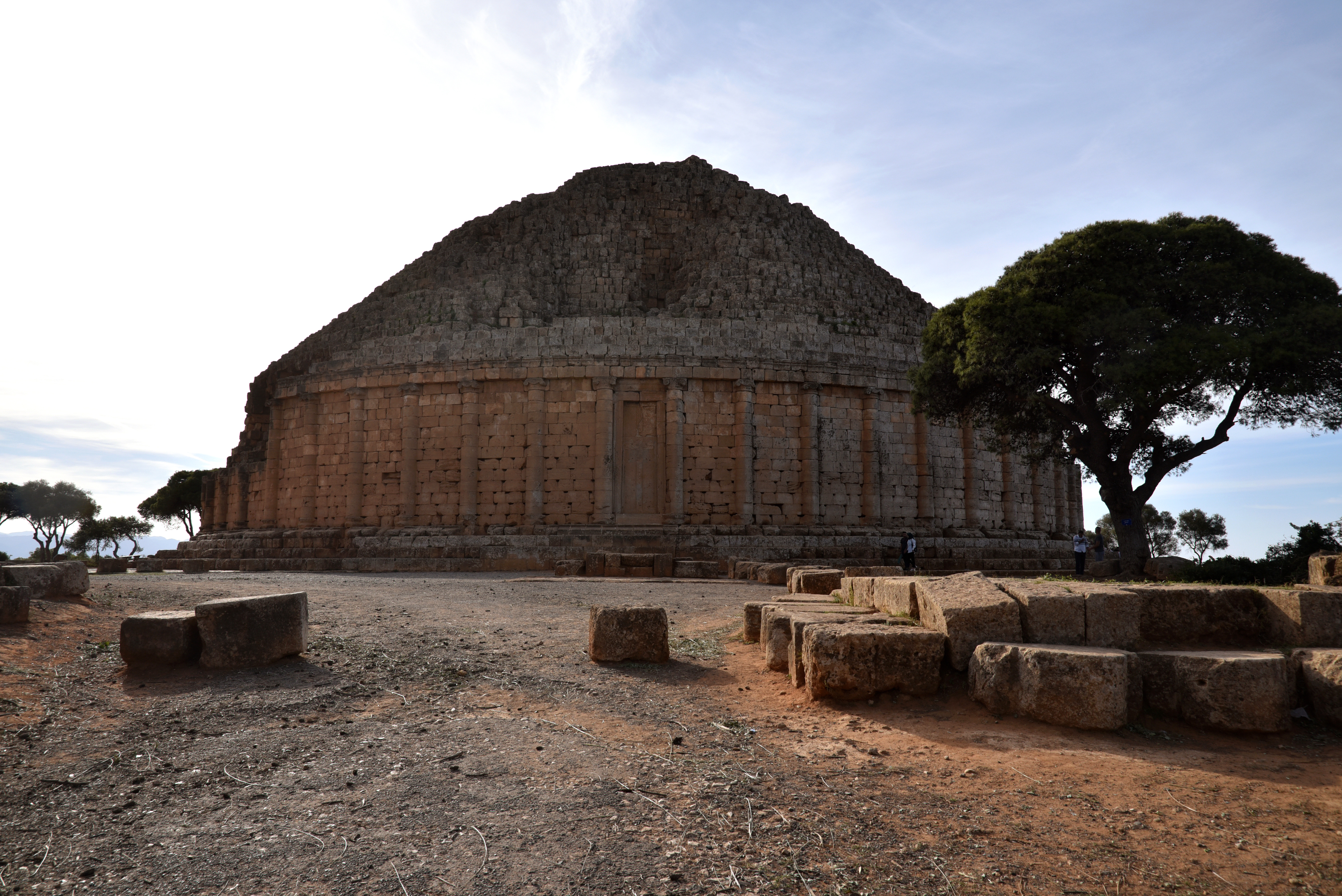
The Royal Mausoleum of Mauretania, located in Tipaza, Algeria, was constructed on a hill in 3 BC and is believed to be the final resting place of Juba II (son of Juba I of Numidia) and Cleopatra Selene II (Cleopatra and Mark Antony’s only daughter), although their remains have not yet been discovered. In 1982, UNESCO recognized the nearby archaeological sites of Tipasa and Cherchell, including the mausoleum, as a World Heritage Site.
Coordinates: 36° 34′ 29″ N, 2° 33′ 12″ E
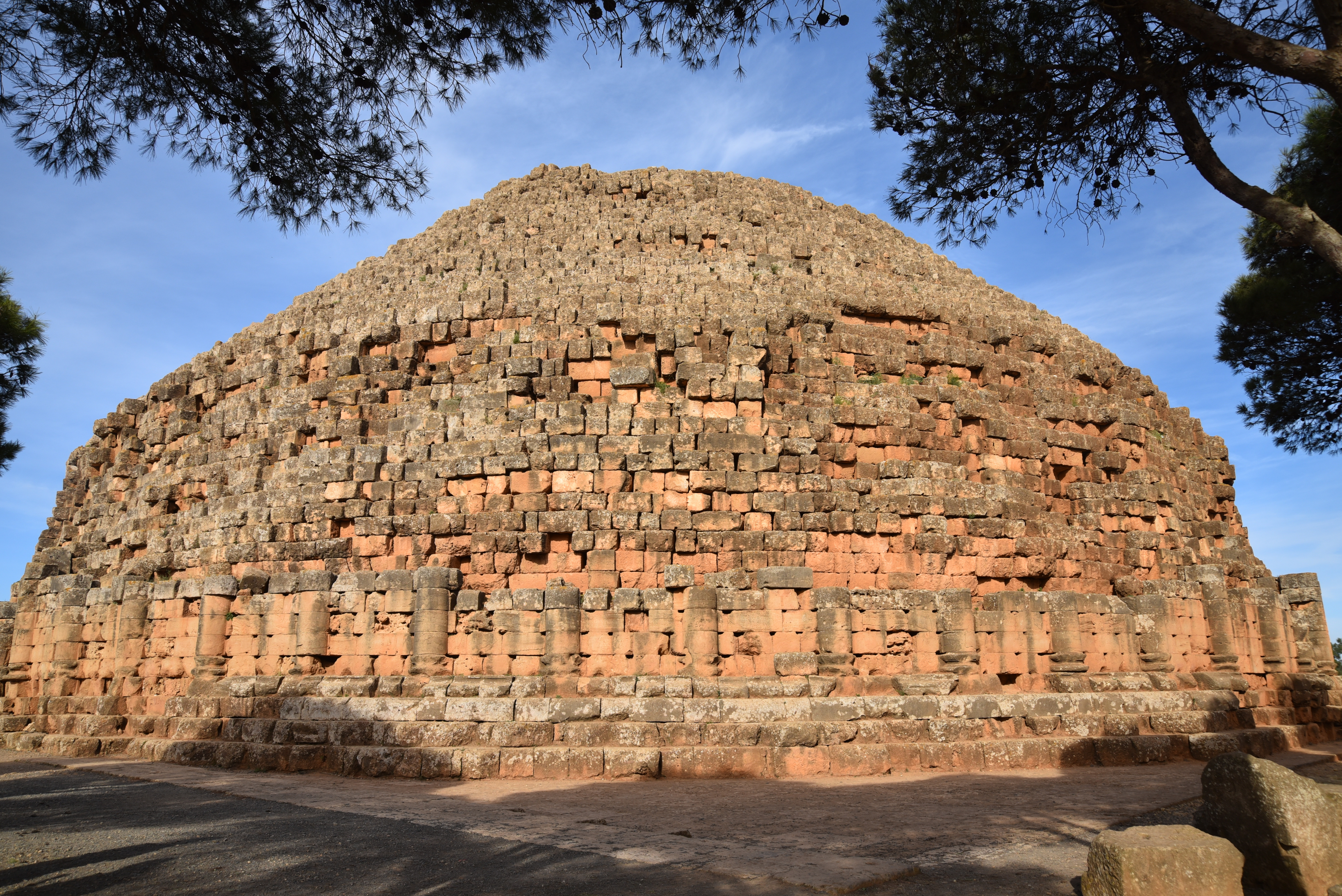
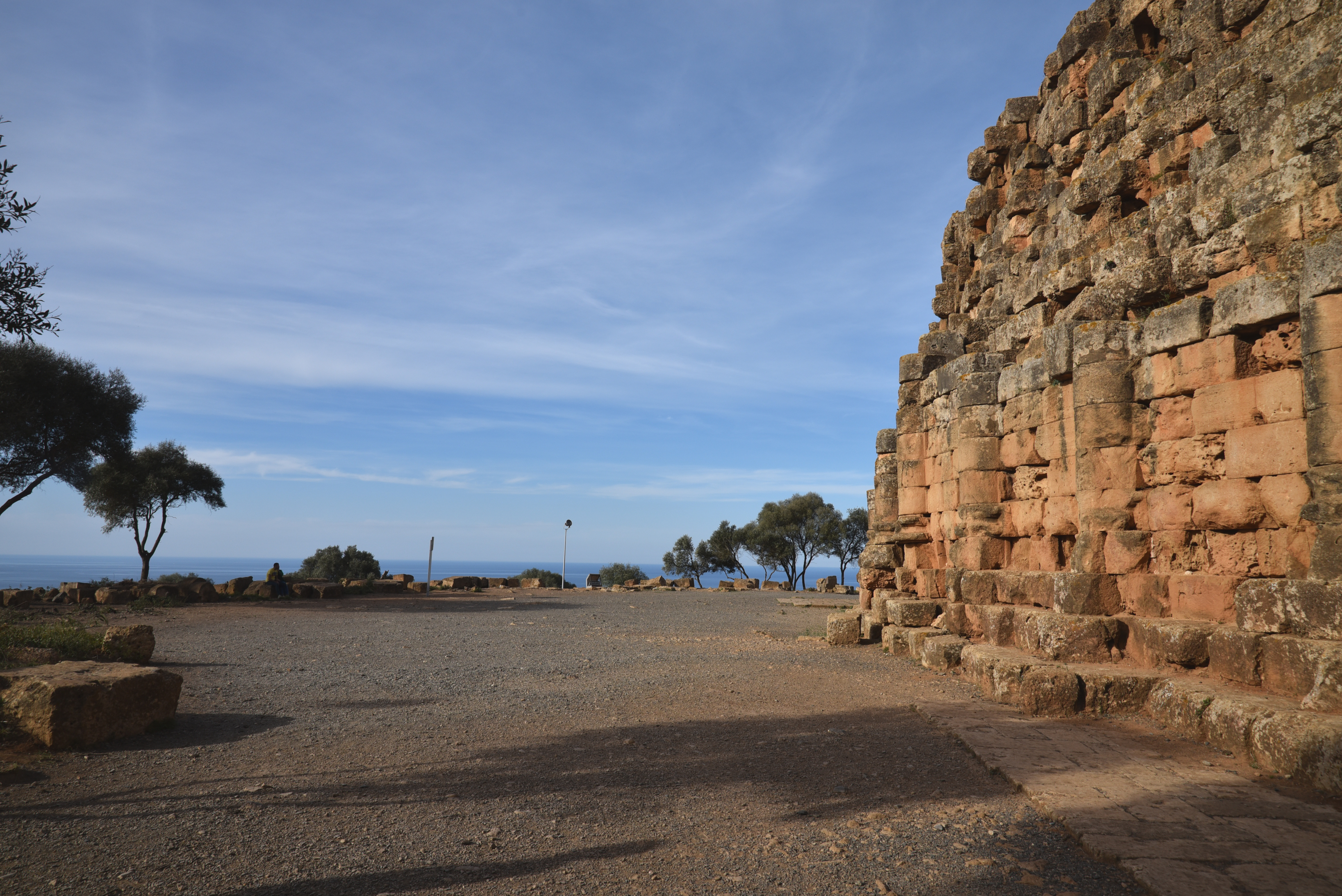
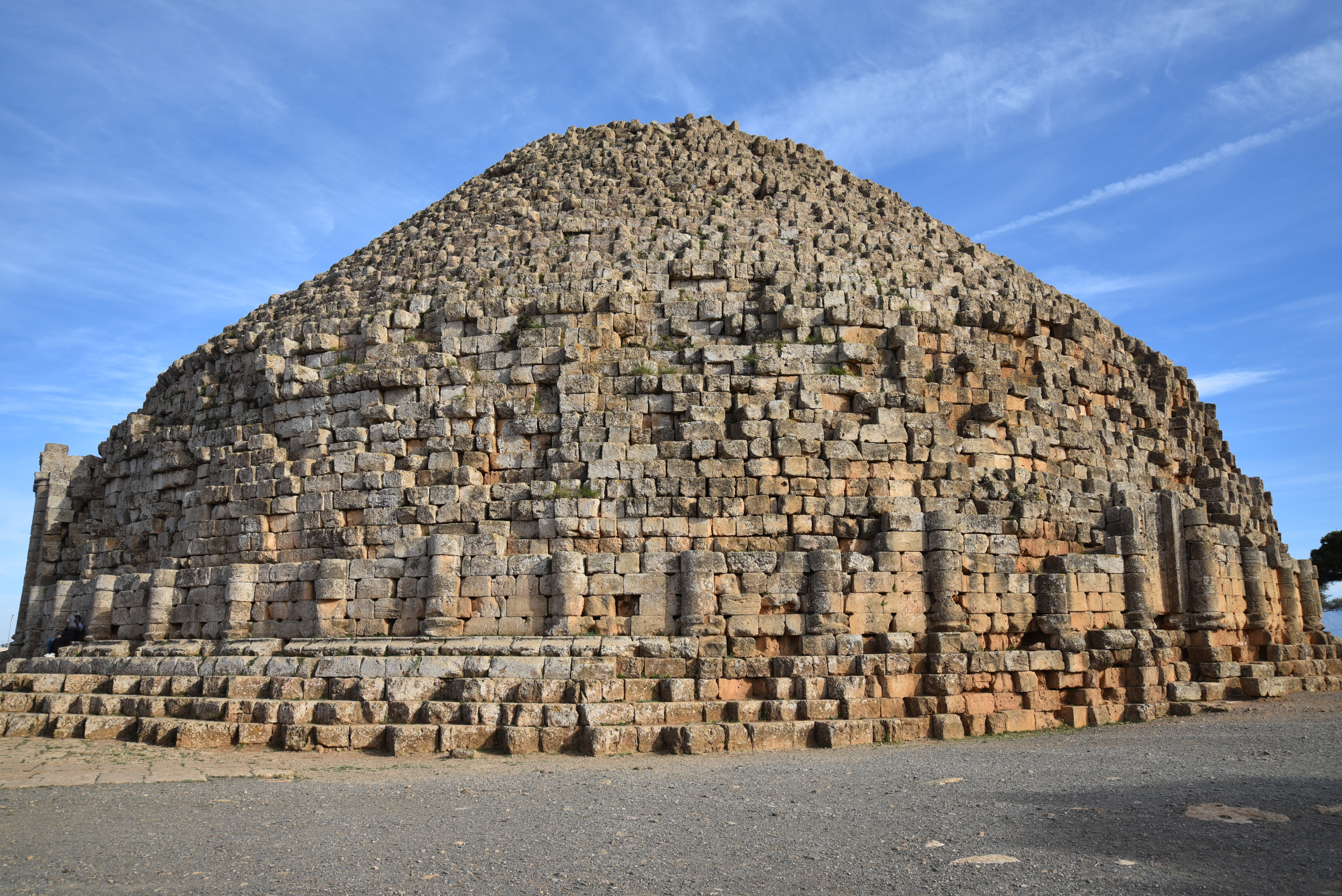
The Royal Mausoleum of Mauretania is a stone tumulus built on a circular base composed of a series of steps 55 centimetres high and was likely originally topped with a cone-shaped structure. The tomb is polygonal and was originally roughly 60 metres in diameter and 40 metres tall, although damage has reduced its height to around 33 metres. It stands on a square stone platform measuring 64 metres each way. Four false stone doors, each over 6 metres high, are located at the cardinal points in the colonnade. The eastern false door leads to an ante-chamber decorated with a carving of a lion and a lioness, an annular corridor and sepulchral chambers long since robbed. There are niches along the gallery walls at intervals for lamps, and in the central chamber, there are two niches designated for similar purposes or for cinerary vases.
The architectural design of the mausoleum resembles other Numidian tombs and draws inspiration from the Mausoleum of Augustus in Rome, which was built around 28 BC, shortly before Juba II returned to Numidia after his time in Rome. Compared to other North African mausoleums, its design is more Hellenized, featuring 60 Ionic columns surmounted by a frieze and cornice that show strong Greek influence. The Roman geographer Pomponius Mela mentioned the mausoleum around AD 40 as a communal tomb of the royal family (Pomponius Mela, Chorographia 1.26).

A similar monument can be found in eastern Algeria, the Medracen, located near Batna (see here). It differs in size, measuring only 18.5 m high, and has a different internal structure; it is also older.
Over the centuries, the mausoleum was frequently ransacked and attacked by treasure hunters with the aid of artillery. The first archaeological research was conducted in 1865-1866 by the French archaeologist and Inspector of Historical Monuments, Louis-Adrien Berbrugger, at the request of Napoleon III. He was succeeded by French architect Marcel Christofle, who continued the study of the interior and restored the external facings in the 1920s.
PORTFOLIO




Links & references:
- The Splendours of Roman Algeria
- Wikipedia
- images of the Royal Mausoleum (Tomb of the Christian) on Manar al-Athar digital image archive
- Blas de Roblès, Jean-Marie; Sintes, Claude; Kenrick, Philip. Classical Antiquities of Algeria: A Selective Guide (p. 127). Society for Libyan Studies. pp. 164-167
 following hadrian photography