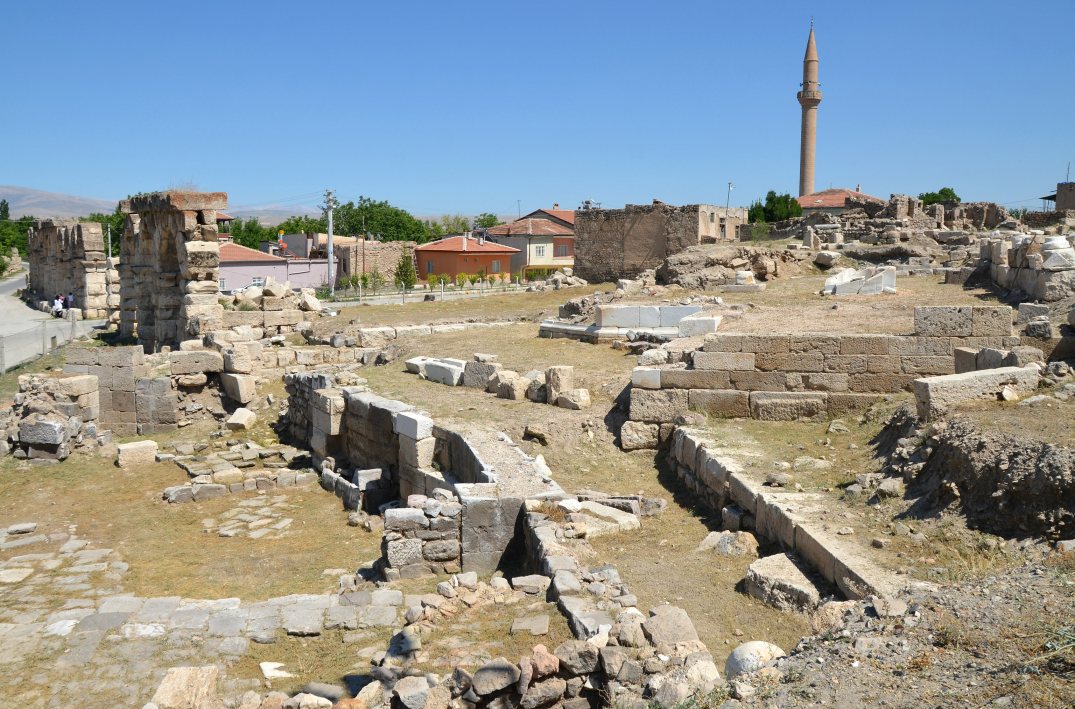
Tyana

Tyana is an ancient town in southern Cappadocia, located in Turkey in the village of Kemerhisar (“castle of the aqueduct”), ten miles south of Nigde. The city has a rich history dating back to the Hittites in the 2nd millennium BC. It gained prominence during the Hellenistic Period and became part of the Roman Empire. In the 1st century AD, Tyana was associated with the celebrated philosopher Apollonius of Tyana. Later, the city fell under Byzantine rule, followed by Arab and Seljuk invasions, before declining in the medieval period.

Coordinates: 37°49’32.0″N 34°34’26.4″E

Tyana was one of the most important cities of Central Anatolia for centuries and was known by several names. It was first reported in the Hittite archives under the name of Tuwanuwa and Tawuna in the Assyrian sourcesXenophon, who visited the city and described it as a “worldwide, big and blessed city” (Anabasis 1.2.20), mentions it under the name of Dana.

The name Tyana was first reported on coins minted by the Cappadocian ruler Αriaramnes (c. 255-220 BC) when it became the second most important city of the Cappadocian Kingdom. According to Strabo, the town was later renamed “Eusebeia near the Taurus” by King Ariarathes IV in the 2nd century BC. The new name remained in use until the Cappadocian Kingdom became a Roman province in AD 17, when the former name of Tyana was restored and established.

Coin of Hadrian minted in Tyana with the club of Herakles on the reverse. AD 117-138.
Coin from the author’s collection.

Tyana gained prominence during the Hellenistic Period but experienced significant development and prosperity under Roman rule. Due to its location, the city controlled the route from central Anatolia to the Cilician Gates and the Mediterranean. Several Roman Emperors, whose benefactions contributed significantly to Tyana’s development, visited the city on their way to the East. Hadrian‘s visits to Tyana in AD 117 and 129 further highlighted the city’s importance (read here).

One notable figure associated with Tyana in the Roman period is the philosopher Apollonius of Tyana, who lived in the 1st century AD. His teachings and reputed supernatural abilities elevated Tyana’s status, and the city became a centre for philosophical and religious activity. Hadrian’s interest in Tyana and its philosopher underscored the town’s cultural and intellectual significance in the Roman world. In AD 213, Tyana was renamed Colonia (Aureliana) Antoniana Tyanorum when Caracalla made the city a Roman colony, perhaps due to the Emperor’s admiration for the native philosopher and orator.

Coin bearing the image of Apollonius of Tyana.

Tyana continued to thrive through the later Roman period. In AD 372, Emperor Valens split the province of Cappadocia into two, and Tyana became the capital and metropolis of Cappadocia Secunda. The first Christian bishop is attested in AD 325. Tyana became a frontier city after the Muslim conquest of Cilicia, but lost much of its former importance and fell into decline in the 10th century AD.

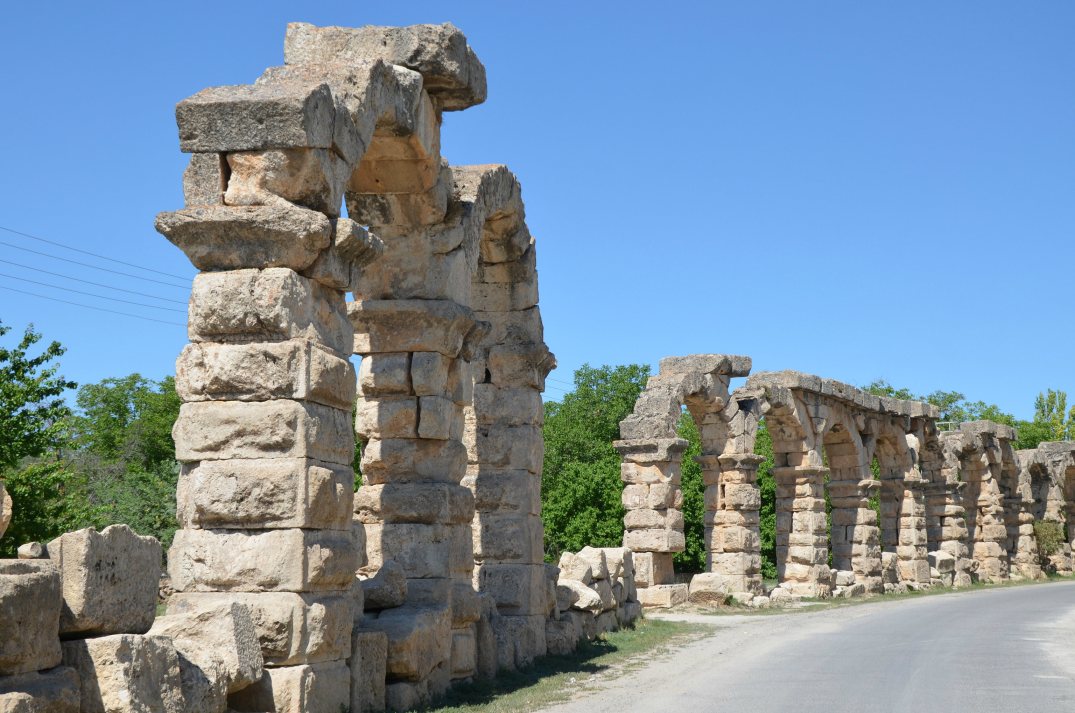
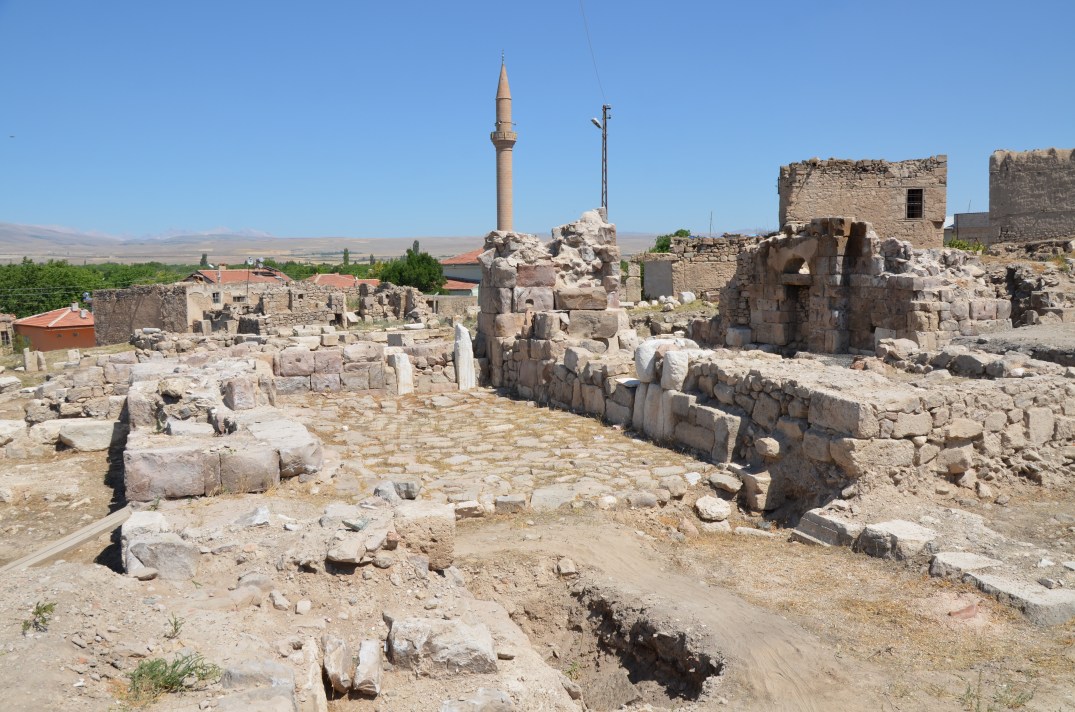
Today, the ruins of Tyana are noteworthy, and the chief surviving monument is the Roman aqueduct, with many of its arches still standing. The aqueduct was built during the reign of the emperors Trajan and Hadrian. It brought fresh water to the city from a spring four miles east of Tyana. The site is currently being excavated, and public baths and an early Christian baptistery have been identified. In 2020, during excavations, a 1,600-year-old octagonal church and 4th-century AD coins were discovered (see here).

PORTFOLIO

The aqueduct of Tyana stretches along Tyana Caddesi for nearly 1.5 km from the town centre to the East.
The Roman aqueduct brought fresh water to the city from a spring four miles east of Tyana.
Arches of the Roman aqueduct.
Water was transported via subterranean clay pipes for 2.5 km and then along the aqueduct for the final 1.5 km.
Tyana archaeological site.
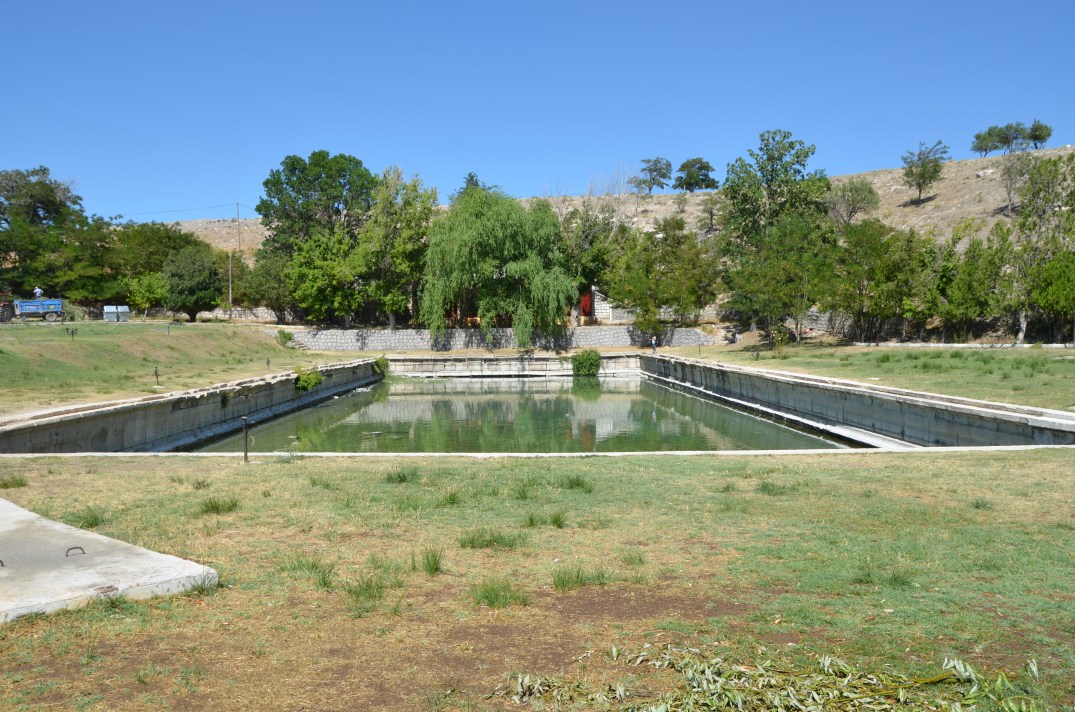
The water reservoir is a rectangular basin (23m x 66m x 2.5m) decorated with marble.
The water reservoir.

Links:

Soli/Pompeiopolis

Soli (later Pompeiopolis) is an ancient port city in Cilicia, 11 km west of Mersin in present-day Turkey. Founded in the 6th century BC by Rhodian colonists from Lindos, Soli developed into a prosperous city known for its cultural and intellectual achievements. It was renowned for its philosophers, including the famous Stoic philosopher Chrysippus and two distinguished poets, Philemon and Aratus. Soli was re-established in the 1st century BC by Pompey, who renamed the city of Pompeiopolis and used it as his naval base during his campaign against the Cilician pirates. The town served as a significant centre for trade and commerce due to its strategic location along the Cilician coast. Over time, Pompeiopolis experienced various cultural influences, reflecting the region’s diverse history. The city flourished during the Roman and Byzantine periods but eventually declined, like many ancient cities, due to economic shifts and invasions.

Coordinates: 36° 44′ 31″ N34° 32′ 24″ E

Soli was first mentioned by Xenophon as a maritime town of Cilicia between the mouths of the rivers Lamus and Pyramus, from each of which its distance was about 500 stadia. It was supposedly founded by Greek colonists from Lindos on Rhodes. Over time, this village grew into a significant city and became the province’s capital when the Persians ruled Asia Minor. Soli prospered under Achaemenid hegemony, minting coins to the Persian standard until Alexander the Great drove the Persians out of Cilicia in 333 BC. In Hellenistic times, under the rule of the Seleucid dynasty, Soli continued to grow and prosper until its destruction by Tigranes II (King of Armenia and the Seleucid Empire) in 83 BC.

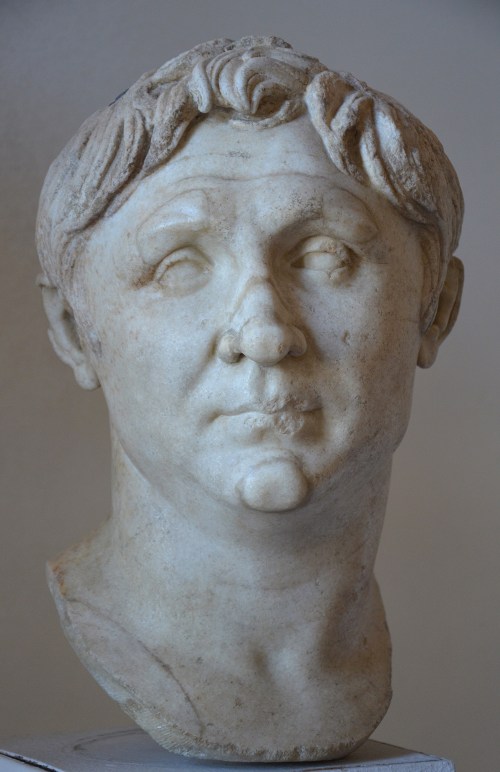
In 67 BC, Pompey the Great restored the city and colonised it with survivors from his successful campaign against the Cilician pirates. He renamed the site Pompeiopolis. Pompeiopolis likely absorbed elements of the older Soli, contributing to the region’s continuous historical development. The city was then surrounded by new defensive walls, and many public buildings and roads were built.

Pompey the Great, Augustan copy of a 70-60 BC original.
Venice Museo Archeologico Nazionale

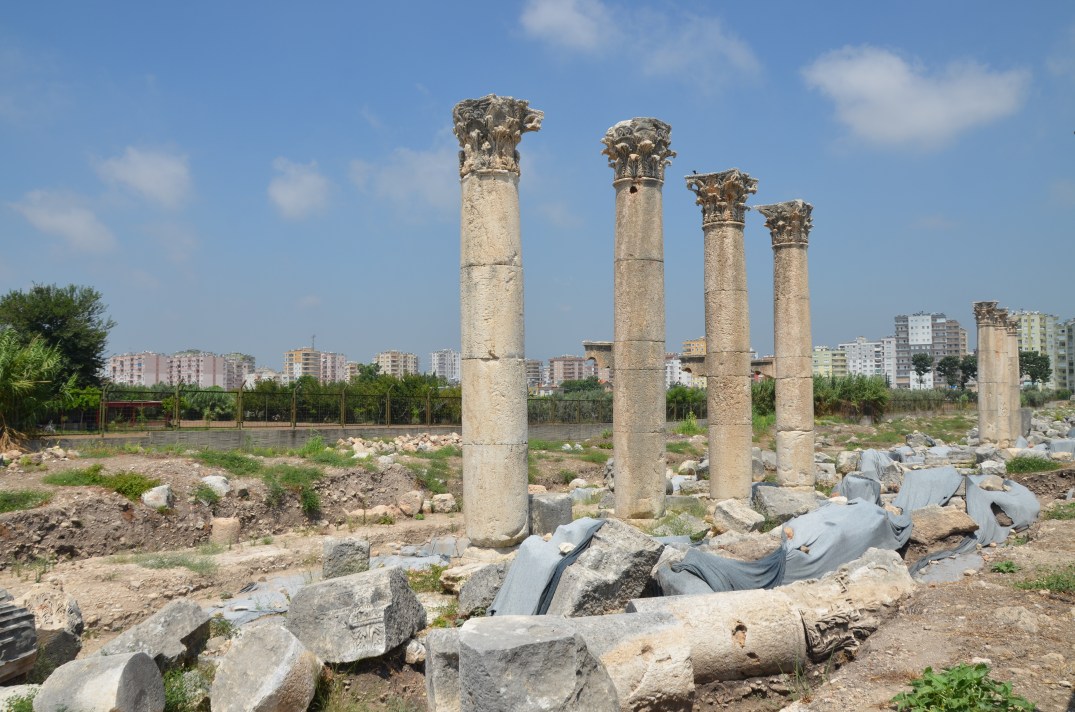
Only a few remains of ancient Pompeiopolis have survived, including the harbour basin and columns of a colonnade road that led from the northern gate of the city to the port. A theatre seen by travellers at the beginning of the 19th century is no longer visible. The harbour of Pompeiopolis played a crucial role in the city’s prosperity, serving as a hub for maritime trade and commerce. The harbour was strategically located along the Cilician coast, facilitating connections with other Mediterranean regions. The well-designed harbour infrastructure, including docks and loading facilities, contributed to the city’s economic growth.

In AD 129/30, the province of Cilicia was visited by Hadrian, who donated funds for the expansion of the port in Pompeiopolis, but the work was completed only in the reign of Antoninus Pius, his adopted son. The completion of the harbour renovations was celebrated on the coinage. The coin’s reverse depicts a two-storey harbour and a divine figure lying down within it, probably representing a local river god. A lighthouse is visible at the end of the western breakwater. On the roof of the harbour, jar-like objects are perched at regular intervals, and a torch is seen between the first two. These torches are thought to have been used to illuminate the harbour. In AD 525, Pompeiopolis was completely destroyed by a powerful earthquake and never regained its former importance.

The bronze coin of Antoninus Pius features the harbour of Pompeiopolis on the reverse. Dated AD 138 – AD 161. (RPC IV.3, 3581)
American Numismatic Society

In 2018, a 1,700-year-old portrait bust was uncovered, believed to be of a Roman aristocrat (see here).

PORTFOLIO

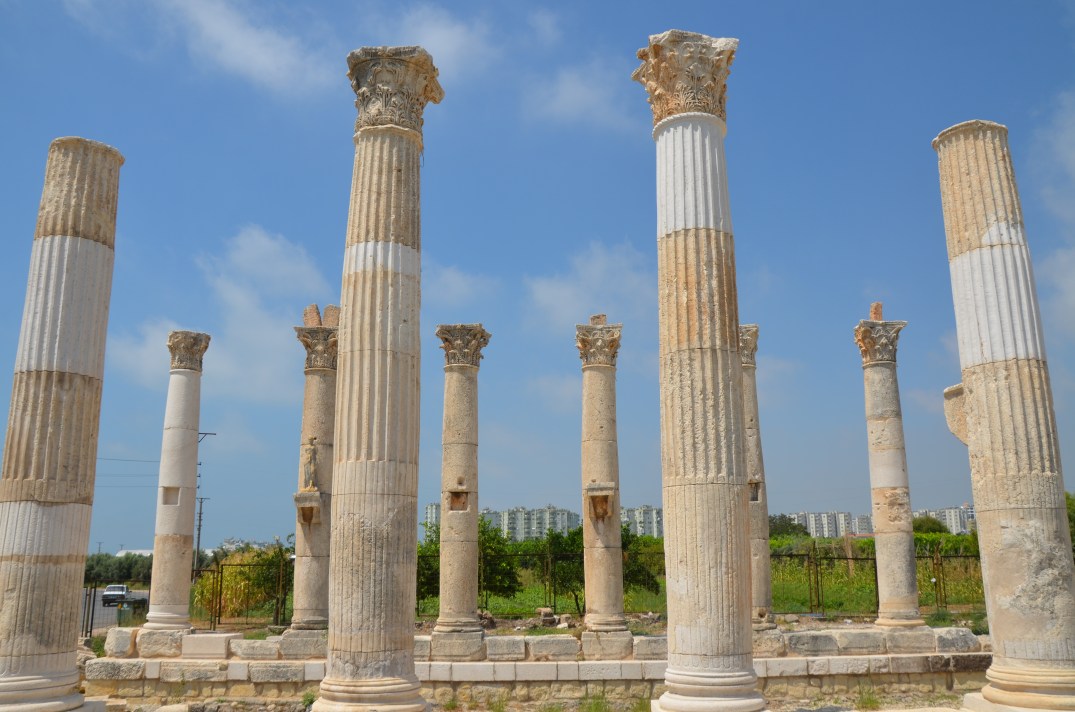
The restored southern end of the Colonnaded Street that led from the northern gate of the city to the harbour.
The 360 -metre-long boulevard was lined with a total of 200 columns. 41 columns are still standing, and as many as 33 of these columns have retained their capitals.
Column Console with a Statue of Nemesis. The consoles facing the colonnaded street have the busts of the Roman emperor Balbinus and various deities such as Asclepius, his daughter Hygieia, Zeus, Nemesis, Demeter and Dionysus.
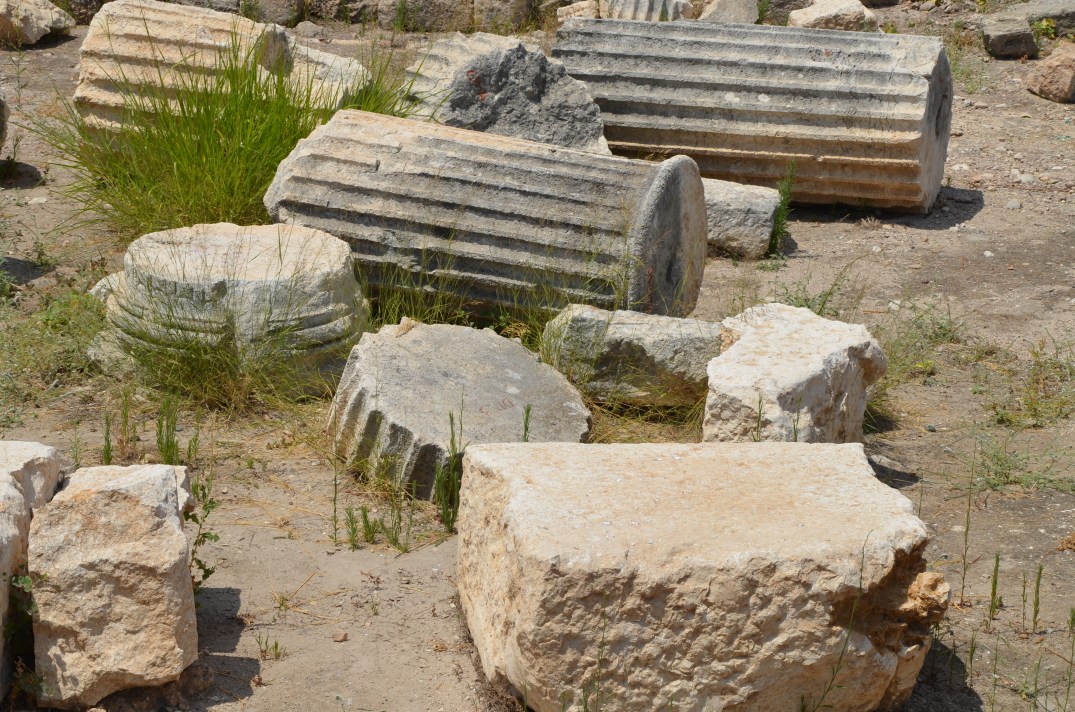
Fragments of Columns from the Colonnaded Street.
The restored southern end of the Colonnaded Street that led from the northern gate of the city to the harbour.

Corinthian Column and Capital.

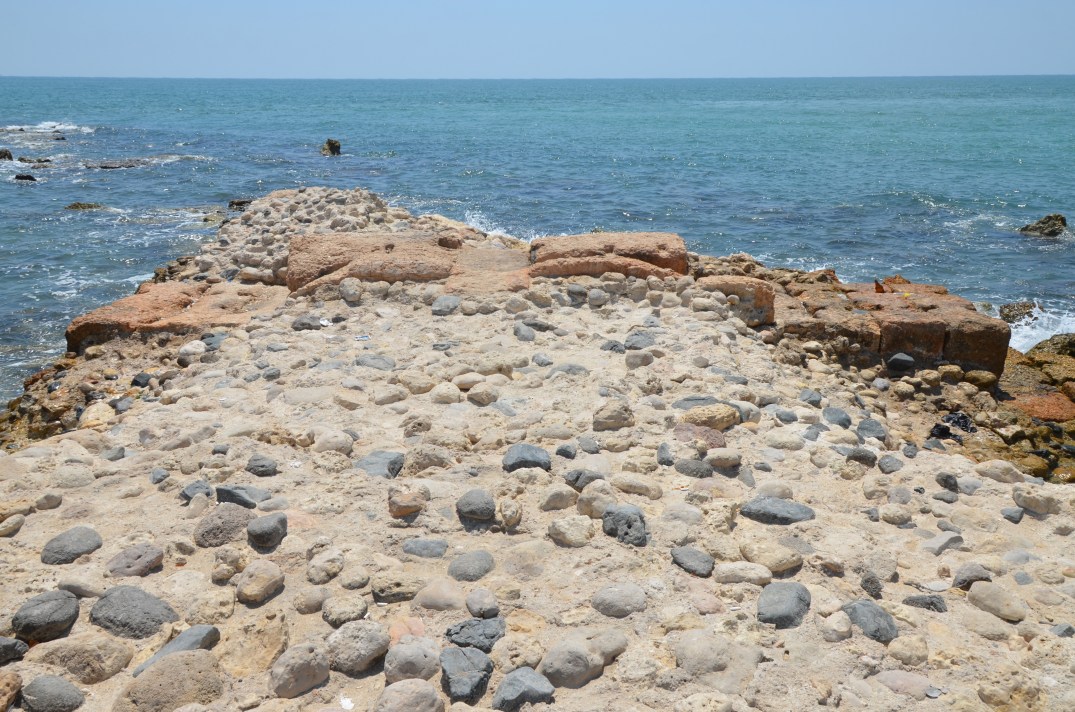
The western mole of the Hadrianic/Antonine harbour.
The western mole of the Hadrianic/Antonine harbour with ashlar wall.
The western mole of the Hadrianic/Antonine harbour.
Remains of the western mole of the Hadrianic/Antonine harbour.

Links: