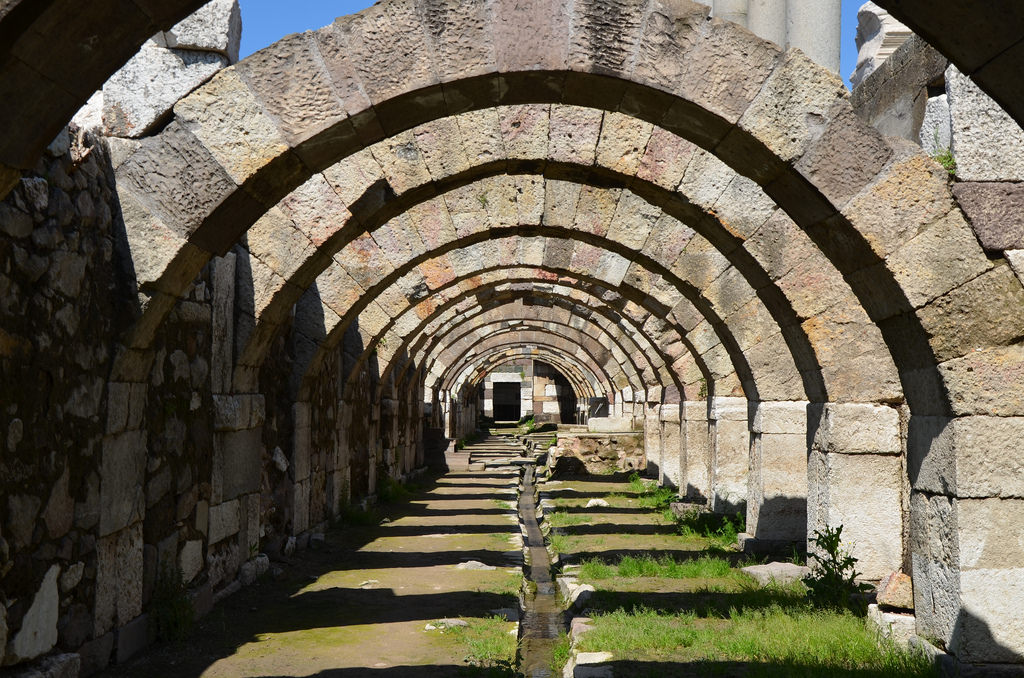
Smyrna was an ancient Greek city and important seaport located at a central and strategic point on the western coast of Anatolia (today Izmir, western Turkey). The early Hellenic settlement lay on a small peninsula, inhabited since the beginning of the 3rd millennium BC, on the northeast coast of the Gulf of Smyrna. Excavations have brought to light some of the city’s most important ruins. Two sites of the ancient city are located within the boundaries of İzmir today. The first site, Old Smyrna, has a few Archaic Period remains on the northeastern side of the bay of Izmir. The second, known as New Smyrna and associated with the foundation of Alexander the Great, reached metropolitan proportions during the Roman Empire. Smyrna competed with Pergamon and Ephesus for the title “First City of Asia”, claiming to be the poet Homer‘s birthplace.
Coordinates: 38° 25′ 7″ N, 27° 8′ 21″ E
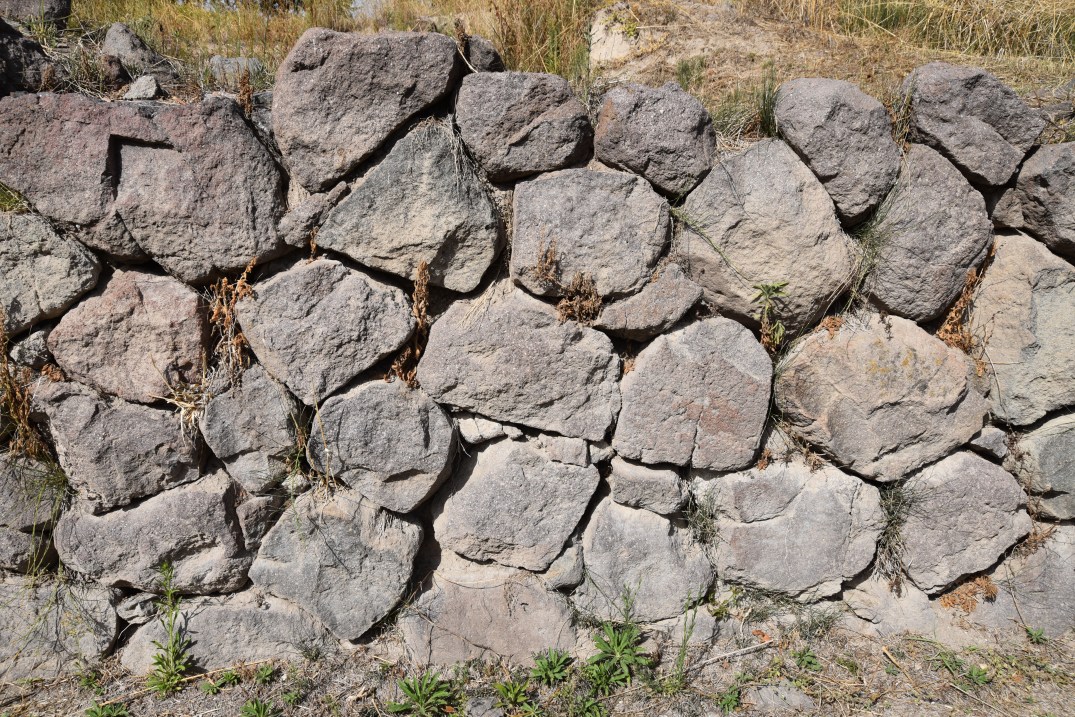
The Gulf of Smyrna was supposedly settled by Aeolians (Greeks from the sector north of Athens) at the beginning of the first millennium BC and later by Ionians (Athenians and their immediate neighbours). The site of the original settlement occupied an area of around 90,000 square meters and was inhabited for about 3,000 years until the second half of the 4th century BC. Smyrna’s principal place of worship was the Temple of Athena. Its ruins, located in the Bayrakli district of Izmir, date from 725-700 BC.
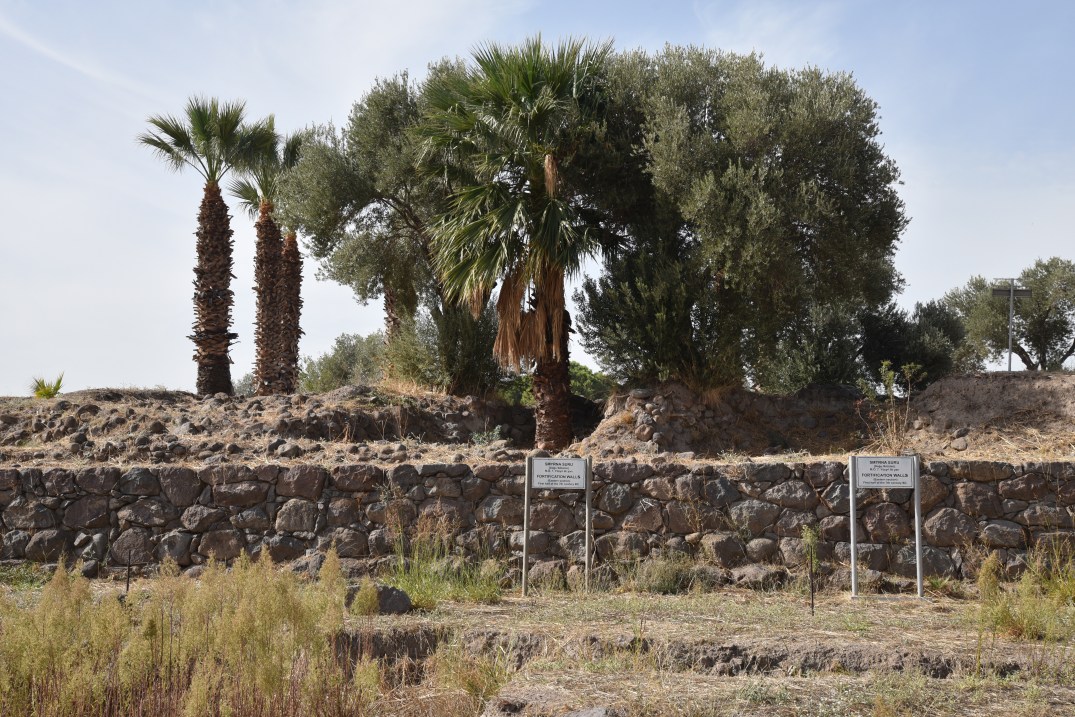
Old Smyrna was attacked by the Lydian king Alyattes around 627 BC and established control over the coastal communities. Alyattes destroyed the city and expelled its inhabitants, and henceforth, for 400 years, it was deserted and in ruins. The polis became a rural village, paying taxes to the Lydian king and subsequently to the Medes and the Persians.

 In the time of Alexander the Great, a new, larger city was founded on the slope of Mount Pagus. According to legend, Alexander is said to have wanted to rebuild the city at this location. During one of his hunting expeditions on the slopes of Mount Pagus, Alexander, exhausted by the chase, fell asleep under a tree and had a dream in which two Nemeses instructed him to build a city on this very spot. And so Mount Pagus became the acropolis of New Smyrna. But Alexander did not live to carry this plan into effect; it was only accomplished by his successors, Antigonus and Lysimachus. New Smyrna was built at a distance of twenty stadia to the south of Old Smyrna.
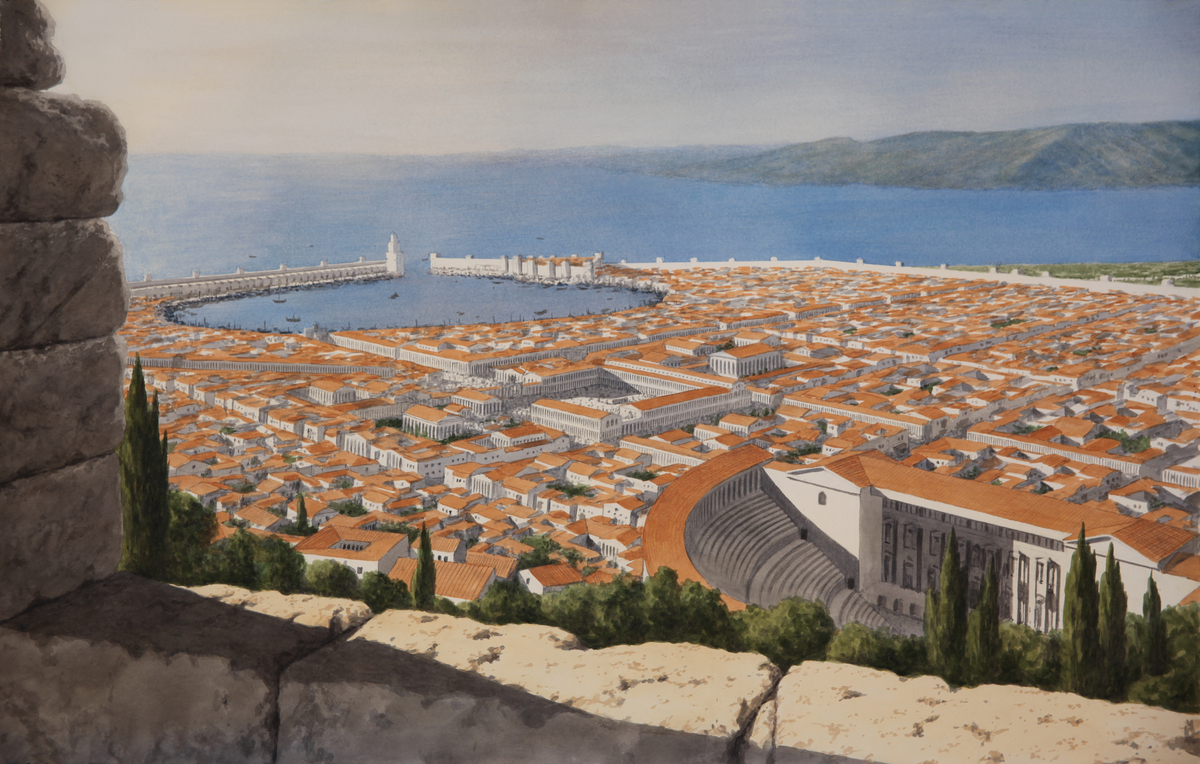
Illustration by Balage Balogh / archaeologyillustrated.com
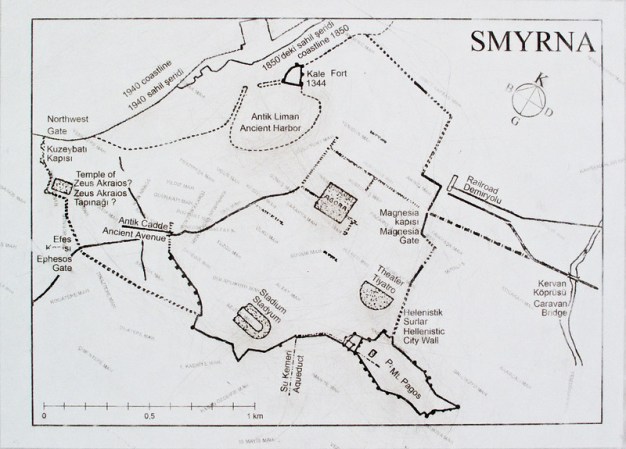
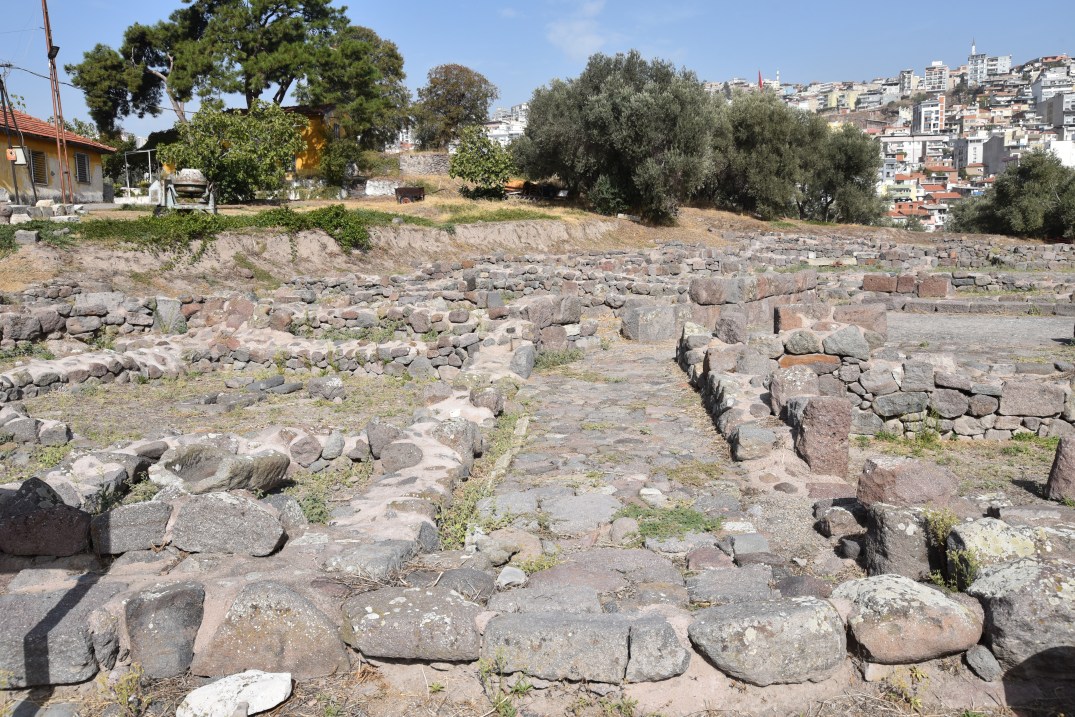
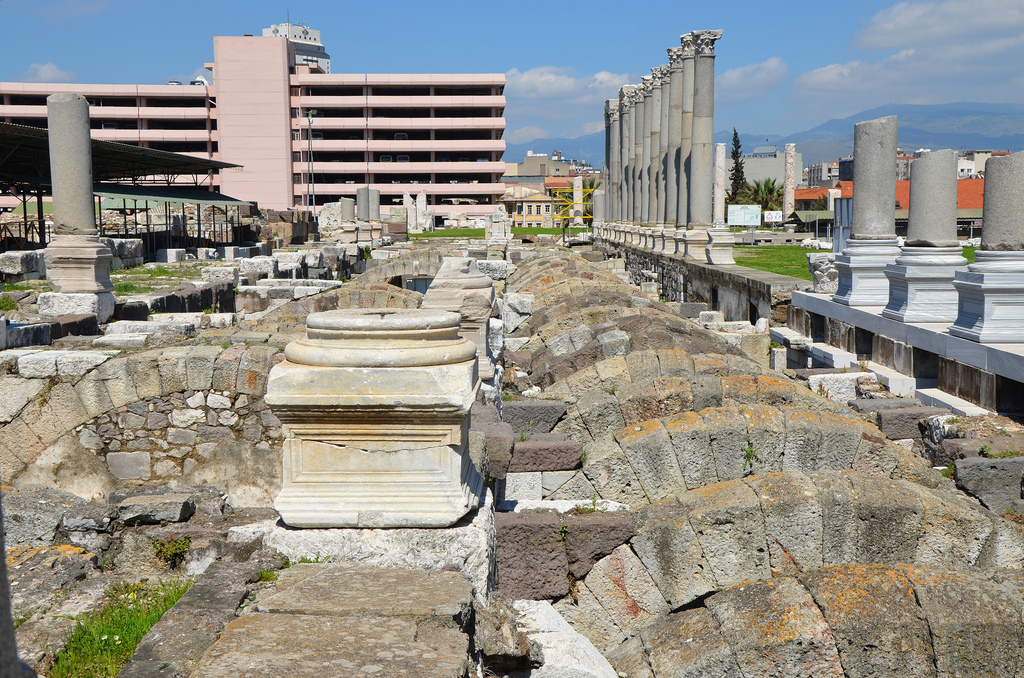
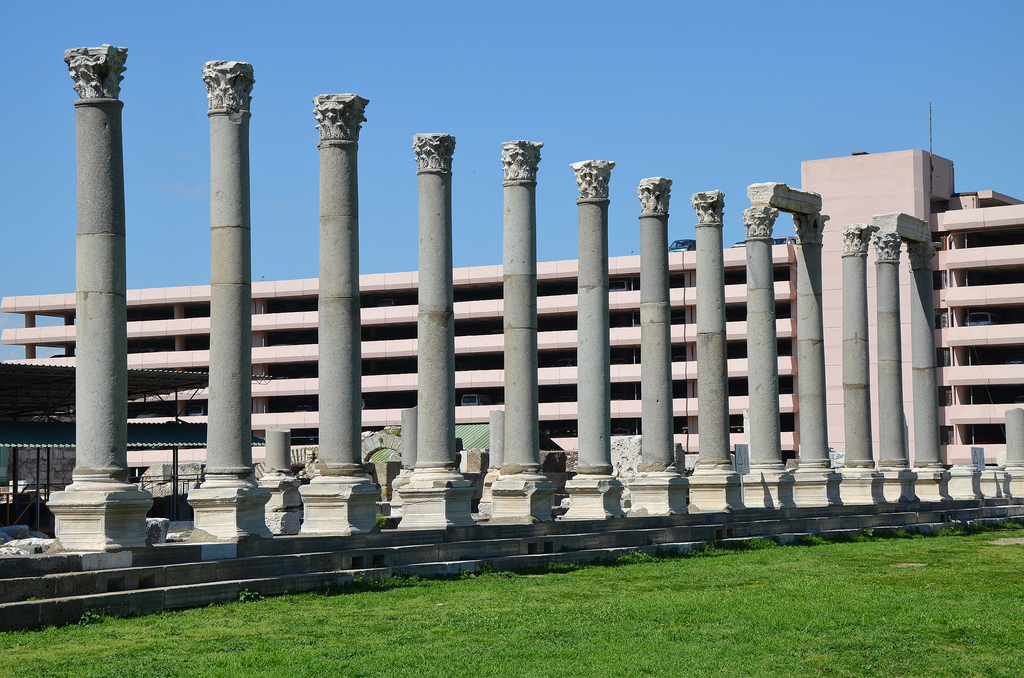
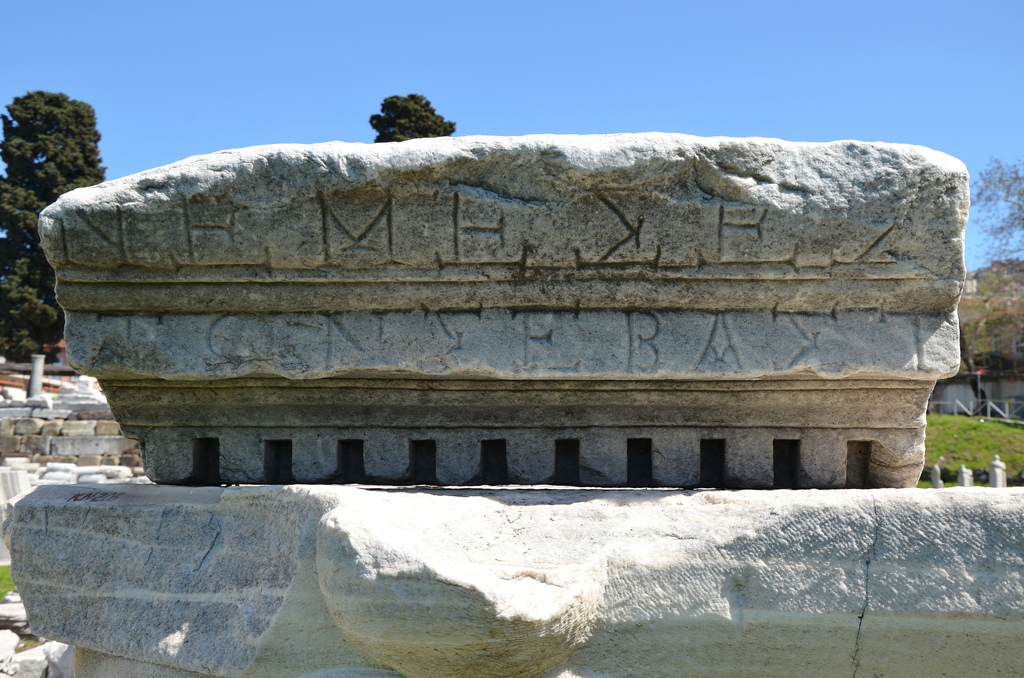
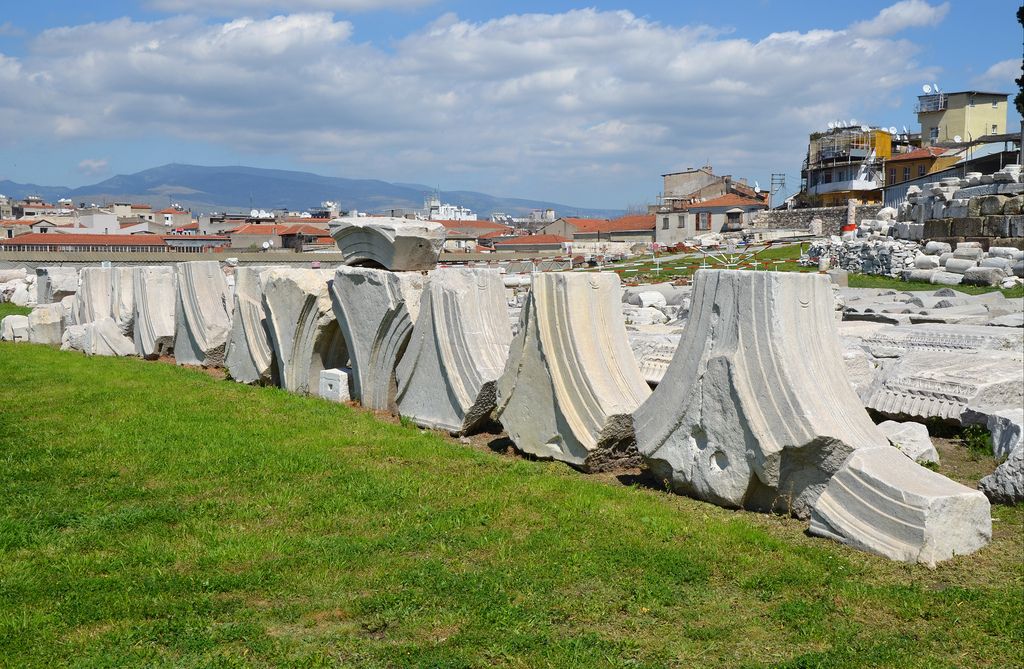
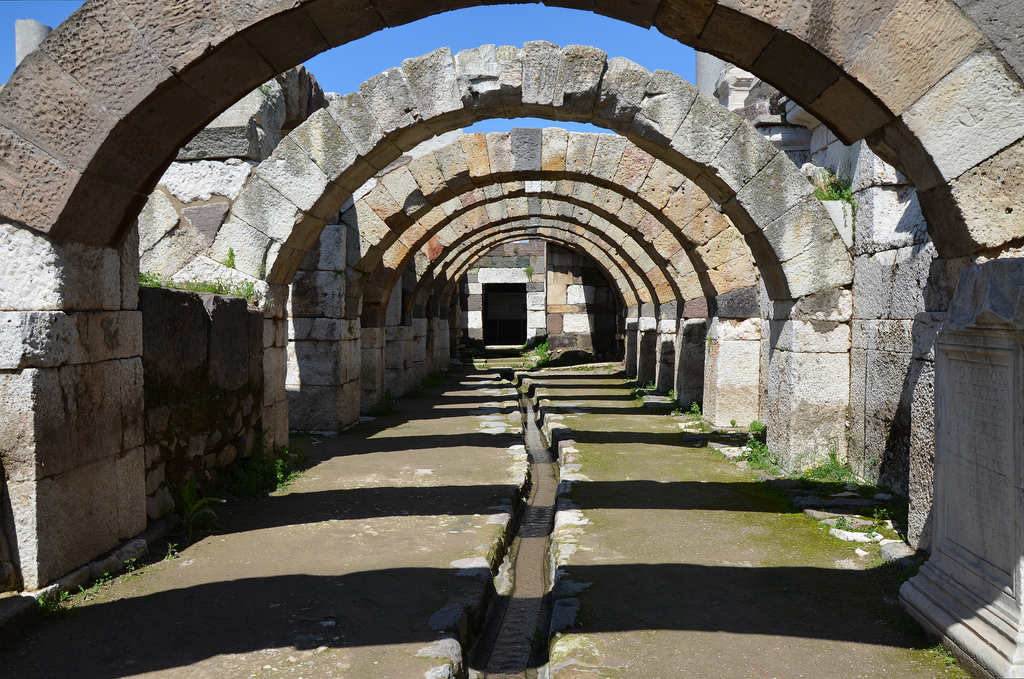
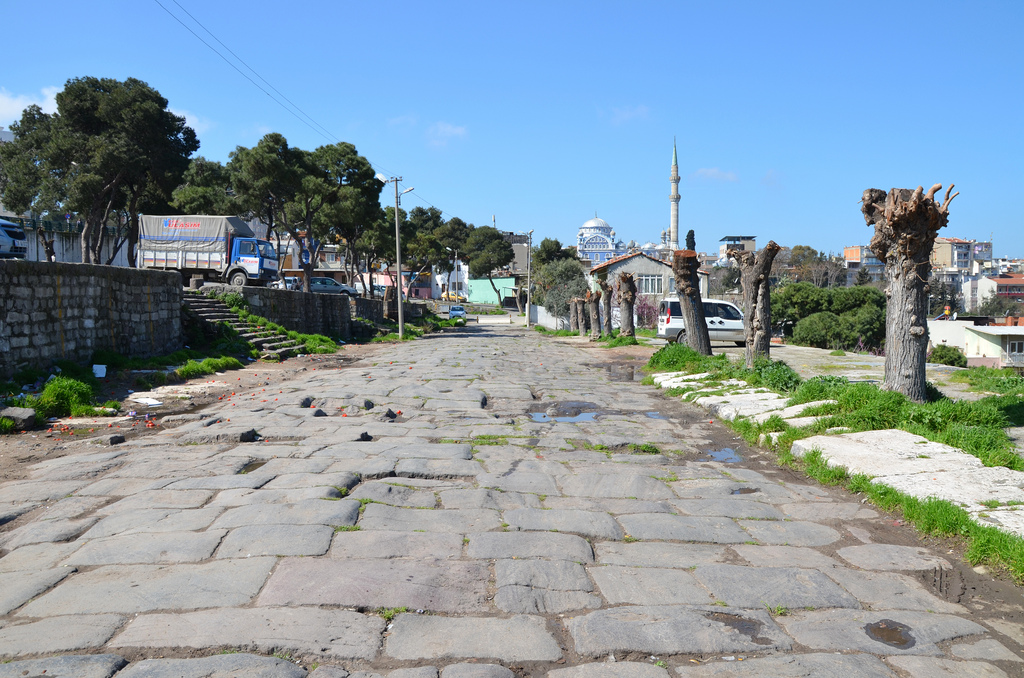
New Smyrna was built on the slopes and plains between the Acropolis Hill (Kadifekale) and the port (Kemeraltı), and the Agora of Smyrna was located at the centre of the ancient city. According to Strabo, the streets of New Smyrna were well paved with stone, and the city contained several squares, porticoes, fountains, a public library, and numerous temples and other public buildings. A temple dedicated to Zeus Akraios stood on the slopes of Mount Pagus. Smyrna also possessed a harbour where the Temple of the Mother Goddess and the gymnasium stood.
After the Roman Province of Asia was established in 133 BC, Smyrna was granted various privileges and honours for having sided with the Romans in the war against Mithridates. In AD 26, Tiberius granted Smyrna the privilege of building a local temple to the emperor (the first neokoria).
The city became “twice neokoros” under Hadrian, whose benefactions to Smyrna exceeded all expectations. On a visit to the city in AD 124, Hadrian encountered one of the most renowned orators of his time, Antonius Polemon. Born in Laodicea, Polemon came to Smyrna as a youth to study rhetoric. He became the leading sophist of his generation and established his own school in Smyrna, attracting students from all over the Greek world. As a result of his fame, he became a prominent political leader and used his talents to benefit his adopted home.
Thanks to Polemon’s intervention, Smyrna was allowed to build a second provincial temple dedicated to Hadrian. The façade of a hexastyle temple is seen on the reverse of the city coins struck under the administration of Strategos Sextus (RPC III, 1970). According to Philostratus, Polemon, who had won the emperor’s favour, persuaded Hadrian to spend “ten million” drachmae on Smyrna to reconstruct a grain market, a splendid gymnasium and a “temple that can be seen from afar”.
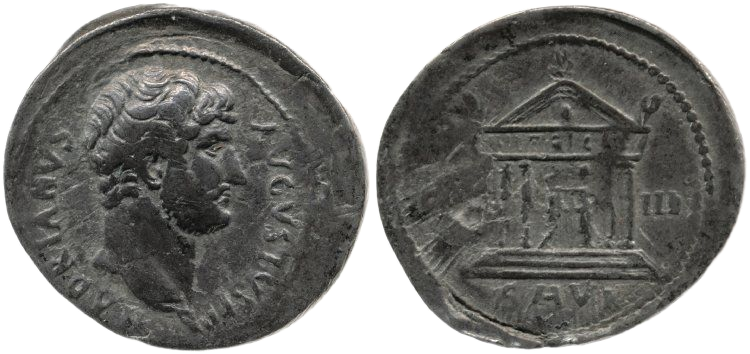
(obverse) Bare head of Hadrian, right.
(reverse) Temple with four columns, within which the two Nemeses stand facing one another (the single goddess worshipped elsewhere became two at Smyrna).
© The Trustees of the British Museum
Hadrian’s benefactions are also attested by an inscription (IGR IV 1431 = Smyrna 54), which lists the emperor’s gifts mentioned by Philostratus (but at a cost of 1,500,000 drachmae) along with 98 columns of Synnadic and Numidian marble and porphyry to adorn the gymnasium, as well as immunity from taxes. In addition, ‘Olympian Hadrianic games’ (Hadrianeia Olympia) were established at Smyrna with musical and dramatic competitions. The sacred games were held in the stadium of Smyrna, where two altars dedicated to Hadrian Olympios have been discovered (ISmyrna 625 & ISmyrna 623).

In AD 178, a major earthquake hit Smyrna, destroying most of the city. Reconstruction work started shortly after the event with the help of Marcus Aurelius. This is confirmed by a portrait of his wife, Faustina the Younger, still visible over an arch of the west colonnade of the Agora. A famous governor of Smyrna in the 3rd century AD was Cassius Dio, the Roman politician and historian best known for his 80-volume Roman History, who was appointed by Emperor Macrinus in AD 218 to this prestigious position.
 To Christians, Smyrna was one of the Seven Churches of Asia. A Christian community was established there very early, and Bishop Polycarp was among the early Christians who suffered martyrdom in Smyrna during the reign of Marcus Aurelius. After the Roman Empire was divided into two distinct entities, Smyrna became a territory of the Eastern Roman Empire. However, in Late Antiquity, particularly after the foundation of Constantinople, Smyrna entered a phase of decline.
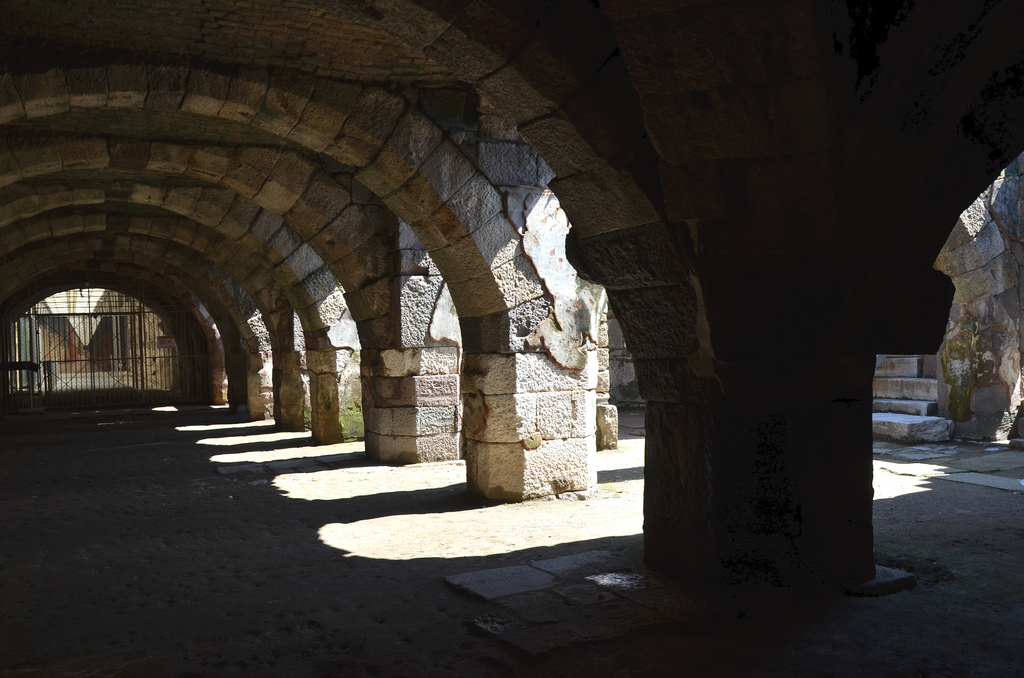
The studies and archaeological excavations have been intense in the last three decades. The buildings most studied are the Agora of New Smyrna, which, in its current form, dates to the Roman rebuilding phase, and the Archaic Temple of Athena of Old Smyrna. An expropriation process has continued in the Agora since 1997, and archaeologists have recently extended the site’s excavation field.
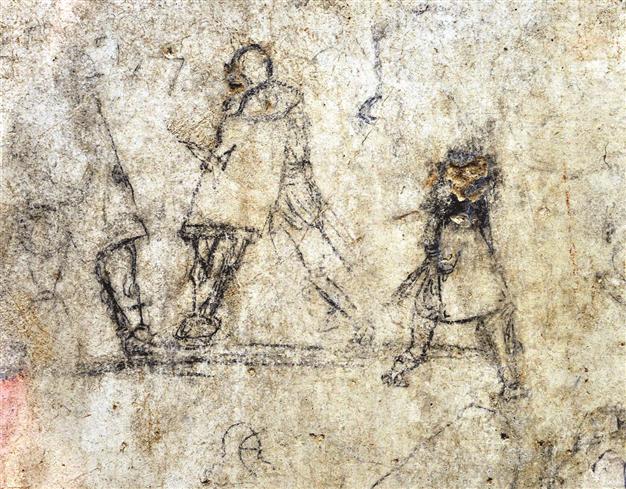
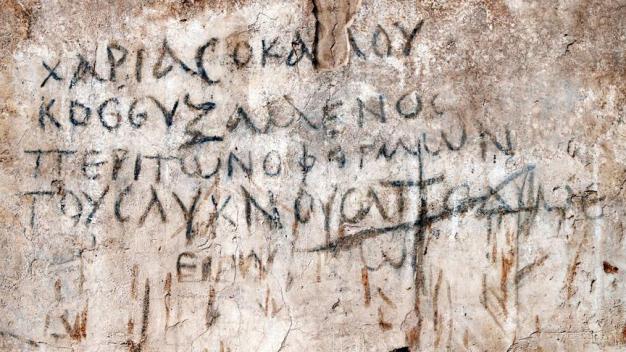
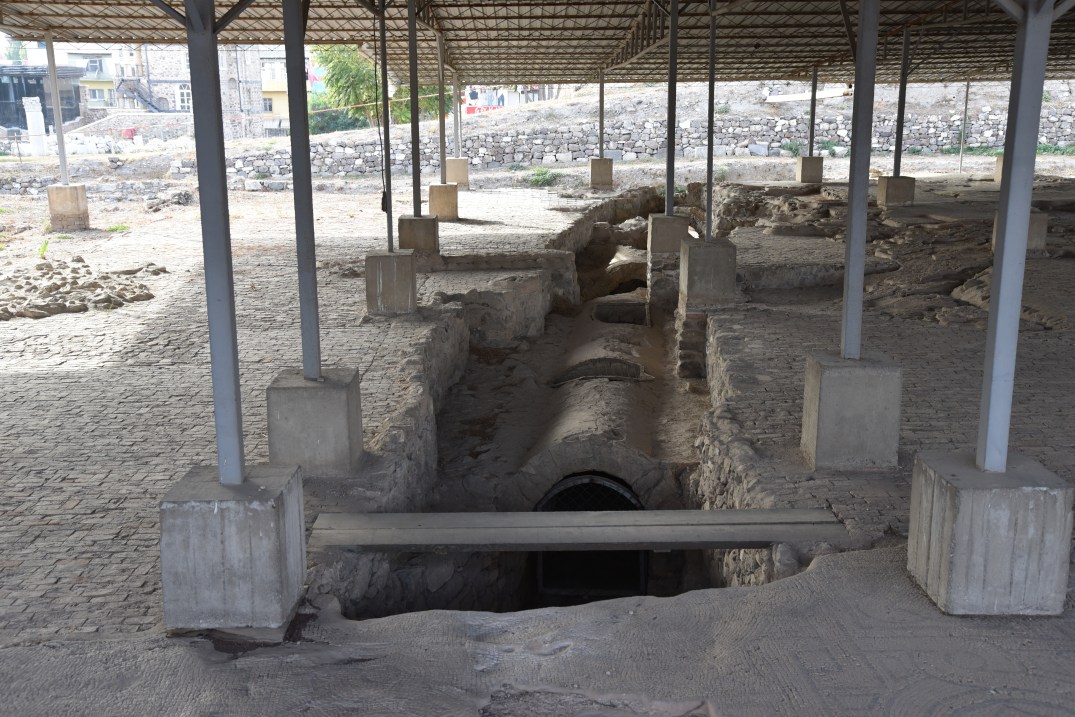
The most recent significant discovery is a rich collection of graffiti found during excavation work in the Agora, within the cryptoporticus of the Basilica. The graffiti (155 pictorial and 170 textual) are preserved on the plaster covering the north wall and on many of the pillars of the Basilica’s basement. They depict scenes of daily life, including images of trade ships, animals, and gladiators. One graffito could even be interpreted as a representation of the Temple of Hadrian, built after his visit. They are estimated to date from the late 2nd century (after an earthquake in 178) through at least the 3rd century AD. The Basilica has been covered to protect the workers and the graffiti from the elements.
Archaeologists recently discovered ashes from the eruption of Thera on the island of Santorini some 3,600 years ago at the site of Old Smyrna. About 100 people, including academics and experts from Turkey and abroad, participated in the Smyrna excavation.
There is still much to discover about Smyrna, as modern construction covers many ancient remains. Archaeological work is currently unearthing the Hellenistic theatre, which has been buried for hundreds of years (see here). The first information about the Theatre of Smyrna comes from Vitruvius’ De Architectura. Vitruvius (5.9.1) notes that there is a portico of the Temple of Aphrodite Stratonikis or an independent portico called Stratonikeion adjacent to or in the immediate vicinity of the skēnē (stage building) of the Theatre of Smyrna. Archaeologists have also recently unearthed the remains of a gymnasium and an adjoining bathhouse dating from the time of Hadrian (see here). The gymnasium could therefore be the one mentioned by Philostratus.
PORTFOLIO
- Old Smyrna


Izmir Museum of History and Art.

Izmir Museum of History and Art.




- New Smyrna












Links & references:
- SMYRNA (Izmir) Turkey – The Princeton Encyclopedia of Classical Sites
- Smyrna Antik Kenti (official site)
- oldsmyrna.org (official site)
- Ruscio Caterina, “Smyrna (Antiquity)”, 2008, Encyclopaedia of the Hellenic World, Asia Minor URL: <http://www.ehw.gr/l.aspx?id=12483>
- Burrell, Barbara. Neokoroi: Greek Cities and Roman Emperors. Leiden, The Netherlands: BRILL, 2003.
- Bagnall, Roger S., et al. Graffiti from the Basilica in the Agora of Smyrna. NYU Press, 2016.
 following hadrian photography
Pingback: Summer AD 124 – Hadrian tours Asia, visits Cyzicus and Troy and hunts a she-bear (#Hadrian1900) FOLLOWING HADRIAN