Sounion

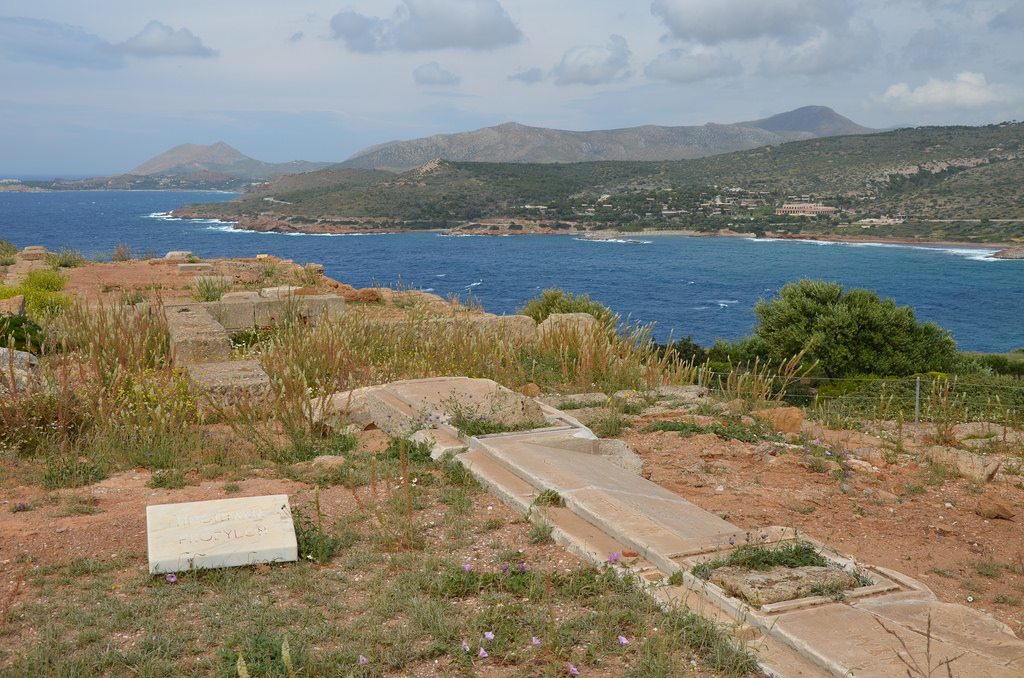
Cape Sounion, with its famous temple dedicated to the god Poseidon, is one of Attica’s most beautiful natural areas and one of the most impressive archaeological sites in Greece. In ancient times it was called Sounias Akra and was connected with the legends of Athens and the Aegean. Cape Sounion is the spot where Aegeus, king of Athens, allegedly jumped off the cliff, thus giving his name to the Aegean Sea. It is also referred to as a sacred place in the Homeric epics. The site was chosen for its direct relationship with the sea since this was the last piece of land seen by ships departing from Athens and the first on returning from their voyage.

Coordinates: 37° 39′ 2.06″ N, 24° 1′ 28.51″ E

The site of Sounion has been inhabited since prehistoric times. From the 8th century BC, the cult of Poseidon and Athena started to develop. However, Persian troops destroyed the sanctuaries in 480 BC during Xerxes I’s invasion of Greece. In the mid-5th century BC, by order of Pericles, the Temple of Poseidon was rebuilt. The ruins now dominate the cape’s summit, with its 16 standing columns partly restored.

The sacred precinct (temenos) of Poseidon was entered through a monumental gateway of poros and marble to the north of the temple, the propylaea. Beyond, along the north side of the temenos, runs a stoa, some 40m long by 9m wide, divided into two aisles by an internal colonnade of six columns. A second smaller stoa occupied the west side of the precinct. The stoas served as accommodation for visitors to the sanctuary.

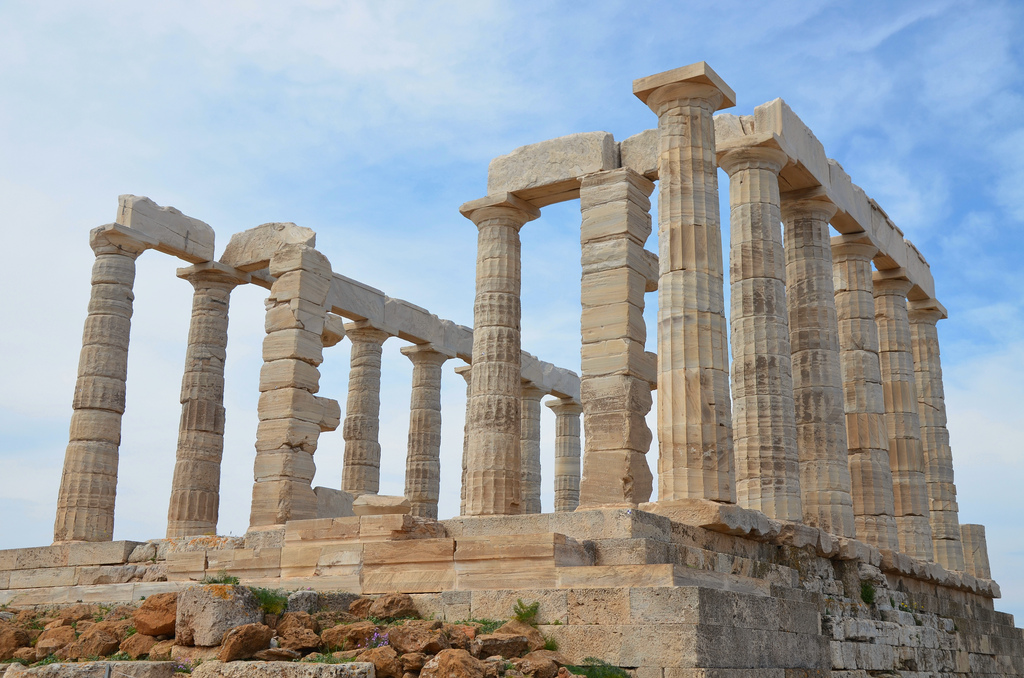
The temple of Poseidon is a Doric peripteral temple with six columns on the narrow sides and thirteen on the long ones, made of locally quarried white marble. At the centre of the temple would have been the hall of worship (naos), a windowless rectangular room similar to the partly intact hall at the Temple of Hephaistos in Athens (considered to be the work of the same architect). It would have housed a colossal bronze statue of Poseidon.

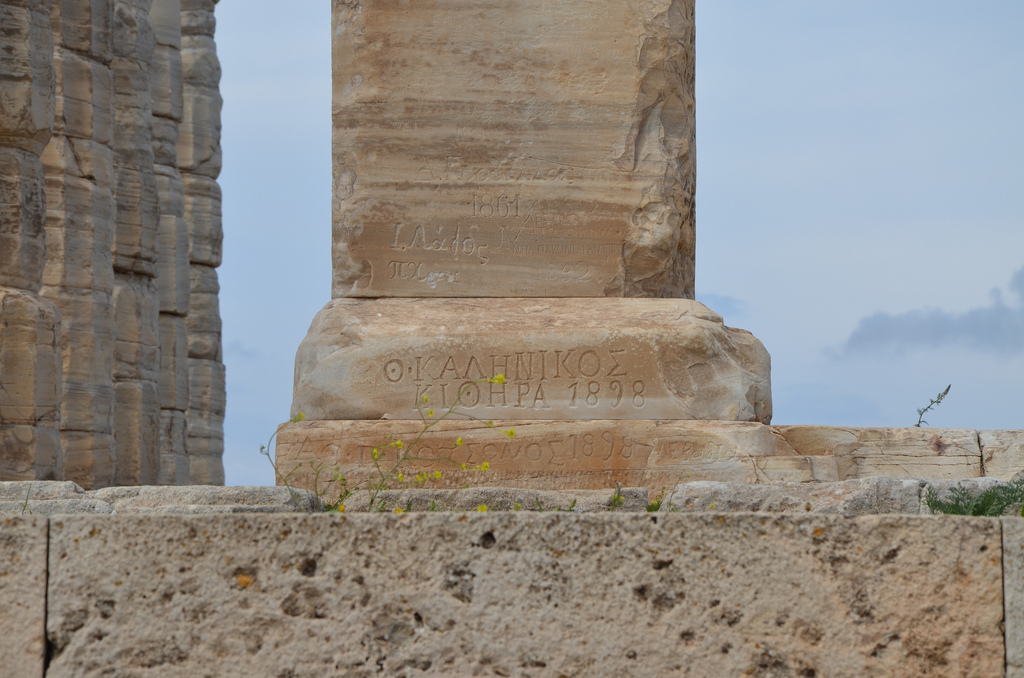
In the 19th century, Sounion was a popular destination for tourists, many of whom have engraved their names on the ruins of the temple of Poseidon. The most famous signature is that of the Romantic poet George Lord Byron.

PORTFOLIO
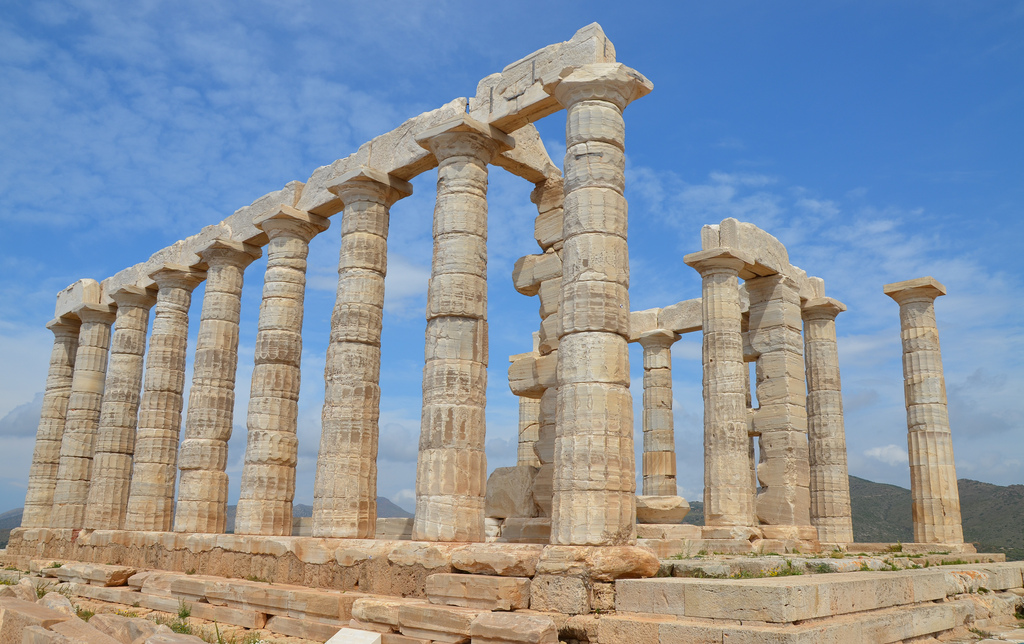
Temple of Poseidon, built around 444 – 440 BC, Cape Sounion
View of the Temple of Poseidon from the south.
The propylaea, a monumental gateway of poros and marble, to the north of the temple, through which the sacred precinct of Poseidon was entered, Cape Sounion, Greece
The propylaea, a monumental gateway of poros and marble, to the north of the temple, through which the sacred precinct of Poseidon was entered.
The temple of Poseidon at Cape Sounion from the northeast, (built circa 440 BC), Cape Sounion, Greece
The temple of Poseidon at Cape Sounion from the northeast.
The north stoa, 40 m. long by 9 m. wide, divided into two aisles by an internal colonnade of six smooth columns, Cape Sounion, Greece
An internal colonnade of six smooth columns divided the north stoa, 40m long by 9m wide, into two aisles.
The temple of Poseidon at Cape Sounion, north side colonnade, (built circa 440 BC), Cape Sounion, Greece
The temple of Poseidon at Cape Sounion, north side colonnade.

Temple of Poseidon, 19th century Graffiti on the left pillar, Cape Sounion, Greece
Temple of Poseidon, 19th-century Graffiti on the left pillar.

“Place me on Sunium’s marbled steep,
Where nothing, save the waves and I,
May hear our mutual murmurs sweep;
There, swanlike, let me sing and die:
A land of slaves shall ne’er be mine–
Dash down yon cup of Samian wine!”

The Isles of Greece by Lord Byron (1788-1824)
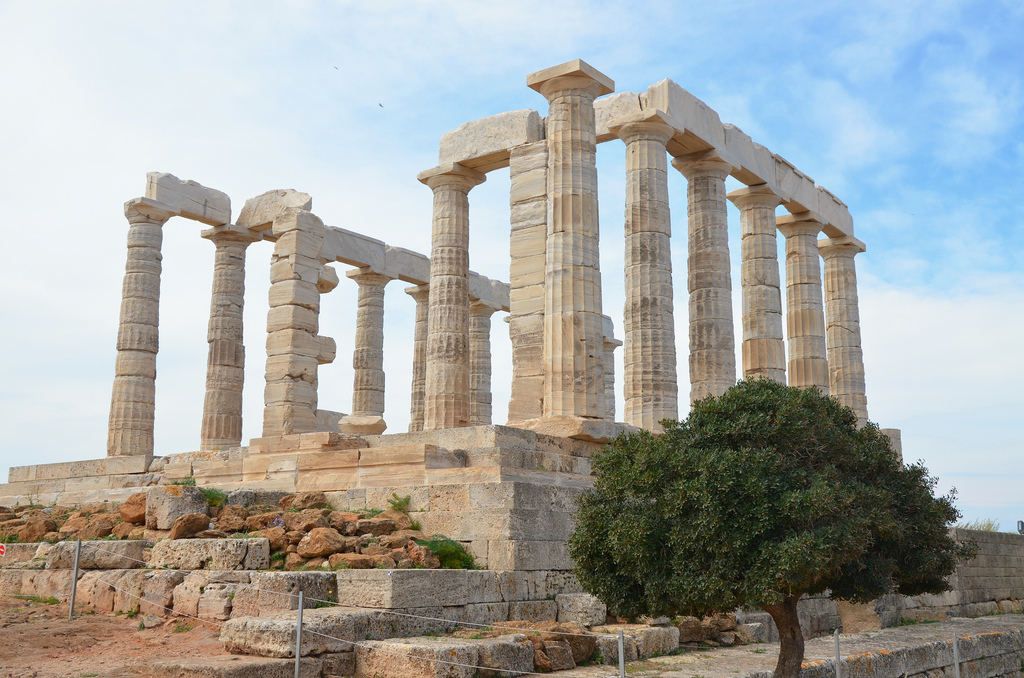
The temple of Poseidon at Cape Sounion from the north, (built circa 440 BC), Cape Sounion, Greece
View of the temple of Poseidon from the north.

Links:

Kourion

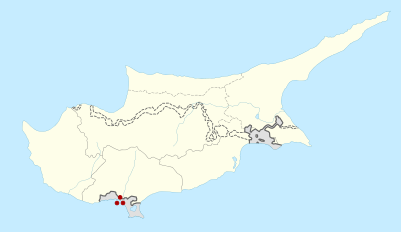
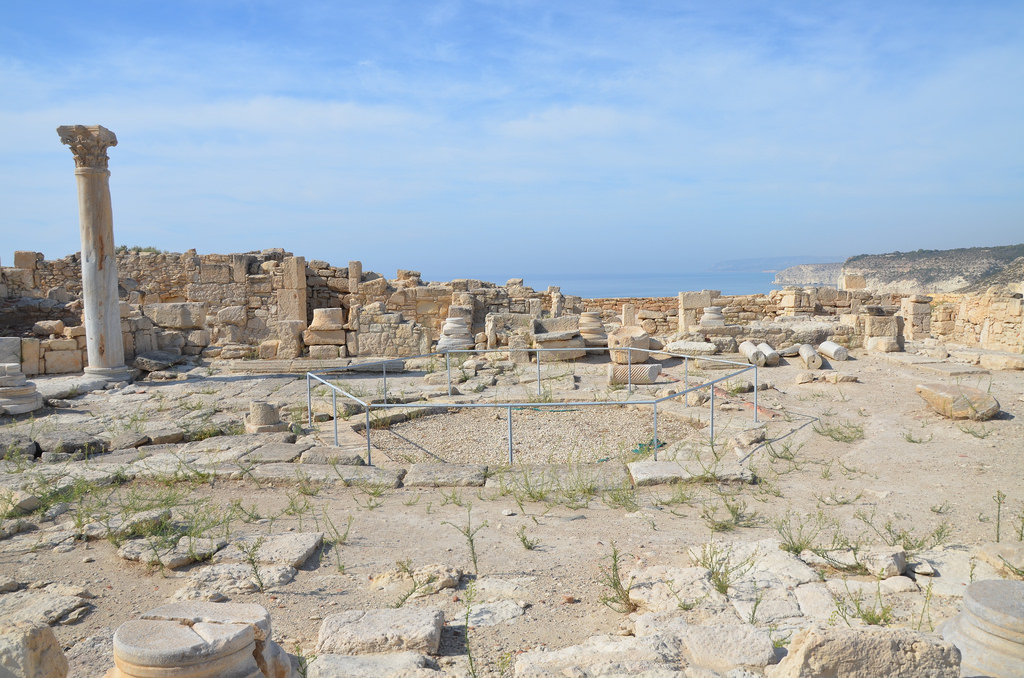
The remains of Kourion (Curium in Latin), the best-preserved Graeco-Roman city on Cyprus, stand atop a cliff overlooking the Mediterranean Sea. According to legend, the ancient city was founded by Achaean colonists from Argos in the Peloponnese. The town prospered under the Ptolemies and the Romans, becoming an important cultural and religious centre with the nearby Sanctuary of Apollo Hylates. Christianity was established at Kourion by the beginning of the 3rd century AD and eventually supplanted the worship of the pagan god Apollo.

Coordinates: 34° 39′ 51.12″ N, 32° 53′ 15.72″ E

Kourion

Like all other coastal cities on the island, Kourion was ruined by the disastrous earthquakes of the late 4th century AD. The city was rebuilt at the beginning of the 5th century, only to be destroyed by fire during the Arab raids of the 7th century AD. Kourion declined and was finally abandoned, its inhabitants having moved to a new site two kilometres east (the modern village of Episkopi). Kourion was not rediscovered until 1820, while systematic excavations began in 1934.

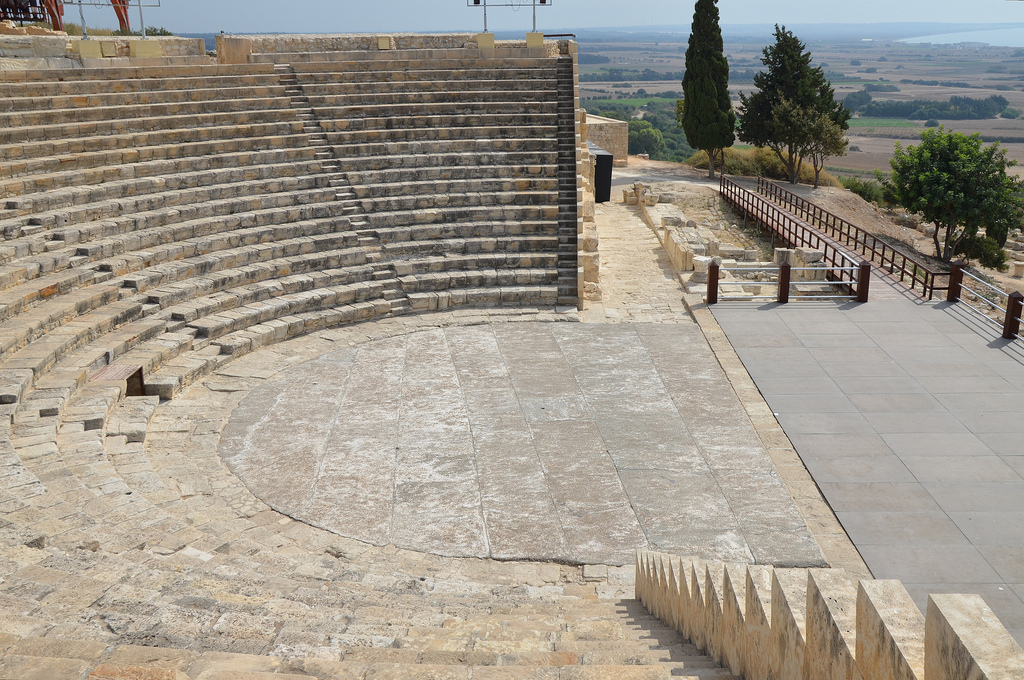
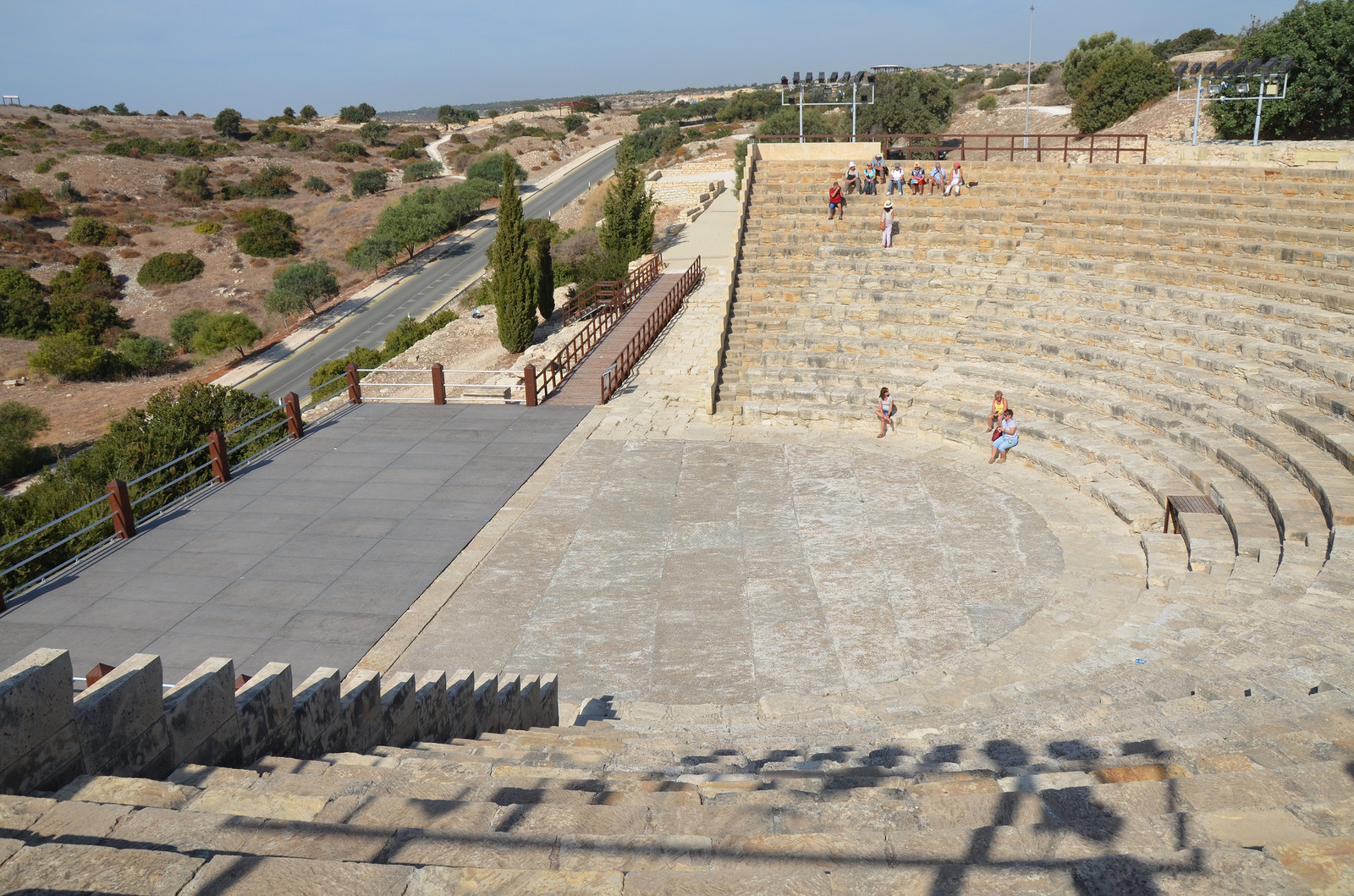
The excavated remains at Kourion lie about 19 km west of Limassol on the road to Paphos. Visitors can wander around impressive ruins, including the theatre, the House of Eustolios, the Early Christian Basilica, the Forum, the public baths, and other houses with fascinating mosaics. Apart from the basilica and the House of Eustolios, all the other buildings belong to the Roman period.

PORTFOLIO

The Roman theatre built over an earlier Hellenistic theatre, it was remodelled in the 1st and 2nd centuries and in the 3rd century it was used as an arena, Kourion, Cyprus
The Roman theatre was built over an earlier Hellenistic theatre. It was remodelled in the 1st and 2nd centuries, and in the 3rd century, it was used as an arena.

The Roman theatre built over an earlier Hellenistic theatre, it was remodelled in the 1st and 2nd centuries and in the 3rd century it was used as an arena, Kourion, Cyprus
The Roman theatre.

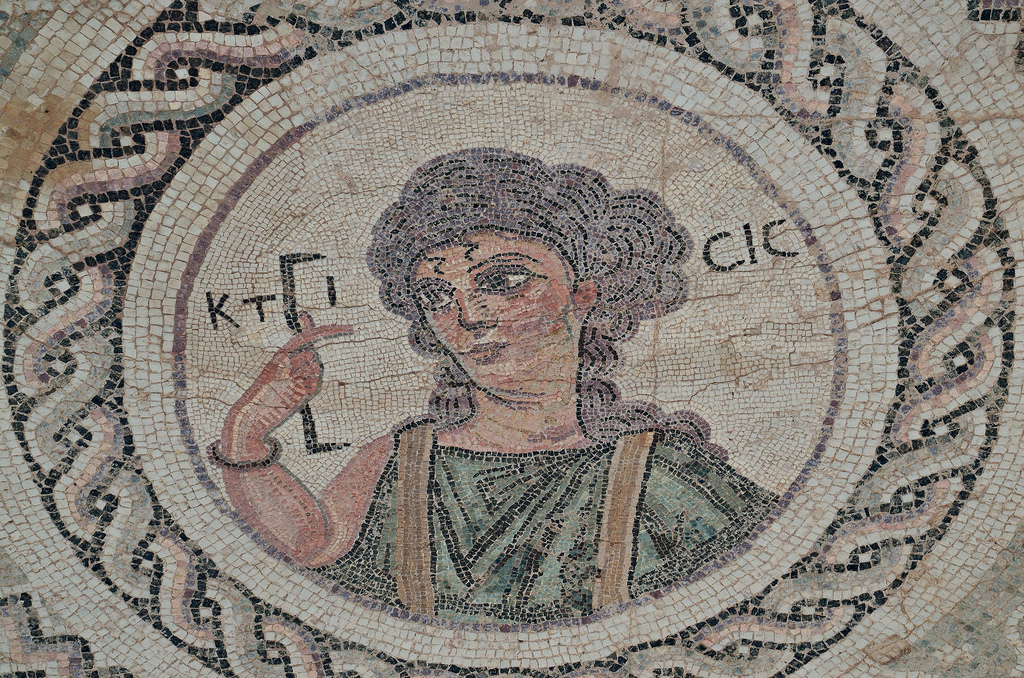
Byzantine mosaic emblema in the House of Eustolios depicting a young woman in a medallion holding a measuring instrument equating of a Roman foot, the Greek inscription identifies her as Ktisis, the personification of Foundation/Donation/Creation, Kourion
The Byzantine mosaic emblema in the House of Eustolios depicts a young woman in a medallion holding a measuring instrument equating to a Roman foot. The Greek inscription identifies her as Ktisis, the personification of Foundation/Donation/Creation.

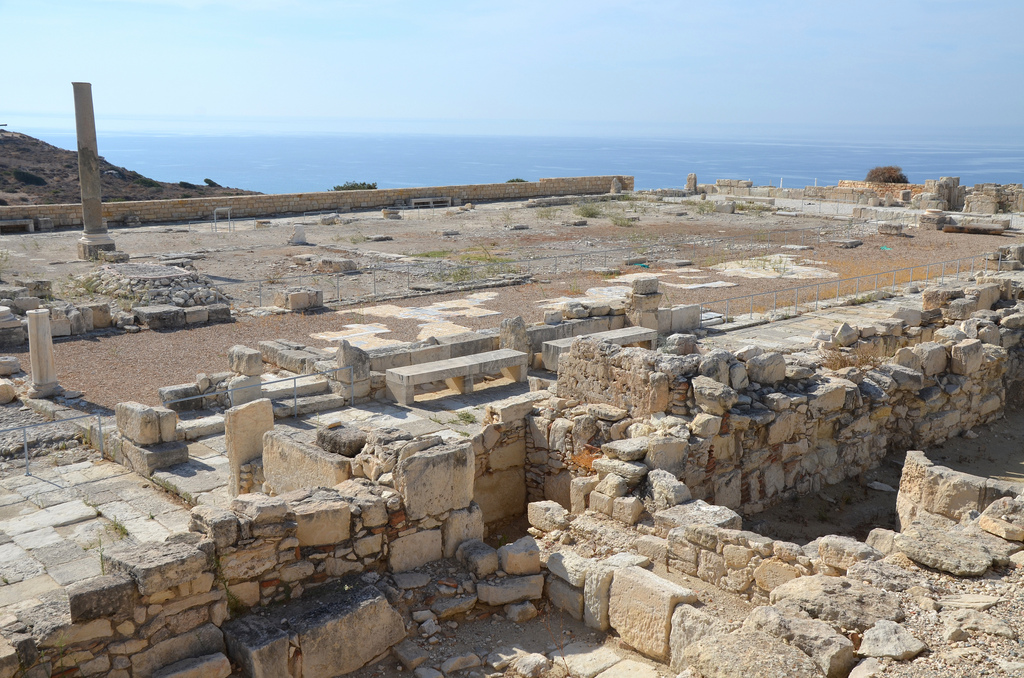
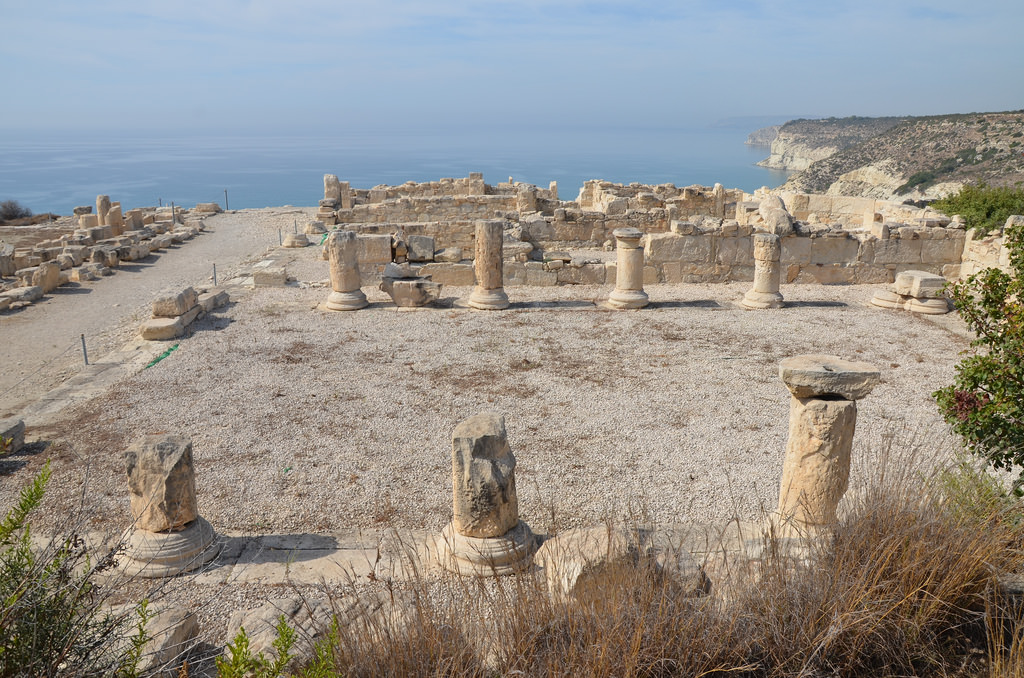
The Early Christian Basilica dating to the beginning of the 5th century AD, Kourion, Cyprus
The Early Christian Basilica, dating to the beginning of the 5th century AD.

The Early Christian Basilica dating to the beginning of the 5th century AD, Kourion, Cyprus
The Early Christian Basilica.

The Early Christian Basilica dating to the beginning of the 5th century AD, Kourion, Cyprus
The Early Christian Basilica.

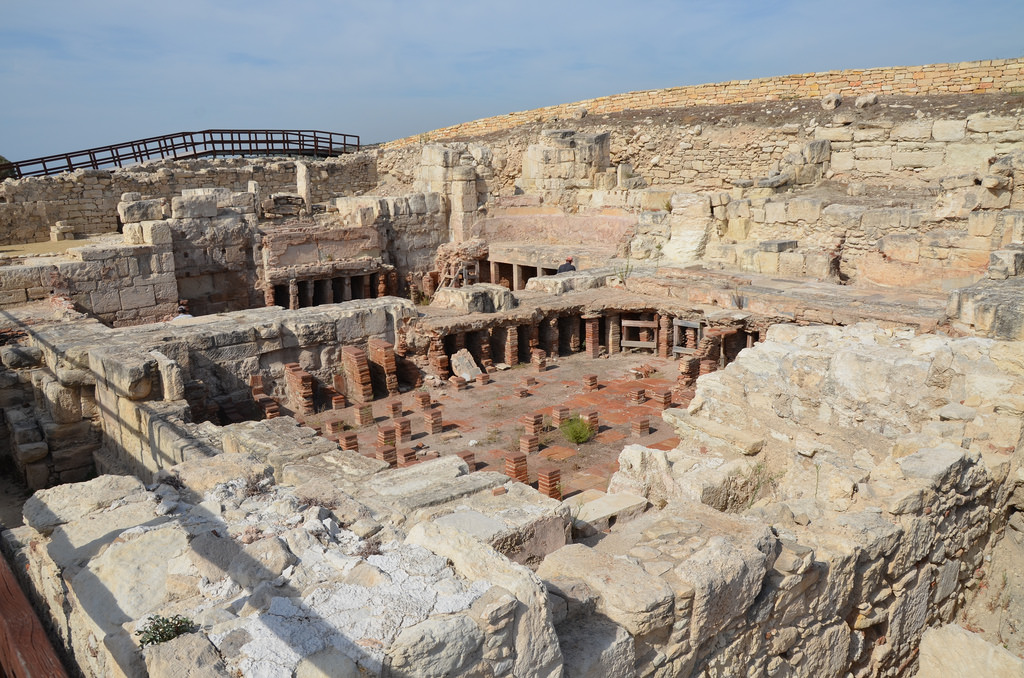
The tepidarium (warm room) and the caldarium (hot room) of the public baths, Kourion, Cyprus
The tepidarium (warm room) and the caldarium (hot room) of the public baths.

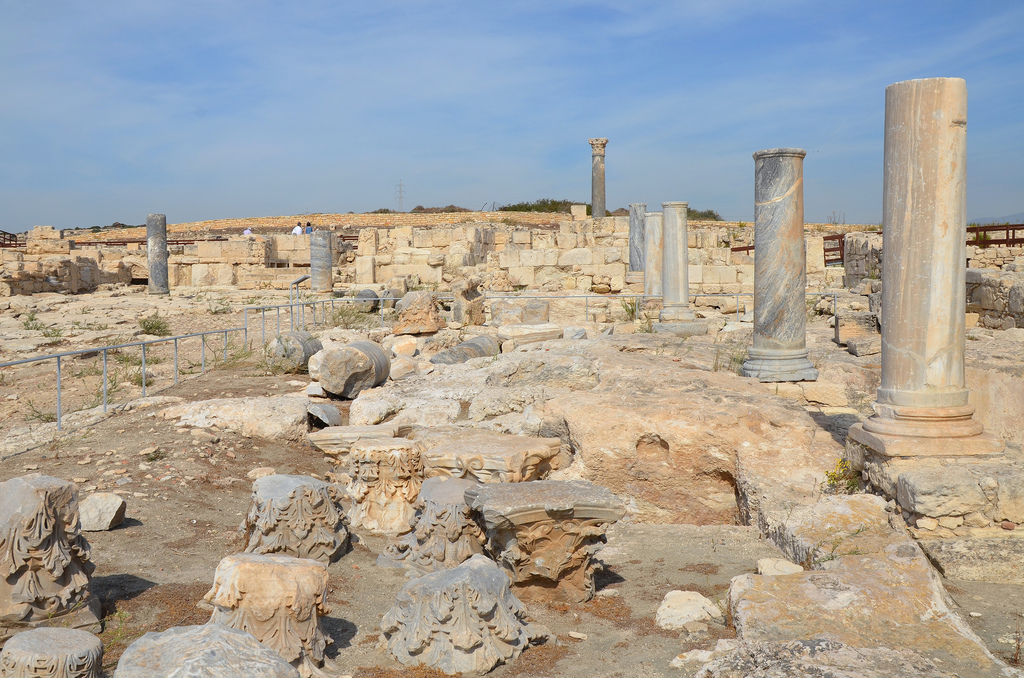
The remains of the portico of the Roman Forum with unfluted columns and Corinthian capitals dating to the Severan era (193-235 AD), Kourion, Cyprus
The remains of the portico of the Roman Forum, with unfluted columns and Corinthian capitals, date to the Severan era (193-235 AD).

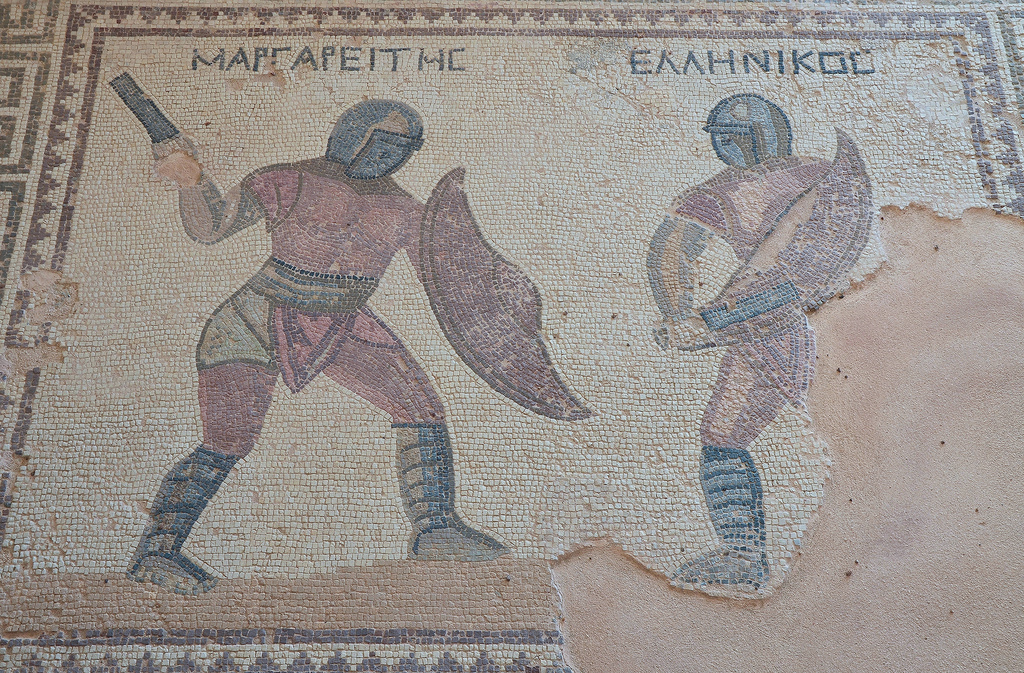
Mosaic depicting two gladiators in combat, their names in Greek listed above: Margarites (left) and Hellenikos (right), late-3rd century AD, House of the Gladiators, Kourion, Cyprus
A mosaic in the House of the Gladiators depicts two gladiators in combat. Their Greek names are listed above: Margarites (left) and Hellenikos (right), late 3rd century AD.

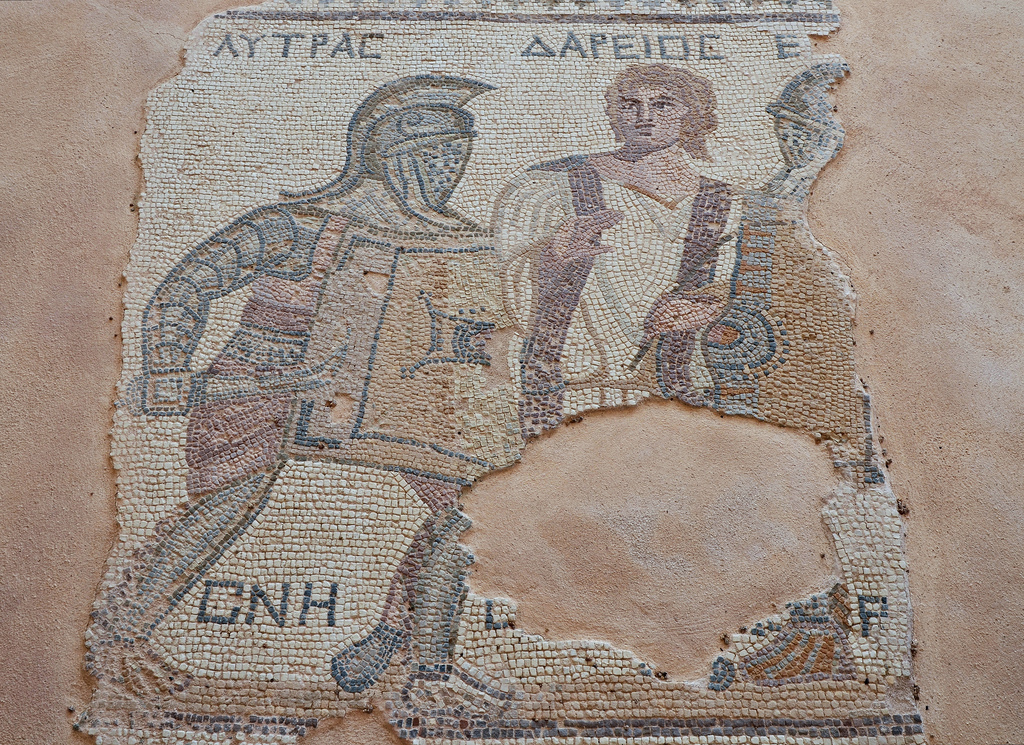
Mosaic depicting gladiators being separated by a referee, late-3rd century AD, House of the Gladiators, Kourion, Cyprus
Mosaic in the House of the Gladiators depicting gladiators separated by a referee, late-3rd century AD.

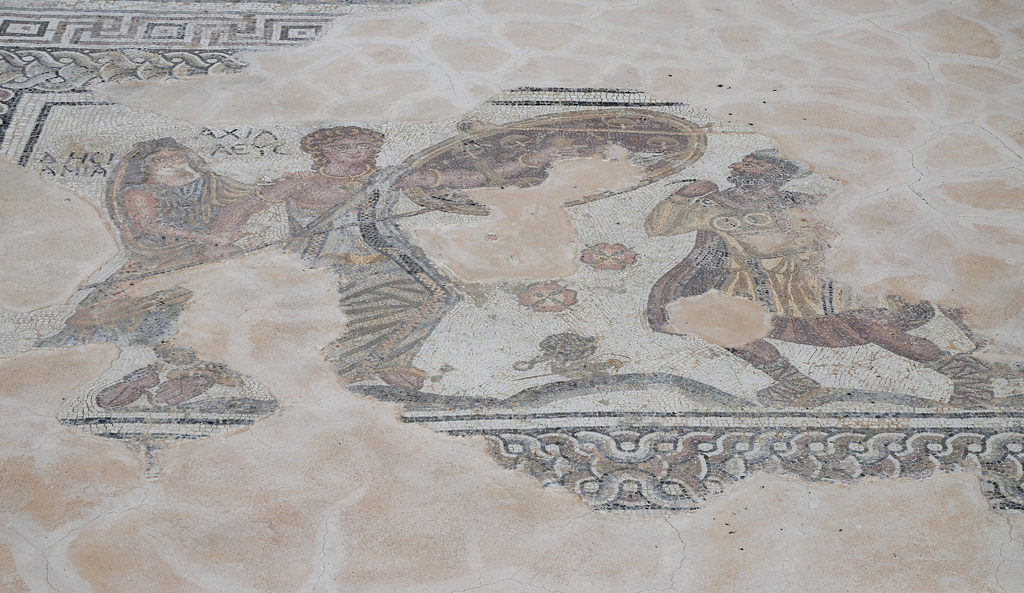
Mosaic floor depicting the unmasking of Achilles by Odysseus on the island of Skyros, 4th century AD, Kourion, Cyprus
Mosaic floor depicting the unmasking of Achilles by Odysseus on the island of Skyros, 4th century AD.

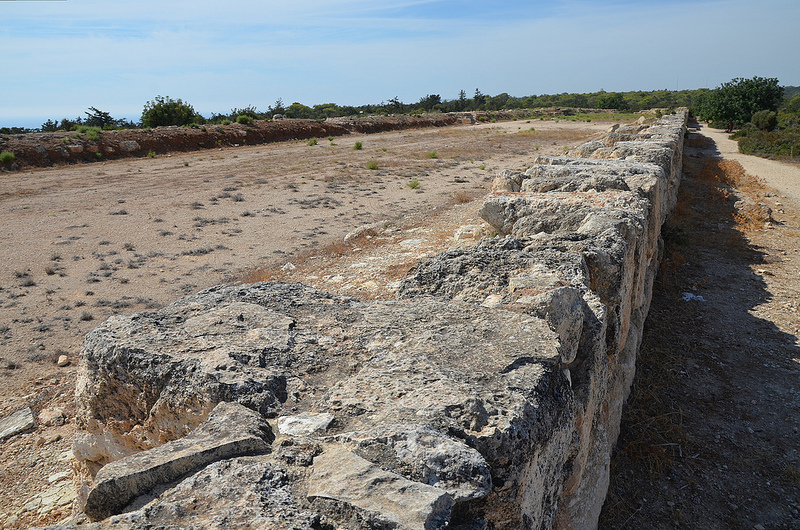
The 186m long stadium, constructed during the Antonine period (138-180), it had a capacity of 6,000 spectators, Kourion, Cyprus
The 186m long stadium, constructed during the Antonine period (138-180), had a capacity of 6,000 spectators.

See more images on Flickr

Links: