Once a thriving port city and an important Greek city-state on the eastern shore of Cyprus, Salamis offers a tantalising glimpse into the island’s vast history. According to ancient Greek tradition, Salamis was founded after the Trojan War by the archer Teukros, son of King Telamon. The latter came from the island of Salamis off the coast of Attica. Half-brother to the hero Ajax, Teukros, was unable to return home from the war after failing to prevent his half-brother’s suicide, leading him to flee to Cyprus, where he founded Salamis.
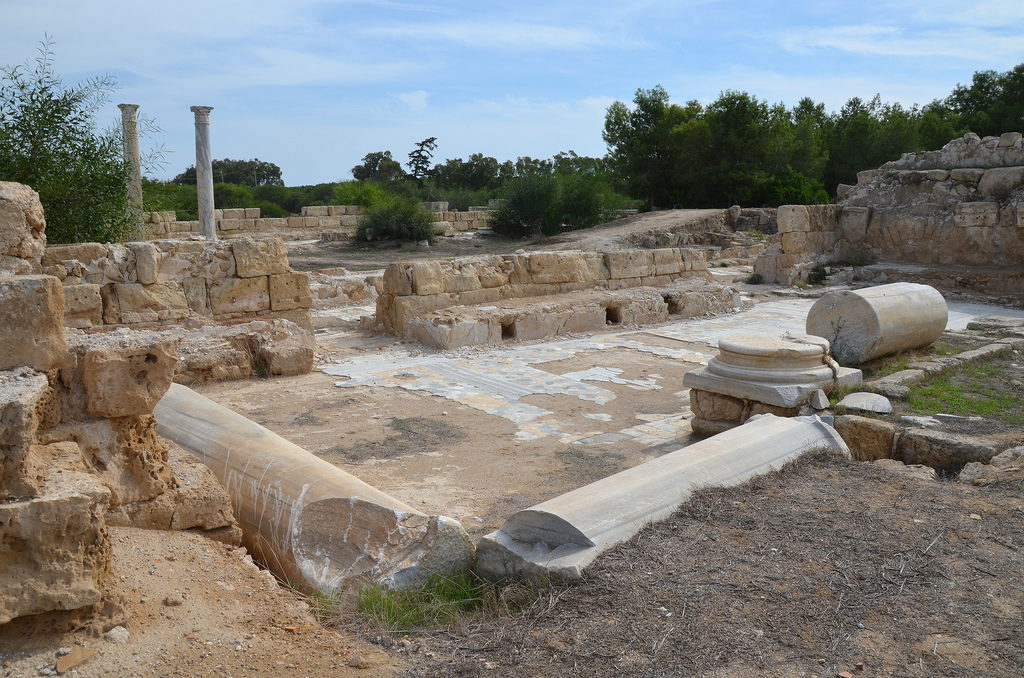
Successively controlled by various dominant powers, Salamis served as the island’s main port and capital for a thousand years. The city saw great wealth and dominated the island until its near-destruction in the 4th century AD following a series of earthquakes. Most of the ruins we see today are from the Roman period. Set along the seashore, they cover an area over one kilometre long. Among the many impressive sights to be seen at Salamis are the Gymnasium devoted to the training of athletes, the Roman baths, the theatre and the basilicas.
For over a thousand years, Salamis lay buried beneath a thick layer of sand, which helped preserve the city from looting and destruction.
PORTFOLIO
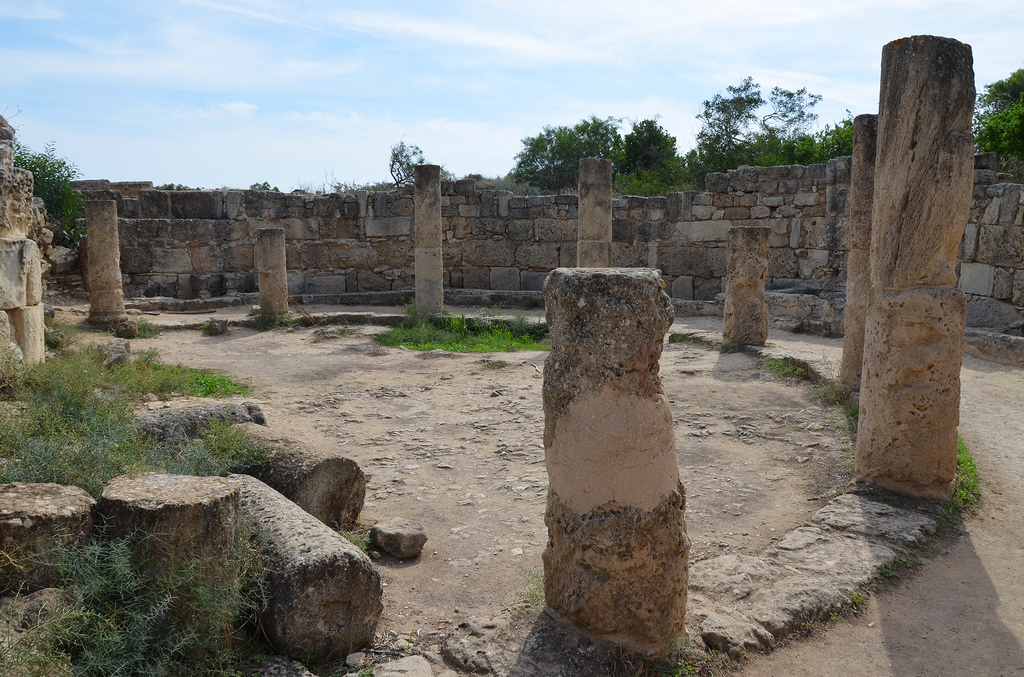
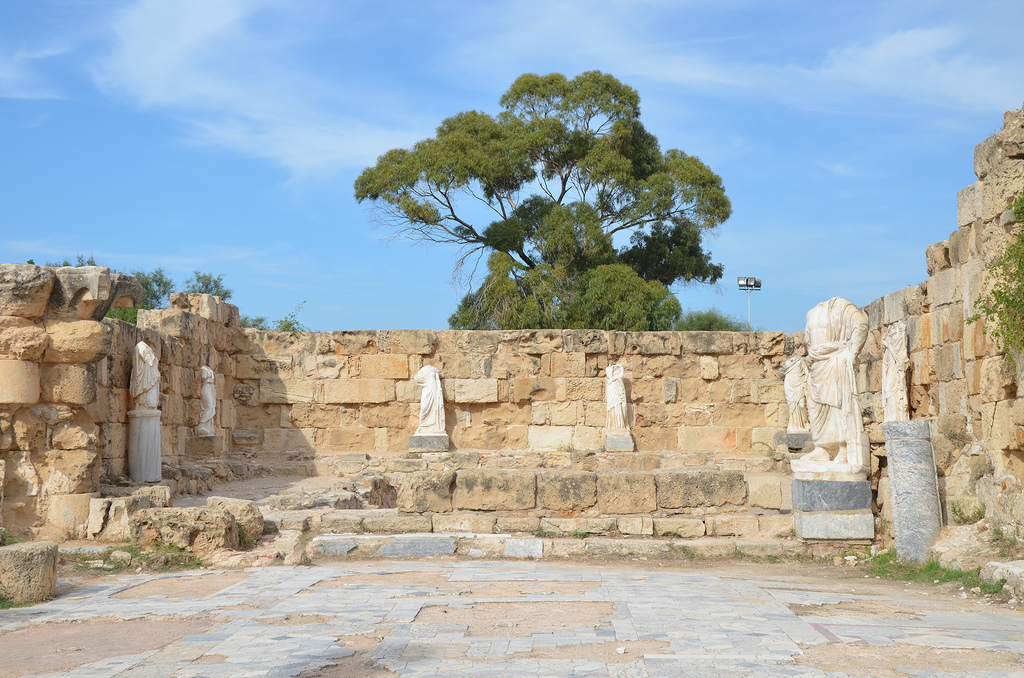
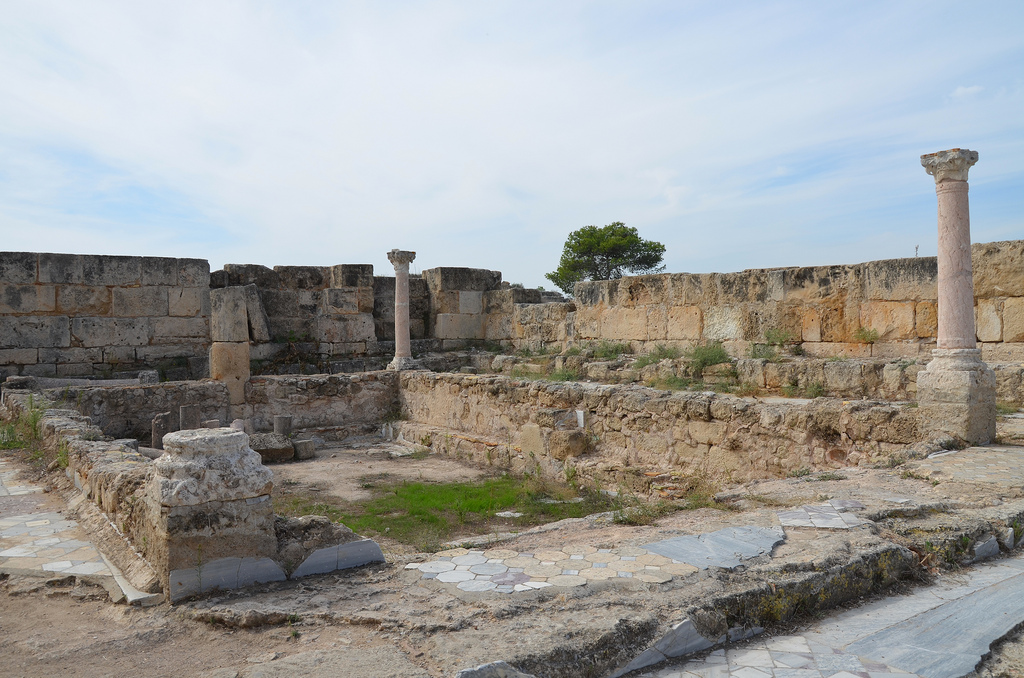
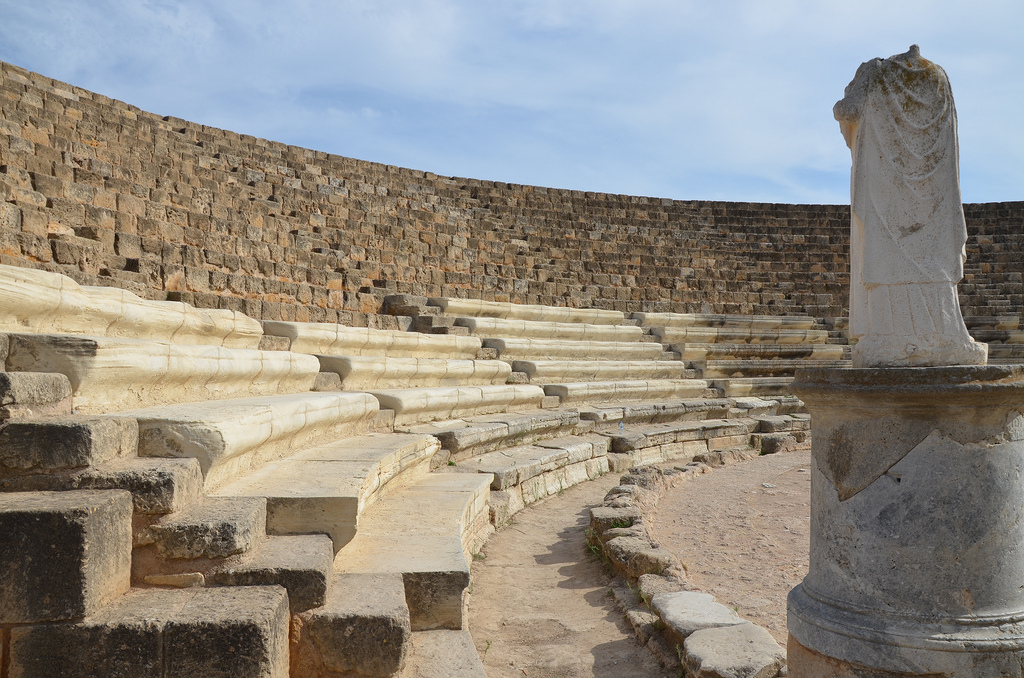
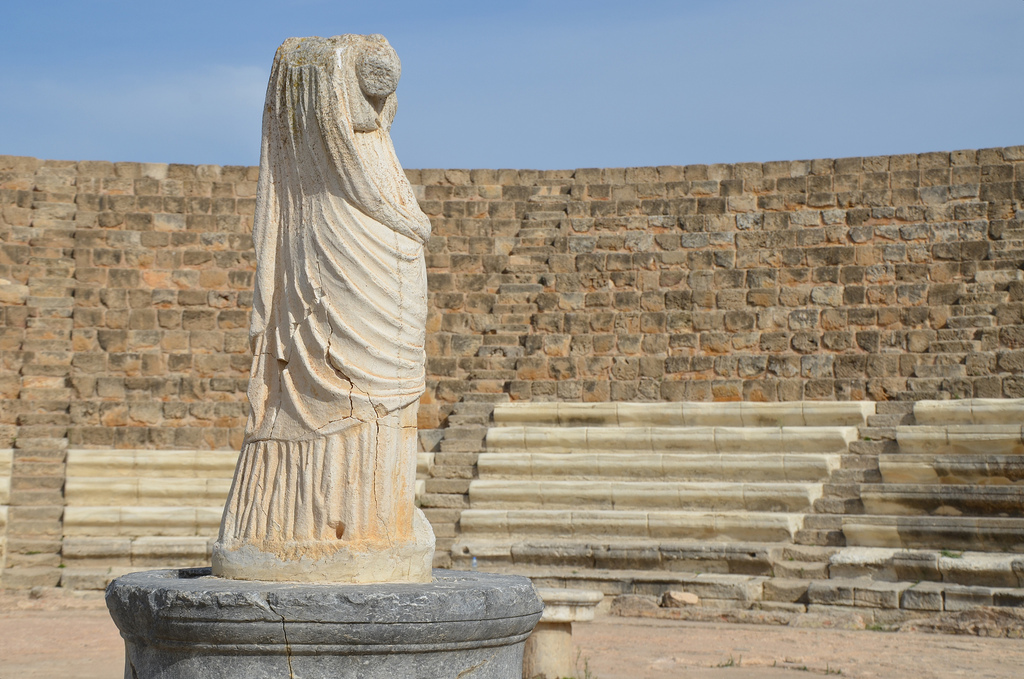
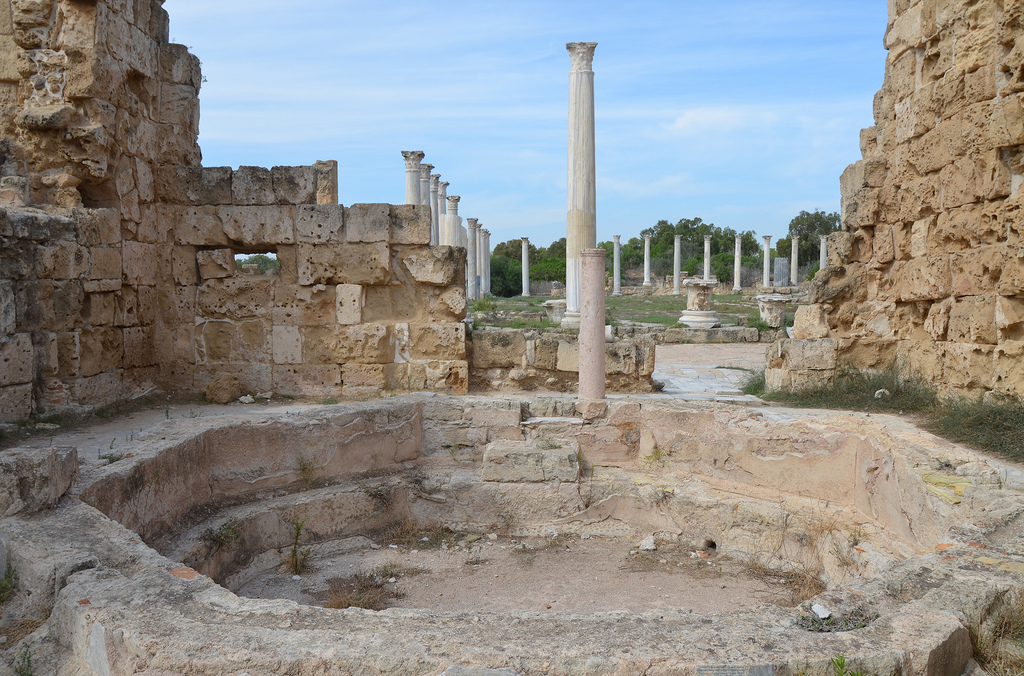
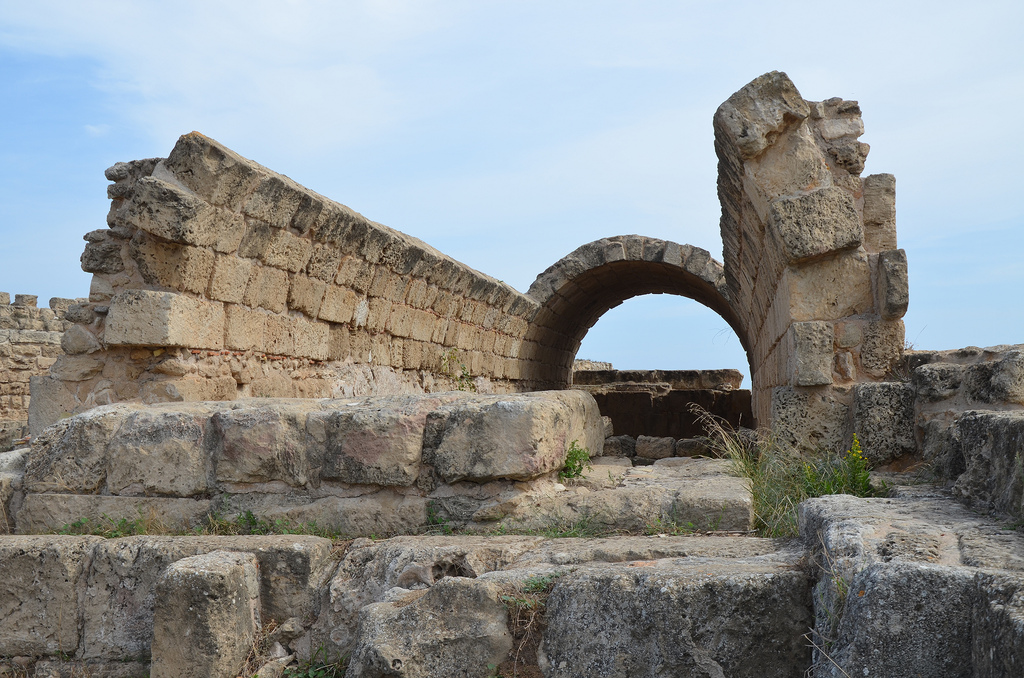
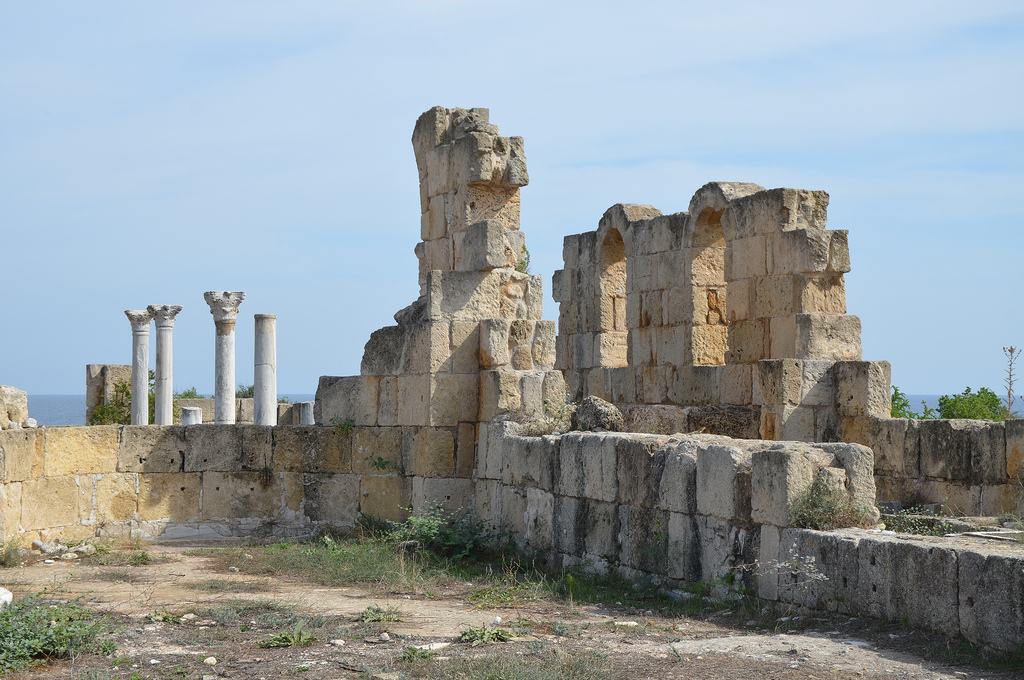
The Gymnasium, with its colonnaded palaestra, was built over the ruins of an earlier Hellenistic gymnasium in the 2nd century AD during Trajan and Hadrian’s reigns after Salamis had significantly been damaged in AD 116 during the Jewish revolt.The Gymnasium with its columned palaestra.The Gymnasium with its columned palaestra.The Gymnasium’s latrines were a semicircular structure with a roof supported on columns and a capacity of 44 people.The marble pool at the NE corner of the Gymnasium’s portico was surrounded by headless statues dating back to the 2nd century AD (Trajanic/Hadrianic).The marble pool.Headless statues dating back to the 2nd century AD (Trajanic/Hadrianic) surround the marble pool at the NE corner of the Gymnasium’s portico.The Roman theatre was built during the reign of Augustus and completed during the years of Trajan and Hadrian. It originally had 50 rows of seats (just 18 remain) and held over 15,000 spectators.The Roman theatre.The Roman theatre.The bath complex.The niche in one of the bath complex’s rooms was decorated towards the end of the 3rd century AD with polychrome wall mosaics depicting Apollo (in the centre) and Artemis (left) slaying the Niobids.The cistern and remains of the aqueduct were used to supply the baths and the pools with water.SalamisThe Kambanopetra Basilica was built in the 4th century AD.Salamis.
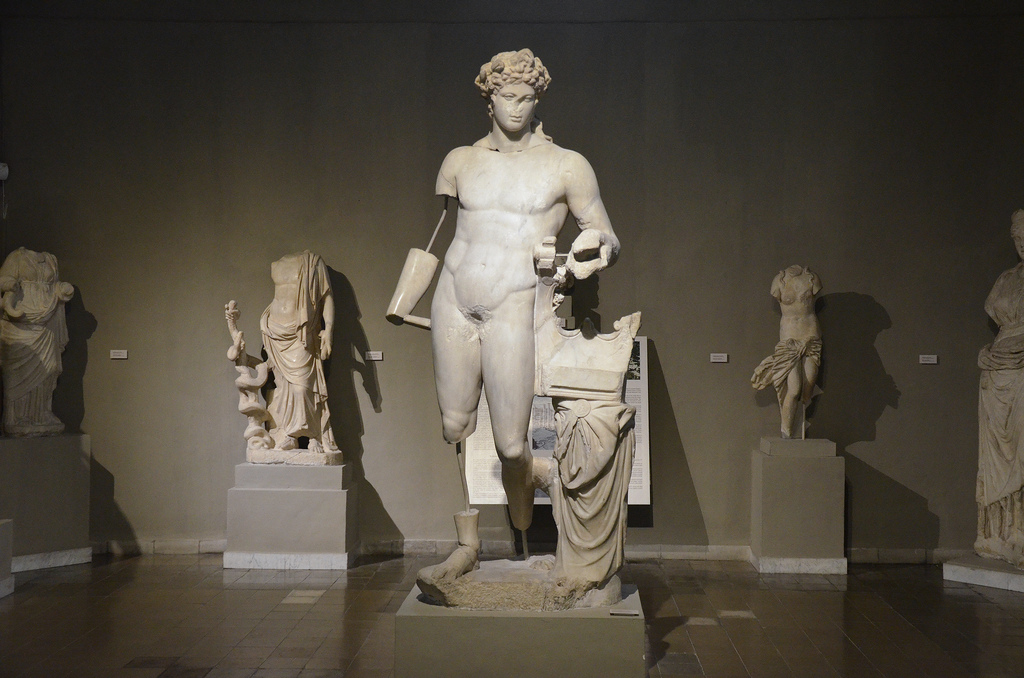
Many Roman sculptures from the Gymnasium of Salamis are housed in the Cyprus Museum in central Nicosia.
Sculptures from the Gymnasium of Salamis, 2nd century AD, Cyprus Museum, Nicosia.Sculptures from the Gymnasium of Salamis, 2nd century AD, Cyprus Museum, Nicosia.
See more images of the archaeological site of Salamis on Flickr
See more images of the Roman sculptures from the Gymnasium on Flickr
Iassos was an ancient Greek city located in Caria on a small peninsula connected to the mainland by an isthmus. According to the historian Strabo, Iassos was well known for its fishing and had a harbour, making it an important commercial centre. Today, it is an extensive multi-period site located on the shores of the Gulf of Güllük, halfway between Didyma to the north and Halicarnassus to the south.
According to tradition, Iassos was colonised in the 9th or 8th century BC by Greeks from Argos (the Dorians). However, Archaeological evidence shows that the site had been inhabited since the Neolithic period and flourished as one of the major Minoan and Mycenaean settlements in Asia Minor. Prosperity continued throughout the Hellenistic, Roman, and Byzantine periods, with many of the remains visible today originating from these later eras.
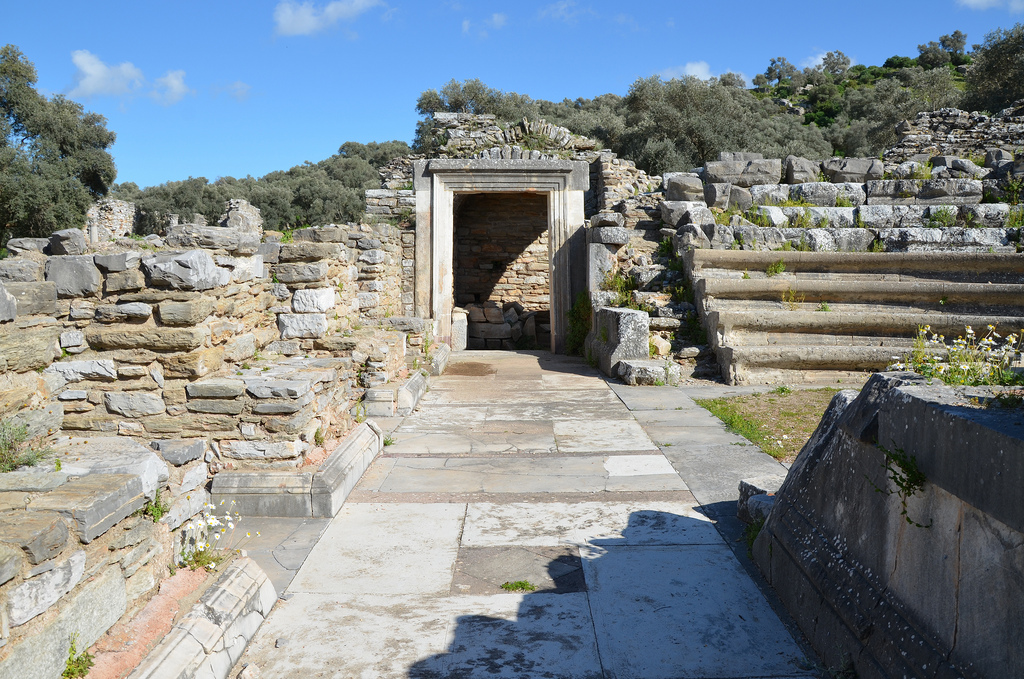
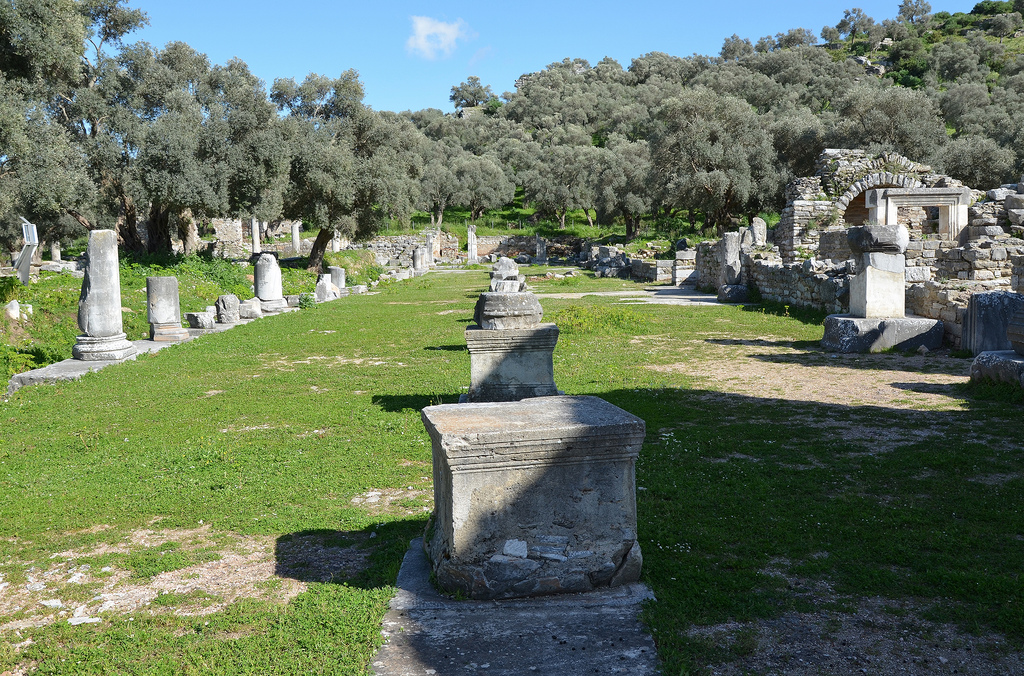
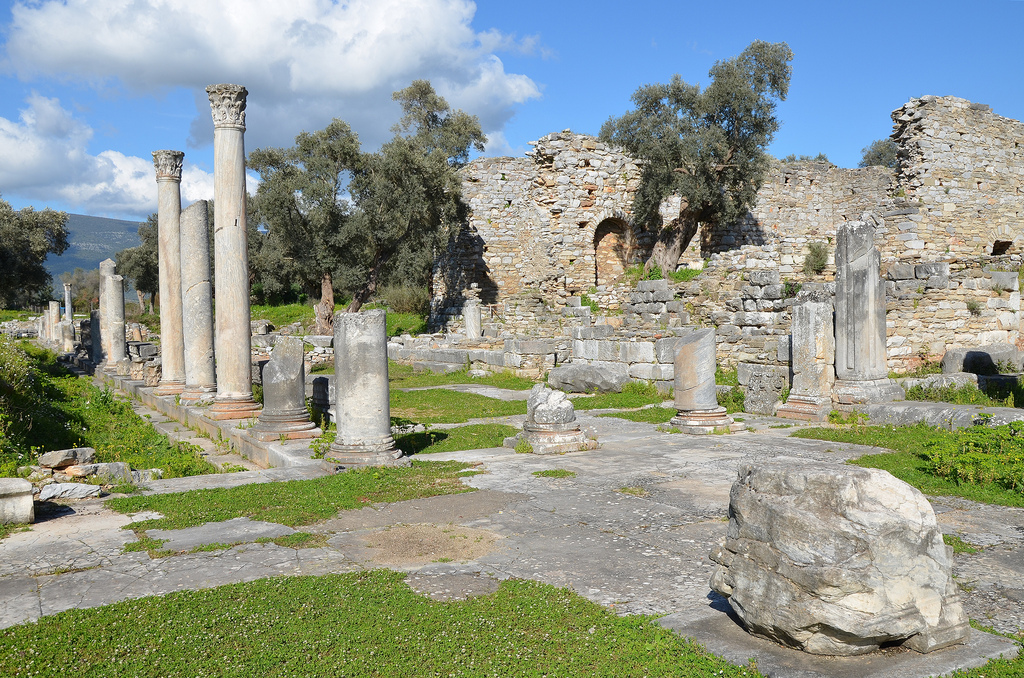
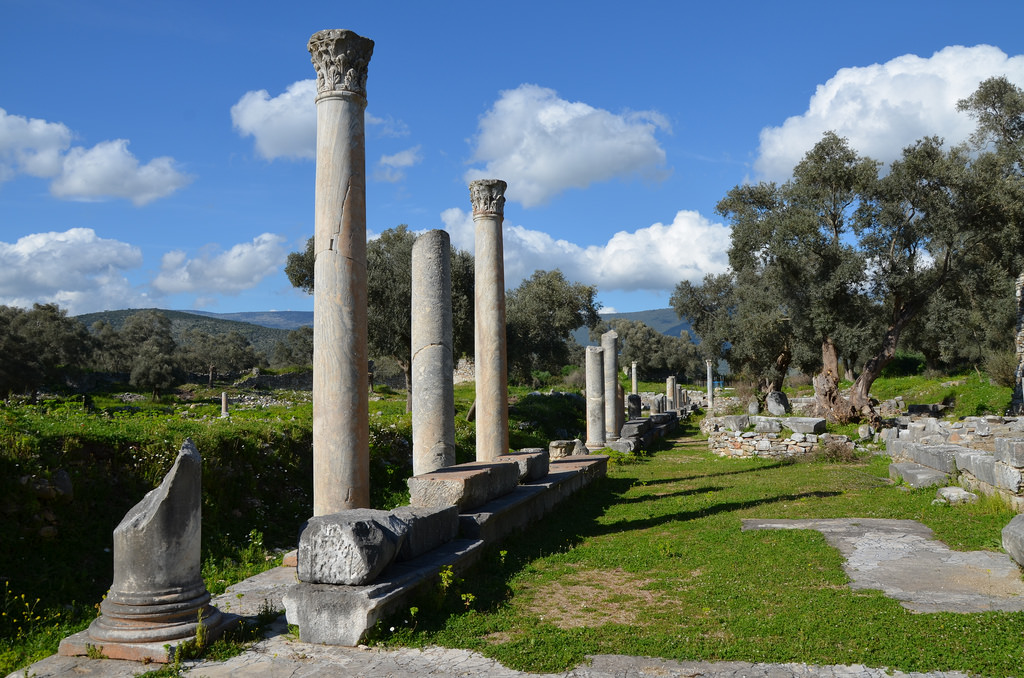
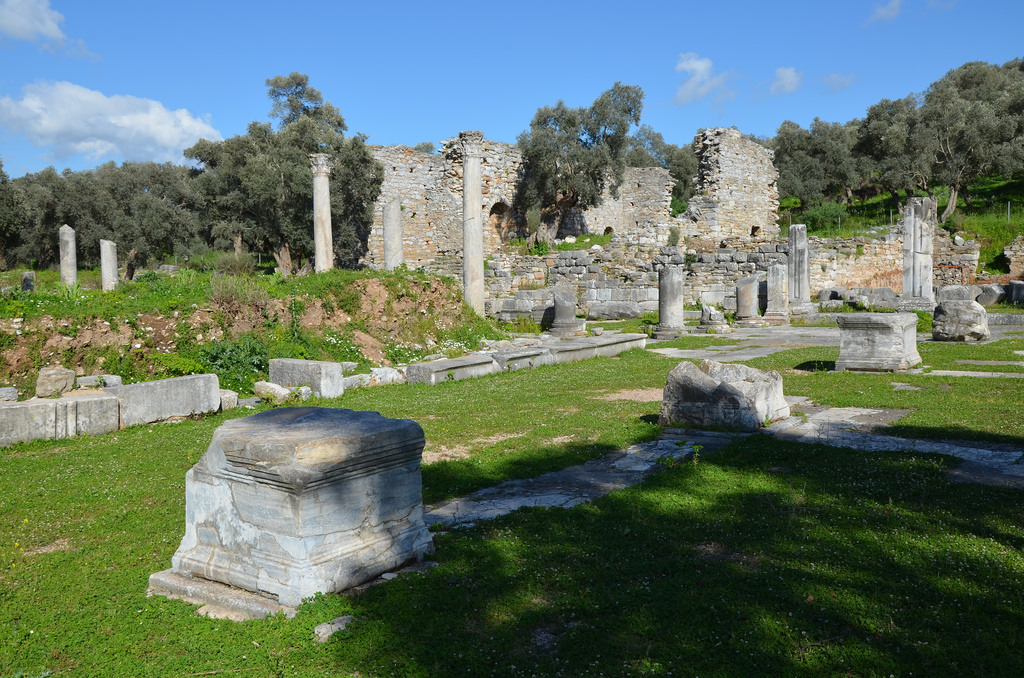
Twentieth-century excavations have uncovered the Agora, dating back to the time of Hadrian and Antoninus Pius (AD 117 – 161), the bouleuterion (one of the best-preserved buildings in Iassos), temples, including a sanctuary dedicated to Artemis Astias (the patron goddess of the city), and numerous other buildings. Additionally, an impressive Roman-period funerary monument in the form of a Corinthian temple is located within the courtyard of the “Old Fish Market.” This site was restored in 1995 to serve as an open-air museum.
PORTFOLIO
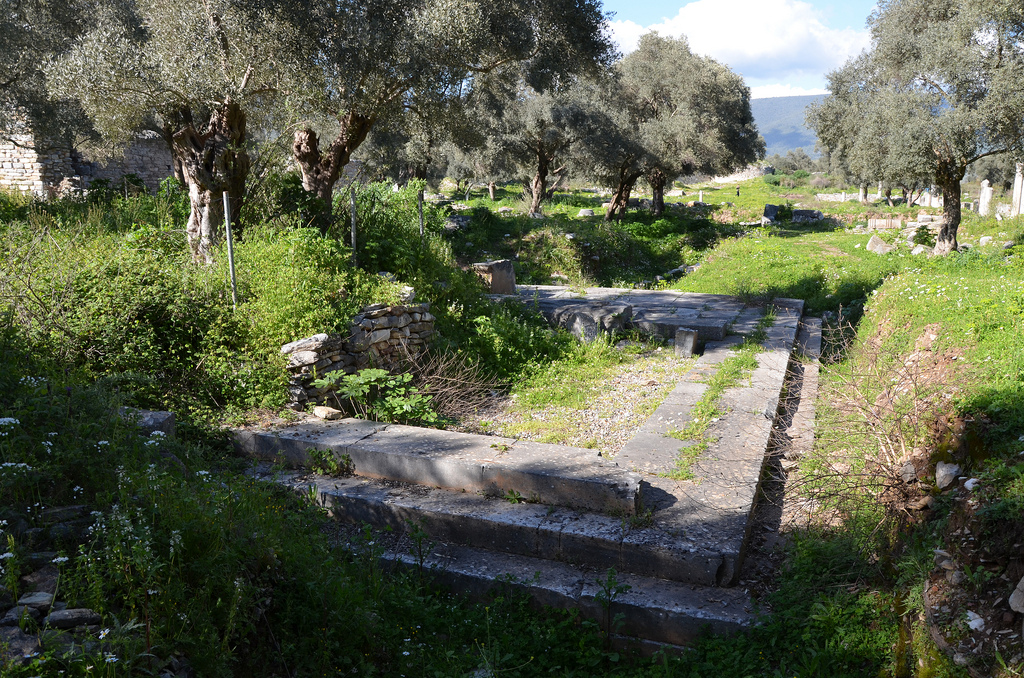
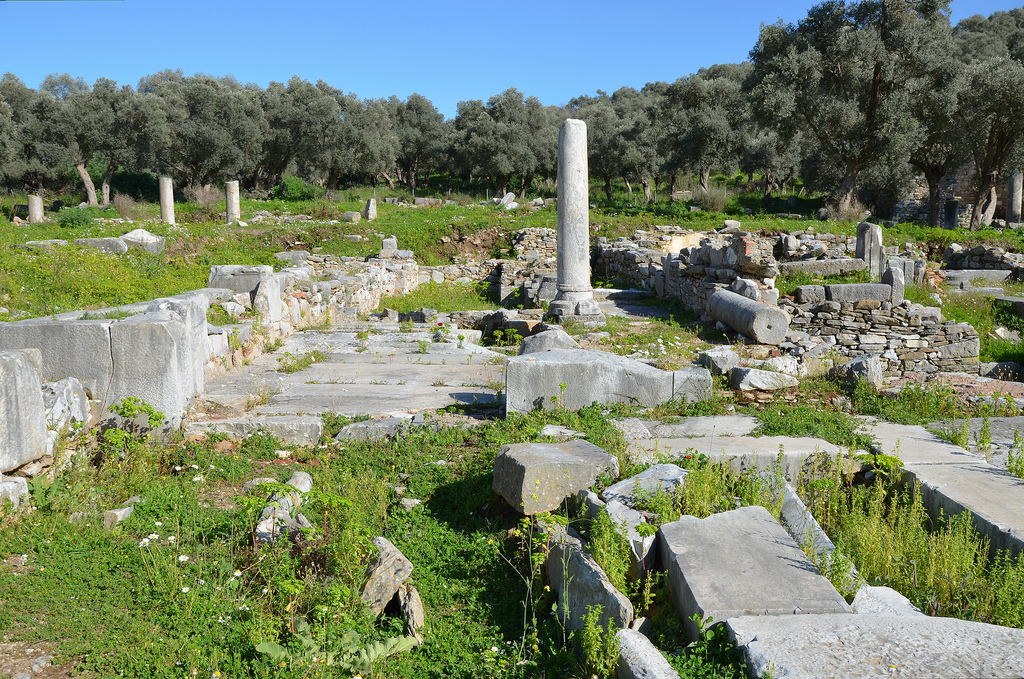
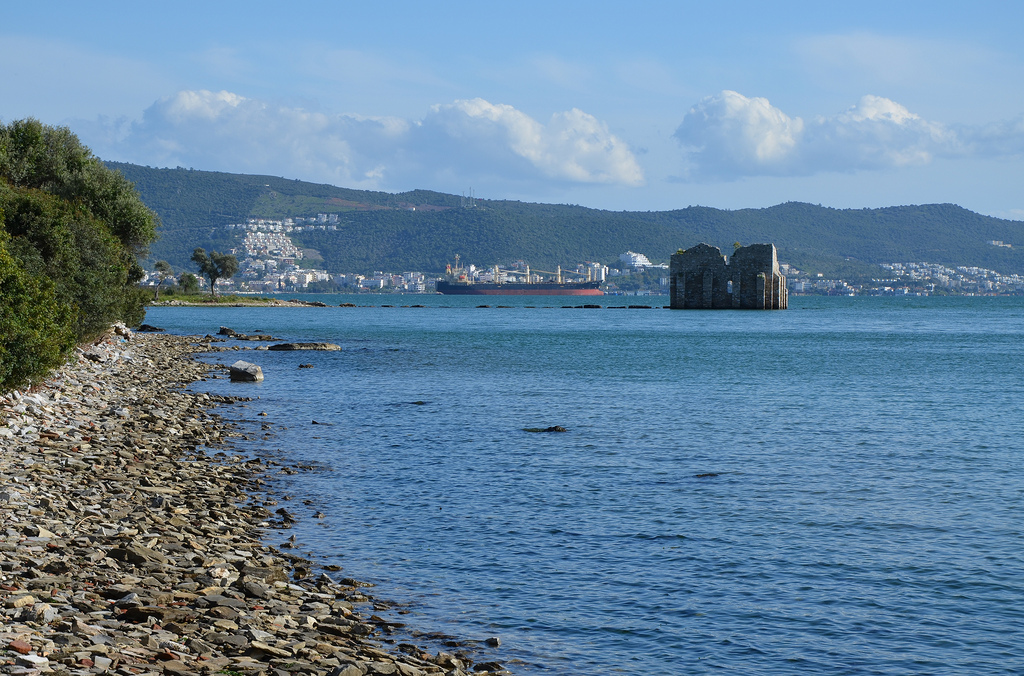
The Bouleuterion is dated to around the end of the 1st century AD. The structure measured 29,5 × 21,75 metres, while its capacity was estimated at 960.The scaenae frons of the Bouleuterion was two-storey high with Corinthian columns. It was decorated with Dionysiac scenes.The orchestra of the Bouleuterion was decorated with opus sectile.The Agora was entirely reconstructed during Hadrian’s time. Its initial building must have started in the 4th century BC.The Agora. It had a rectangular shape, and it was surrounded by porticoes and temples.The Agora.The Agora.The Sanctuary of Artemis Astias.Iassos ruins.The western harbour with the ruins of a Byzantine Tower.A monumental Roman tomb from Iassos. It had the appearance of a small Corinthian temple on a very high podium (Iassos Museum).










 following hadrian photography